Best Books for Babies 6 to 12 Months: Top Indian Picks
Looking for the best books for babies 6 to 12 months? Discover Indian board books, bath books, and IAP-aligned tips to boost your baby's brain today.
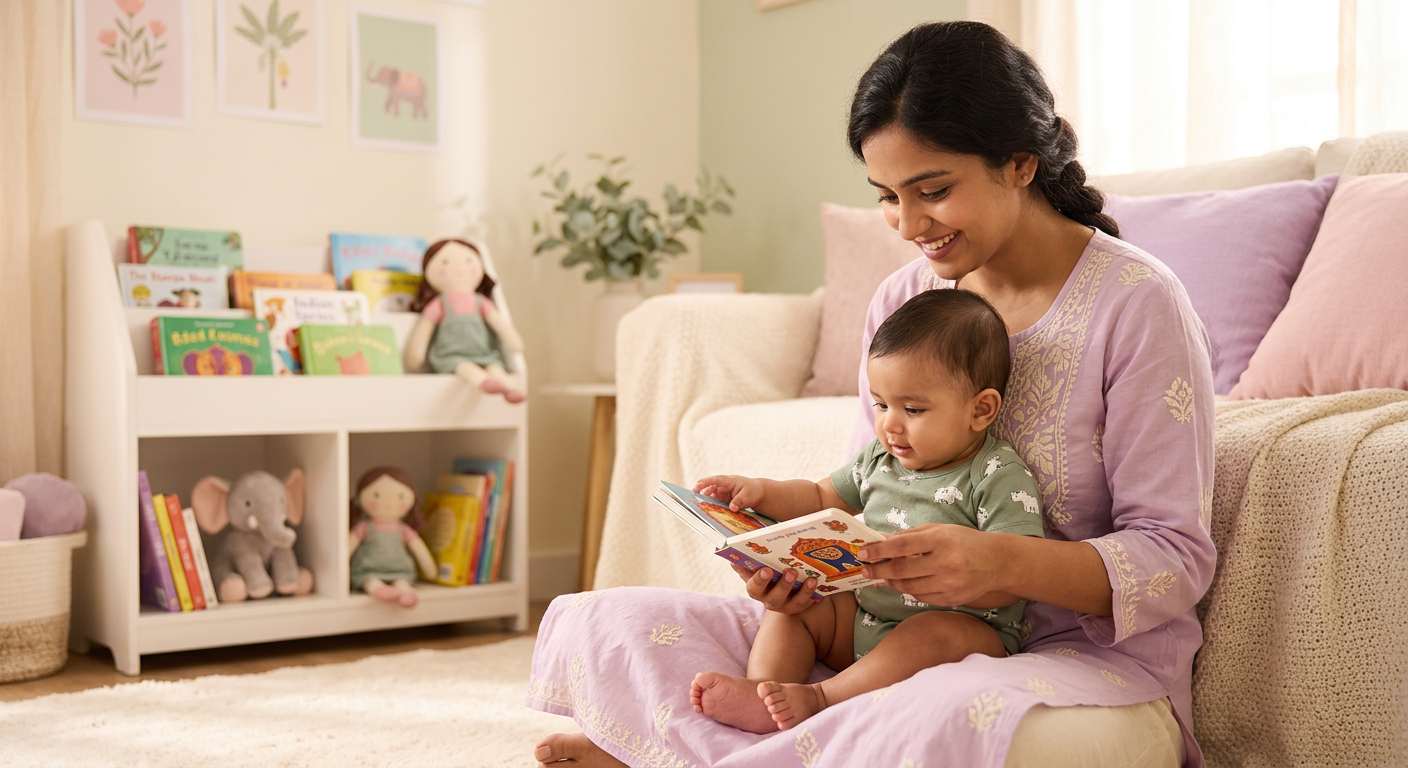
Finding the best books for babies 6 to 12 months is about more than just reading stories; it is about building the brain’s architecture during a massive developmental leap. By 6 months, your baby is transitioning from just looking at high-contrast patterns to grabbing, tasting, and turning pages. In India, where our homes are filled with multiple languages and vibrant traditions, choosing the right books means looking for sturdy board books, interactive textures, and stories that reflect our unique culture.
Why 6 to 12 Months is the Golden Age for Reading
Between half a year and the first birthday, your baby’s brain is like a sponge. According to the Indian Academy of Pediatrics (IAP), early literacy exposure improves cognitive development and language acquisition. During this stage, babies are moving from a 'palmar grasp' (using the whole hand) to a 'pincer grasp,' making it the perfect time for books they can physically manipulate.
They aren't just listening to your voice; they are watching your mouth move and learning the rhythm of speech. Whether you are reading in English, Hindi, or your mother tongue, the key is consistency. At this age, a book is as much a toy as it is a learning tool.
The Best Books for Babies 6 to 12 Months: Our Top Picks
When you are building a library, you need a mix of sensory experiences and simple narratives. Here is a curated list specifically for Indian families.
1. Indestructibles and High-Quality Board Books
Since everything goes into the mouth at this age, paper pages are a no-go. You need "chew-proof" materials.
* Touch and Feel Playbooks: Look for books with different textures—bumpy, soft, scratchy. These stimulate the somatosensory cortex.
* Indian Context: Brands like Pratham Books and Tulika offer amazing books for babies that feature Indian faces, clothing (like sarees and kurtas), and street scenes that your baby will actually see outside their window.
* Price Range: Expect to spend ₹250 to ₹600 for high-quality imported or local board books that withstand heavy drool.
2. Bilingual and Regional Language Starters
Many Indian households are multilingual. Introducing a second language now is easier than at any other time.
* Hindi-English / Tamil-English Series: Look for first word books that label 'Aam' alongside 'Mango' or 'Kela' alongside 'Banana'.
* Rhythmic Verses: Look for board book versions of traditional lorries (lullabies) or rhymes.
3. Interactive Bath Books
Bath time is a great window for learning. The best baby bath books are made of non-toxic, BPA-free plastic or foam. They are easy to wipe clean and often change colour when dipped in warm water, which feels like 'magic' to a 9-month-old.
Developmental Milestones and Reading Habits
As your baby grows through this window, their interaction with the best books for babies 6 to 12 months will change. You can track these shifts alongside their physical growth using a baby milestones tracker.
* 6-8 Months: The baby will mostly try to eat the book. This is normal! Choose cloth books or heavy board books with BIS (Bureau of Indian Standards) certification for safety.
* 9-10 Months: They begin to understand object permanence. "Lift-the-flap" books are a hit now. When they lift a flap to find a hidden cow, they are learning that things exist even when they can't see them.
11-12 Months: They may start pointing to pictures when you ask, "Where is the Gaye (cow)?" or "Where is the Chanda Mama* (moon)?"
If you notice your baby is struggling to focus on objects or doesn't seem to track the bright colours in a book, you might want to use a baby vision simulator to understand what they are actually seeing at this stage.
How to Read to a Distracted Toddler-in-the-Making
Don’t expect a 10-month-old to sit still for a 10-page story.
Real Talk from Indian Moms
> "I started reading 'Gajapati Kulapati' to my son when he was 8 months old. He didn't understand the story, but he loved the 'A-CHOO' sound I made. Now at 12 months, he tries to mimic the sneeze!" — Megha, Bengaluru, Mom to 1-year-old Kabir
> "We keep a small basket of baby books right next to his playmat. During his 'independent play' time, he often crawls over and just flips the pages of his cloth books. It gives me 5 minutes to finish my chai!" — Ananya, Pune, Mom to 9-month-old Ishani
Safety First: What to Look For
In India, the toy and book market is vast, but not all products are safe for the "mouthing" phase.
* Check the Edges: Ensure board books have rounded corners to avoid eye pokes.
* Non-Toxic Inks: Look for soy-based inks or "lead-free" certifications.
* Avoid Small Parts: Some sound books have small button batteries. Ensure the battery compartment is screwed shut tightly.
If you are worried about your baby's physical development or how they are sitting up during storytime, checking their baby growth chart can provide peace of mind that they are on the right track.
When to Call Your Paediatrician
While every baby develops at their own pace, keep an eye out for these red flags between 6 and 12 months:
* Lack of Eye Contact: If the baby doesn't look at you or the book when you are interacting.
* No Reaction to Sound: If they don't turn their head when you start reading or making animated noises.
* Regression: If they used to enjoy looking at books but suddenly lose interest in all visual stimuli.
* No Babbling: If they aren't making "ba-ba" or "da-da" sounds by 12 months.
* Vision Issues: If you notice a persistent squint or if one eye seems to wander constantly.
Frequently Asked Questions
Which are the best books for babies 6 to 12 months to start with?
The best books for babies 6 to 12 months are high-contrast board books, touch-and-feel books, and "Indestructibles." Focus on books that show one clear object per page, like a ball, a dog, or a spoon, to help with vocabulary building.
How many baby books should I buy for a 6-month-old?
You don't need a library of hundreds. A rotation of 5-10 high-quality baby books is plenty. Babies love repetition; reading the same book ten times helps them encode the information and anticipate what happens next.
Are cloth books better than books for toddlers?
Cloth books are excellent for the 6-12 month stage because they are washable and soft. However, as they approach the toddler years, books for toddlers with paper pages or complex flaps become more appropriate as their fine motor skills improve.
Can I use a screen instead of books for babies?
The WHO and IAP recommend zero screen time for children under 2 years (except for video calls with family). Physical books for babies provide tactile feedback and 3D interaction that a screen simply cannot replicate.
My baby just wants to close the book, should I stop?
Yes. If your baby is fussy or turning away, don't force it. The goal is to make reading a joyful association. Try again after their nap or maalish (massage) when they are in a "quiet alert" state.
Reading to your baby is a superpower that costs very little but pays off for a lifetime. Choose books that you enjoy too, because your enthusiasm is what will truly hook them.
I am building a reader, one page and one cuddle at a time.
Sources & further reading
- Indian Academy of Pediatrics - Early Childhood Development
- WHO guidelines on physical activity, sedentary behaviour and sleep for children under 5 years of age
- National Institute of Nutrition (NIN) India - Child Growth and Development
Written by Dr. Anjali Mehta, MBBS, DCH (Paediatrics)
Reviewed by TheMamaCircle Editorial Team
Last updated: 17 August 2026
This article is for general information only and is not a substitute for personalised medical advice. Always consult your paediatrician or obstetrician for your specific situation.