Dal Water for Babies: Indian 6-Month Feeding Guide
Start dal water for babies safely with our expert guide. Learn the right moong dal recipe, weaning tips, and a 6-month food chart for Indian moms.
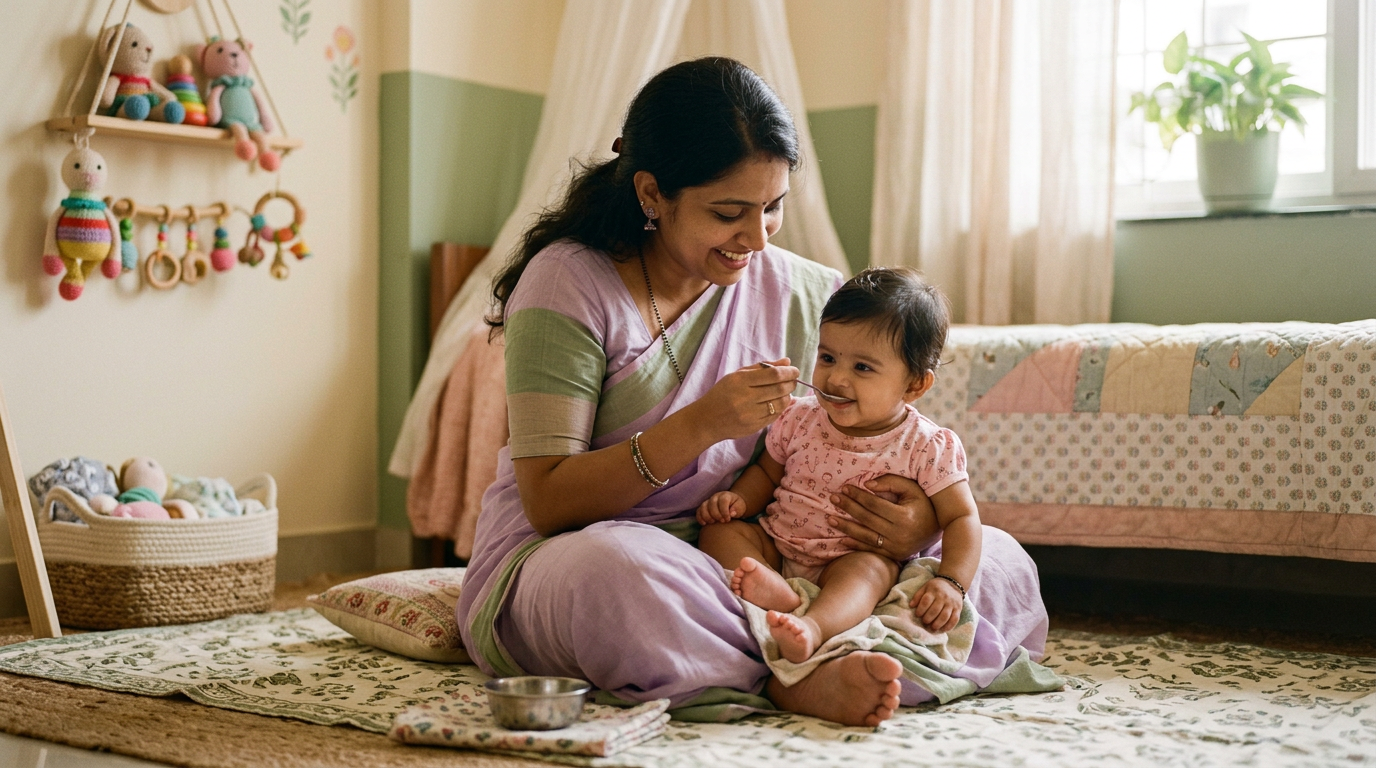
Dal water for babies, traditionally known as dal ka paani, is often the very first solid food introduced in Indian households when a baby hits the six-month mark. While it has been a staple for generations, modern paediatric guidelines from the IAP (Indian Academy of Pediatrics) suggest that while dal water is a safe start, it shouldn't be the only thing on the menu. It serves as a gentle bridge between exclusive breastfeeding and solid textures, helping your little one get used to the earthy taste of pulses without overwhelming their tiny digestive systems.
Why is Dal Water for Babies a Traditional First Food?
In India, we treat the Annaprashan or Mukhe Bhaat ceremony with great reverence. It marks the transition from stanpaan (breastfeeding) to solids. Dal water for babies is favoured because it is hypoallergenic, easy to digest, and mimics the consistency of milk while introducing new nutrients.
However, as a dietitian, I want to clarify one thing: the "water" floating on top of the dal has very little protein. To make it truly nutritious, you should mash a small amount of the cooked dal into the water. This ensures your baby gets the essential amino acids needed for growth. You can track these growth spurts using our baby growth chart to ensure they are meeting their weight goals.
Nutritional Benefits of Pulses
* Protein: Essential for muscle and tissue repair.
* Iron: Crucial for brain development and preventing anaemia, a common concern in India.
* Folate: Supports DNA synthesis and rapid cell growth.
* Easy Digestion: Yellow Moong Dal (Dhuli Moong) is the lightest on the stomach, making it the perfect entry point in a 6 month baby food chart indian.
How to Prepare Dal Ka Paani the Right Way
Don't just boil dal and drain the liquid. The goal is to provide a nutrient-dense starter. Follow this simple, hygienic method:
Moving Beyond Just Water: The Weaning Timeline
While you start with dal water, you shouldn't stay there for long. The nutritional requirements of a baby increase rapidly after six months.
The 7-Month Transition
By the time you are looking at a 7 month baby food chart indian, your baby should be moving from thin dal water to Dal Khichdi. You can add a drop of homemade desh ghee to increase the caloric density. Ghee helps in the absorption of fat-soluble vitamins and is great for brain health.
The 8-Month Texture Shift
When exploring an 8 month baby food chart indian, it is time to introduce variety. You can mix dal with mashed vegetables like Lauki (bottle gourd) or Kaddu (pumpkin). This helps in developing the baby's palate and prevents "picky eater" syndrome later on.
Common Mistakes to Avoid During Weaning
As you start this journey, your own body is still in a phase of postnatal recovery (also called postnatal). It is vital to nourish yourself while feeding the baby. If you feel overwhelmed by the transition, consider 1:1 postnatal care sessions to manage your energy levels and nutrition.
* Adding Salt: The kidneys of a 6-month-old cannot process added salt. The natural sodium in foods is enough.
* Replacing Milk: Solids are "complementary." Breast milk or formula remains the primary source of nutrition until age one.
* Force Feeding: If the baby pushes the spoon away or cries, stop. They are learning to recognize hunger and fullness cues. Use an AI cry analyzer if you're struggling to distinguish between hunger cries and general fussiness.
* Introducing Multiple Foods at Once: Always follow the 3-day rule. Introduce dal water for babies, wait three days to check for allergies (rashes, diarrhoea, vomiting), and then move to the next food.
Real Talk from Indian Moms
"I started with moong dal water because my mother-in-law insisted. My paediatrician told me to add a little mashed dal to it so it wasn't just 'yellow water.' My son loved the taste of haldi!" — Sneha R., Bengaluru (Mom to 7-month-old Kabir)
"Transitioning to solids felt like a full-time job. I used a 9 month baby food chart indian to realize I could finally give him thicker dals and even small pieces of soft roti soaked in dal." — Megha W., Pune (Mom to 10-month-old Ananya)
When to Call Your Paediatrician
While weaning is a natural process, keep an eye out for these red flags:
* Allergic Reaction: Hives, swelling of the lips, or a sudden rash after consuming dal water.
* Severe Constipation: If the baby hasn't passed stool for more than 3 days after starting solids.
* Projectile Vomiting: Not just simple "spit-up," but forceful vomiting.
* Refusal to Eat: If the baby refuses all solids and is also not taking milk effectively.
* Blood in Stool: This requires immediate medical attention.
Feeding Gear and Hygiene in India
Given our tropical climate, hygiene is paramount. Always use sterilized stainless steel or BPA-free silicone bowls. In India, brands like LuvLap or Mee Mee offer affordable weaning sets ranging from ₹300 to ₹800. Ensure the Nani or Dai helping you also washes their hands thoroughly before feeding the baby.
If you are noticing changes in your own body while bending over to feed or carry the baby, such as a bulging tummy, you might want to do a free diastasis recti self-check. Postnatal health is a marathon, not a sprint.
Frequently Asked Questions
Can I give dal water for babies at 4 months?
No. The WHO and IAP strictly recommend exclusive breastfeeding until 6 months. Starting solids too early can lead to infections and does not provide more nutrition than breast milk.
Which dal is best for a 7 month baby food chart indian?
Yellow Moong Dal is the best starter. Once the baby is comfortable, you can introduce Masoor Dal (red lentils) around 7 months. Save heavy dals like Toor/Arhar for after 8-9 months.
How much dal water should a 6-month-old drink?
Start with just 2-3 teaspoons once a day. Gradually increase the quantity to half a small katori (bowl) as the baby shows interest.
Does dal water cause gas in babies?
Sometimes. Soaking the dal for 30 minutes and adding a tiny pinch of hing (asafoetida) during cooking can help reduce gas and bloating in infants.
What should be in a 9 month baby food chart indian?
By 9 months, your baby should be eating three solid meals a day. This includes thick dal, mashed khichdi, finger foods like steamed carrots, and even mashed seasonal fruits like banana or papaya.
Can I use a 10 month baby food chart indian to introduce spices?
Yes, by 10 months, you can introduce mild spices like cumin powder, coriander powder, and a bit of cinnamon. Continue to avoid red chilli powder and salt.
Starting dal water for babies is a beautiful milestone. It’s the first time your little one experiences the rich flavours of Indian cuisine. Take it slow, keep it simple, and enjoy these messy, golden-yellow smiles.
You are doing a great job feeding your baby, one spoonful at a time.
Sources & further reading
- IAP Growth Charts and Infant Feeding Guidelines
- WHO Complementary Feeding Guidelines
- ICMR-NIN Dietary Guidelines for Indians
Written by Neha Kapoor, RD (Registered Dietitian, Maternal & Child Nutrition)
Reviewed by TheMamaCircle Editorial Team
Last updated: 26 August 2026
This article is for general information only and is not a substitute for personalised medical advice. Always consult your paediatrician or obstetrician for your specific situation.