12 Month Baby Food Chart Indian: Complete Guide & Meal Plan
Transitioning to a 12 month baby food chart indian style? Introduce dal, paratha, and ragi with this easy weekly plan. Join the toddler food transition!
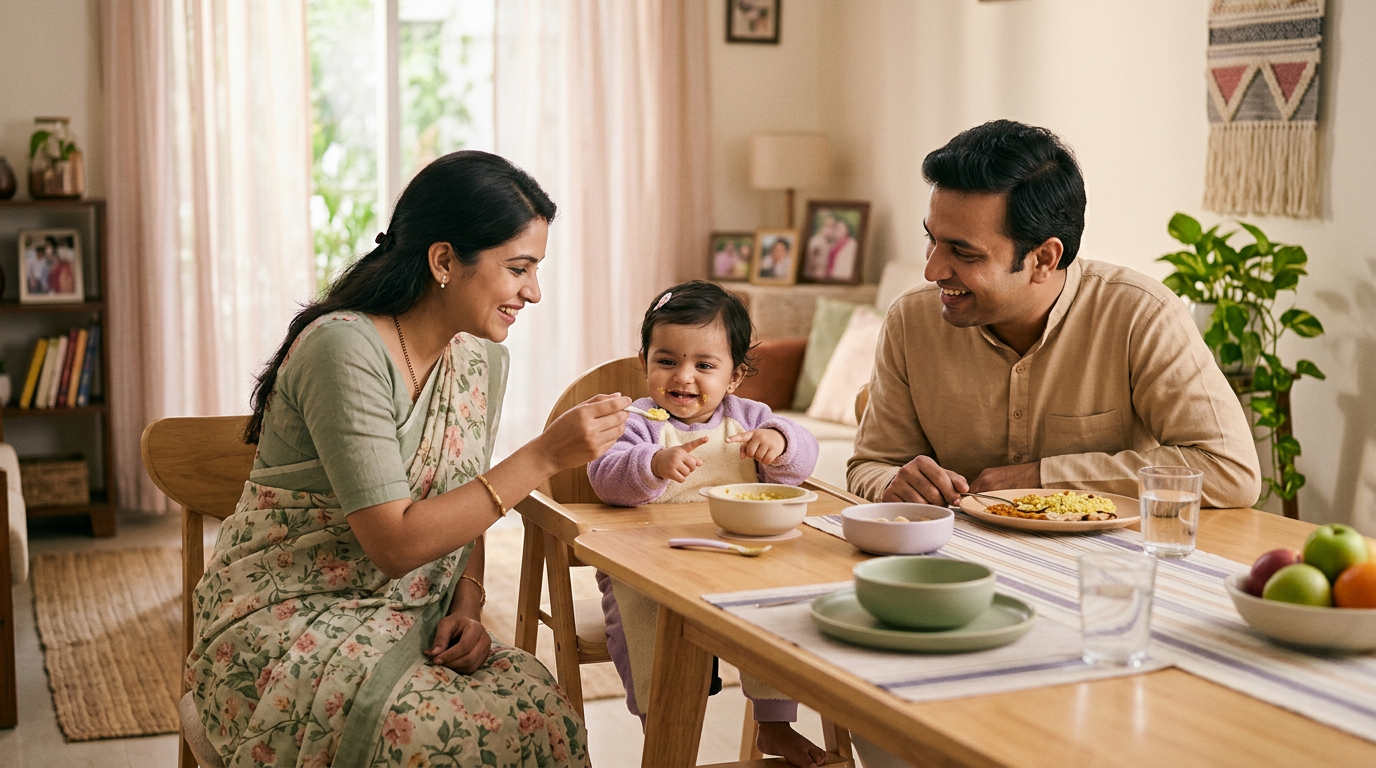
The day your little one hits the one-year mark, the kitchen rules change. No more obsessing over salt-free purees or watery dal; your toddler is now ready for a 12 month baby food chart indian style that mirrors what the rest of the family eats. At 12 months, your baby is transitioning from 'infant' to 'toddler,' and their nutritional needs shift toward denser calories and a wider variety of textures to support rapid brain growth and physical milestones.
Transitioning to a Toddler Diet: What Changes at 1 year?
By 12 months, the Indian Academy of Paediatrics (IAP) suggests that breast milk or formula should no longer be the primary source of nutrition. Your toddler should now be getting about 75% of their calories from solid foods. This is the stage where you introduce cow’s milk (if you choose), honey, and a pinch of salt and jaggery into their meals.
If you’ve been following our 9 month baby food chart indian, you’ll notice the 12-month transition is less about new ingredients and more about 'adult-like' consistency. Your baby should now be using their pincer grasp to pick up small pieces of roti or paneer and might even be attempting to use a spoon (mostly to decorate the floor, let’s be honest).
To track if your toddler is hitting the right growth markers during this transition, you can check our baby growth chart to see where they stand on the WHO-India percentiles.
The Ultimate 12 Month Baby Food Chart Indian (Weekly Plan)
This plan focuses on iron-rich foods, healthy fats, and local Indian grains like ragi (finger millet) and bajra (pearl millet). Costs for these ingredients are very friendly, usually ranging from ₹40–₹120 per kg at local kirana stores.
| Day | Breakfast (8:30 AM) | Mid-Morning Snack (11:00 AM) | Lunch (1:30 PM) | Evening Snack (4:30 PM) | Dinner (7:30 PM) |
| :--- | :--- | :--- | :--- | :--- | :--- |
| Monday | Ragi Sheera (with jaggery/ghee) | Mashed Banana with Cardamom | Moong Dal Khichdi (thick) + Ghee | Suji Halwa | Small pieces of Roti with Dal Palak |
| Tuesday | Paneer Paratha (shredded) | Steamed Apple Silces | Curd Rice with Tadka | Roasted Makhana (crushed) | Vegetable Pulao (soft) |
| Wednesday| Vegetable Poha (softened) | Papaya cubes | Kadhi with soft Rice | Ragi Ladoo (small) | Scrambled Egg or Paneer Bhurji |
| Thursday | Idli with mild Sambar | Mango (seasonal) or Chikoo | Dalia with Mixed Veggies | Beetroot Cutlet (shallow fried) | Moong Dal Chilla |
| Friday | Besan Chilla | Pomegranate (seeds halved) | Roti soaked in Dal + Curd | Stewed Pear | Vegetable Upma |
| Saturday | Wheat Pancakes (Banana/Milk) | Watermelon wedges | Fish Curry (boneless) or Rajma Rice | Makhana Kheer | Vegetable Khichdi |
| Sunday | Stuffed Aloo Paratha (mild) | Grapes (quartered) | Chicken Stew or Paneer Makhani | Fruit Yogurt | Mixed Vegetable Soup + Bread |
Key Nutrients for your 12-Month-Old
According to ICMR guidelines, a toddler needs roughly 1000–1200 calories a day. In an Indian household, we often overdo cow's milk, which can lead to "milk-anaemia." Keep milk limited to 400-500ml a day to ensure they actually have space for iron-rich solids.
Iron and Vitamin C
Iron is non-negotiable for brain development. Pair your dal or ragi with a squeeze of lemon (Vitamin C) to increase absorption. If you started with the 6 month baby food chart indian focusing on single grains, now is the time to mix them.
Healthy Fats
Don't skimp on the asli ghee. A teaspoon in every meal provides the concentrated calories toddlers need for their high energy levels. Nut powders (almond/walnut) can be added to porridges or laddoos.
Calcium
Beyond milk, include curd (dahi), paneer, and sesame seeds (til). If your baby is meeting milestones, like those tracked in our baby milestones tracker, their calcium and Vitamin D intake is likely supporting healthy bone density.
Nutrition Tips for the "Pickler" Phase
Around 12 months, many Indian babies become "picky" eaters. This is often just them asserting independence.
The Power of Jhootha: Eating from your plate makes food more desirable. Give them a small portion of your sabzi* (less spicy).
Avoid Force-feeding: If the sasu maa* insists on one more bite, gently remind her that the baby’s stomach is only the size of their fist.
* Texture exposure: If you haven't moved past purees from the 8 month baby food chart indian stage, start now. Delayed texture introduction can cause speech delays and sensory issues.
Real talk from Indian moms
"My son refused everything until I started giving him 'grown-up' food. Now he just wants the tadka dal I make for my husband. I just wash off the extra spice with a bit of warm water!" — Meera V., Bengaluru (Mom to 13-month-old)
"I was so worried about salt. But at 12 months, my paediatrician said a little bit of namak in the family vegetable khichdi is fine. It made my life so much easier than cooking separate meals." — Pritika S., Noida (Mom to 14-month-old)
When to call your paediatrician
While we want to be relaxed, certain signs require a visit to the doctor:
* The baby is not gaining weight or is losing weight.
* Persistent constipation or chronic diarrhoea (more than 3-4 days).
* Severe allergic reactions (hives, swelling of lips, difficulty breathing) after trying new nuts or seafood.
* Refusing all solids and only wanting to breastfeed/bottle-feed.
* Extreme lethargy or lack of interest in play.
Frequently Asked Questions
Can I give cow's milk in the 12 month baby food chart indian?
Yes, once your baby turns one, you can introduce full-fat cow’s milk. Ensure it is boiled and cooled. Start with small amounts to ensure it doesn't cause constipation. Stay within the 400-500ml limit daily.
How do I handle a picky eater using the 10 month baby food chart indian principles?
While the 10 month baby food chart indian focused on finger foods, at 12 months you should stop offering alternatives. If they don't eat the upma, wait until the next snack time. Hunger is the best sauce!
Is honey safe for a 12 month baby food chart indian?
Yes, honey is safe after the first birthday. Before 12 months, it carries a risk of botulism, but now their digestive system is mature enough to handle it. You can use it in halwas or on chillas.
Can I include salt and sugar now?
In moderation, yes. While the WHO suggests limiting added sugar, a pinch of salt in the family meal is fine. Avoid highly processed snacks like chips or sugary biscuits which offer zero nutrition.
How many meals should a 1-year-old eat?
Ideally, three main meals and two healthy snacks. Breastfeeding or formula can continue 2-3 times a day but should not replace the nutritional density of the main meals.
What if my baby still doesn't have teeth for the 7 month baby food chart indian textures?
Babies use their gums to "munch." Don't wait for teeth to introduce soft-cooked roti or idli. If you were following the 7 month baby food chart indian and keeping things mashed, it’s time to move to chopped bits regardless of tooth count.
Feeding your one-year-old is about building a lifelong relationship with food. It won't always be perfect—some days they will eat like a king, and other days they will live on air and one grape. Trust their appetite, keep the desi flavours alive, and keep your cool. You are doing a great job, Mama!
You are your baby's best teacher; if you eat your veggies, eventually, they will too.
Sources & further reading
- Indian Academy of Paediatrics (IAP) Feeding Guidelines
- NIN - Dietary Guidelines for Indians
- World Health Organization - Infant and Young Child Feeding
Written by Neha Kapoor, RD (Registered Dietitian, Maternal & Child Nutrition)
Reviewed by TheMamaCircle Editorial Team
Last updated: 22 July 2026
This article is for general information only and is not a substitute for personalised medical advice. Always consult your paediatrician or obstetrician for your specific situation.