Educational Toys India: Montessori Guide for Babies 0-24m
Looking for the best educational toys in India? Discover age-wise Montessori toys (0-24 months) from top Indian brands to boost your baby's development naturally.
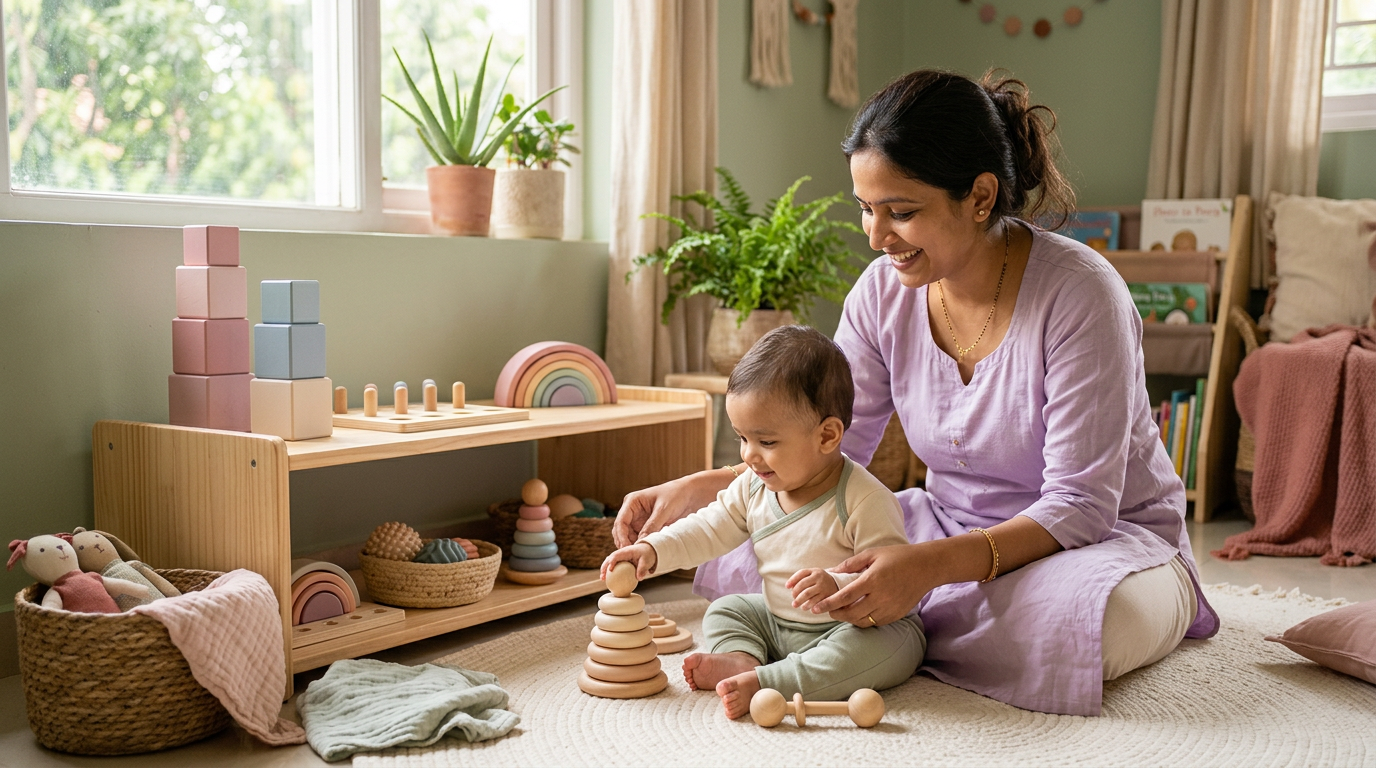
Choosing the right educational toys in India often feels like a battle between flashy plastic gadgets that scream in three languages and the aesthetic "beige" wooden toys you see on Instagram. As a paediatrician and a mom, I can tell you: your baby doesn't need a battery-operated laptop to be "smart." The best learning happens when toys follow the Montessori philosophy—simple, open-ended, and focused on one skill at a time. In the Indian context, where our homes are often bustling with dadi-nani and cousins, choosing purposeful toys helps create a calm "Prepared Environment" amidst the beautiful chaos.
Why Montessori educational toys are different for Indian babies
Traditional educational toys often try to do too much. A single plastic cube might play music, flash lights, and recite numbers. For a 6-month-old, this is sensory overload. Montessori-aligned toys, however, focus on "isolation of quality." If the toy is meant to teach shapes, it shouldn't also be screaming the alphabet.
In India, we have a long history of sustainable, artisanal play—think of the Channapatna lacquerware or the Kondapalli toys. Modern montessori toys india are essentially a return to these roots: wooden, non-toxic, and grounded in reality. When you choose montessori educational toys, you are giving your child a tool to master their environment, whether it's learning to grasp a neem-wood teether or matching different types of dal in a sensory bin.
The Age-Wise Guide to Montessori Play Toys (0–24 Months)
Every stage of postnatal development requires different stimuli. During your postnatal recovery—a time often filled with jaapa maids and ajwain ka pani—you don't need a mountain of toys. You just need a few high-quality pieces that grow with the baby.
0 to 6 Months: The Sensorial Stage
At this stage, your baby is a "sensory explorer." Their vision is still developing, and they are learning that their hands actually belong to them.
* High-Contrast Flashcards: Focus on black and white patterns. Since newborns see high contrast best, these are excellent early educational toys. Check out our baby vision simulator to see exactly what your little one perceives right now.
* The Interlocking Discs: This classic Montessori material encourages hand-to-hand transfer. Look for Indian brands like Ariro that use neem wood.
Bell Rattle: A simple silver or wooden rattle (like a ghungroo* toy) provides auditory feedback without being jarring.
6 to 12 Months: Developing Fine Motor Skills
This is the age of sitting up and the dreaded (but exciting) "throwing stage."
Object Permanence Box: A wooden box where a ball disappears and reappears. It teaches the baby that even if they can't see Mom (who might be in the kitchen making khichdi*), she still exists.
* Egg in a Cup: A simple wooden egg and a matching cup. It requires precise hand-eye coordination.
* Soft Cloth Books: Brands like Shumee offer wonderful fabric books that introduce Indian animals and daily routines.
12 to 24 Months: Practical Life and Maximum Effort
Toddlers want to do what you are doing. If you are cleaning the mandir or chopping bhindi, they want in.
* The Learning Tower: A sturdy stool that lets them reach the kitchen counter safely.
* Pincer Grasp Puzzles: Puzzles with large wooden knobs (check out Skola Toys or Kinder Castle).
* Vertical Posting: Dropping coins or large buttons into a slot. This is a staple among montessori developmental toys.
Buying Guide: What to look for in the Indian Market
When shopping for educational toys in India, don't just trust the "Montessori" label on Amazon. Many brands use it as a marketing gimmick for plastic toys. Look for these specific markers:
If you are tracking your child's growth alongside their play, you can use our baby milestones tracker to see which skills are emerging next.
Real talk from Indian moms
> "I spent a fortune on those musical walkers, but my daughter only wanted to play with the steel katoris and spoons from the kitchen. I switched to basic montessori play toys like stacking rings and wooden blocks, and suddenly she was focused for 20 minutes straight!" — Pooja, Mumbai, Mom to 14-month-old Kabir.
> "Living in a joint family, everyone kept gifting plastic noisy toys. I had to politely explain the 'one toy at a time' rule. We started using a toy rotation shelf with just 6 educational toys out at a time. It changed the energy of the living room completely." — Ananya, Bengaluru, Mom to 9-month-old Mira.
How to DIY Montessori at home (The Desi Way)
You don't always need to buy. Some of the best educational toys are already in your kitchen pantry:
The Spice Smelling Jars: Take old jam jars, put a bit of dalchini (cinnamon), elaichi (cardamom), and kadipatta* (curry leaves) inside. Let your toddler smell them to develop their olfactory senses.
* Whisking Bubbles: A bowl of water, a drop of baby soap, and a hand whisk. This is great for strengthening wrist muscles.
Grain Pouring: Two small lota or jugs and some rajma* or rice. Transferring from one to another builds focus and coordination.
When to call your paediatrician
While play is developmental, sometimes a lack of interest in toys can be a sign of something else. Consult your doctor if:
* Your baby does not track a high-contrast toy with their eyes by 3 months.
* They do not reach for or grab toys by 6 months.
* They show a persistent lack of interest in people, preferring only repetitive play with objects.
* They have not developed a "pincer grasp" (using thumb and forefinger) by 12 months.
* You notice a sudden regression in skills they had previously mastered.
If you have concerns about physical development, such as your baby not sitting up to play, our baby growth chart can help you track their physical parameters against WHO standards for Indian children.
Frequently Asked Questions
Are all wooden toys considered Montessori educational toys?
No. While many montessori educational toys are wooden, the material isn't what makes it Montessori. A wooden toy that is overly complicated or doesn't allow for independent discovery isn't truly Montessori. The focus should be on simplicity and purposeful design.
Where can I find authentic montessori toys india?
Brands like Ariro, Shumee, Skola, and Kinder Castle are well-known in India for adhering to Montessori principles. Always look for BIS-certified products to ensure safety standards are met for Indian homes.
How do I introduce montessori play toys to a newborn?
For newborns, start with visual mobiles (like the Munari or Octahedron) hung about 10-12 inches from their face. As they reach 3 months, introduce grasping toys like the wooden interlocking discs or a soft crochet ball.
What are the best montessori developmental toys for a 1-year-old?
At one year, focus on "Object Permanence" and "Functional Play." Toys like the permanent box, peg dolls, and simple 2-3 piece puzzles are ideal montessori developmental toys that challenge their growing cognitive abilities.
Can I use plastic educational toys in a Montessori home?
Montessori prefers natural materials because they provide better sensory feedback (weight, texture, temperature). However, if you have plastic toys, you can still use them in a Montessori way by offering only one at a time and ensuring they serve a specific developmental purpose.
Investing in educational toys isn't about buying the most expensive set; it’s about observing your child and providing the right challenge at the right time. Your baby doesn't need a toy that does everything—they need a toy that lets them do everything.
I am doing enough, and my presence is the best 'toy' my baby has.
Sources & further reading
- Indian Academy of Pediatrics (IAP) - Growth and Development
- Bureau of Indian Standards - Safety of Toys (IS 9873)
- WHO Standards for Child Development and Play
Written by Dr. Anjali Mehta, MBBS, DCH (Paediatrics)
Reviewed by TheMamaCircle Editorial Team
Last updated: 27 August 2026
This article is for general information only and is not a substitute for personalised medical advice. Always consult your paediatrician or obstetrician for your specific situation.