Feeding Essentials for Baby: The Ultimate Indian Guide
Essential feeding essentials for baby guide: From breastfeeding kits to weaning gear. Get the best baby care essentials for your Indian home. Shop smart, Mama!
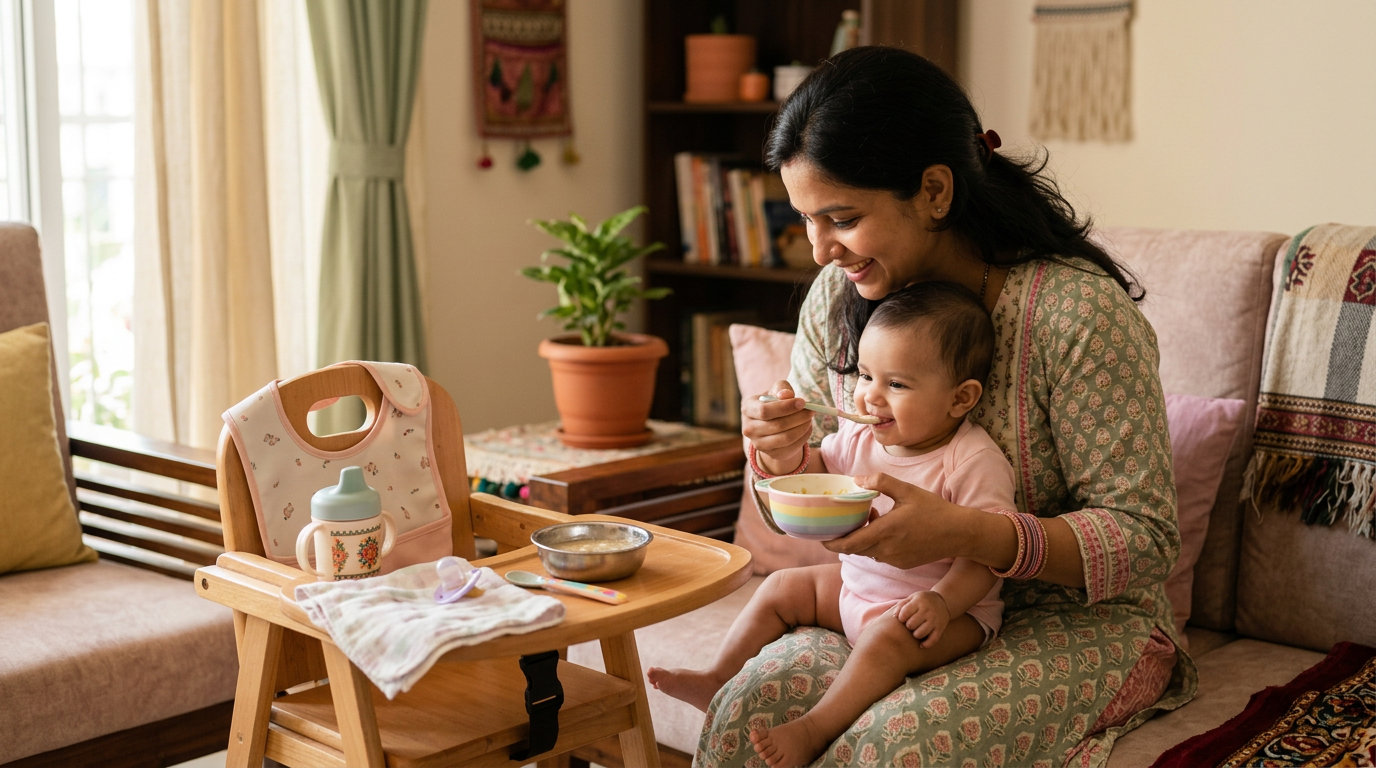
Setting up your nursery is one thing, but figuring out the feeding essentials for baby is where the real work begins. Whether you are exclusively breastfeeding, using formula, or transitioning to solid khichdi, you need tools that fit an Indian kitchen and a busy desi lifestyle. From soft mulmul burp cloths to the right katori-chammach set, your kit needs to prioritize hygiene, ease of cleaning, and safety standards like BIS (Bureau of Indian Standards).
The Essential Feeding Kit for the First Six Months
During the exclusive breastfeeding phase, the focus isn't just on the baby, but on making stanpaan comfortable for you. In India, we often have a house full of relatives, so privacy and comfort are key. Even if you are not using bottles yet, a few baby care essentials make the postnatal period much smoother.
Breastfeeding Must-Haves
* Nursing Pillows: Don't just rely on your sofa cushions. A firm, C-shaped nursing pillow helps position the baby correctly, preventing the back pain often associated with the early weeks of postnatal recovery.
Cotton Nursing Covers: Look for breathable mulmul* or cotton fabrics. These are essential for feeding during family gatherings or doctor visits.
* Nipple Butter: Choose a Lanolin-free, food-grade balm. Brands like The Moms Co. or Mamaearth are popular, but ensure they are free from mineral oils.
* Nursing Bras: Invest in at least 4-5 high-quality cotton nursing bras. Avoid underwires in the first few months to prevent clogged ducts.
Pumping and Storage
If you are a working mom or need to step out, a breast pump becomes one of the non-negotiable baby care items.
* Manual vs. Electric Pumps: Electric pumps (like Philips Avent or Medela) are faster for daily use, while manual ones are great for occasional relief.
* Milk Storage Bags: Ensure they are BPA-free. Remember the "Rule of 4" for the Indian climate: 4 hours at room temperature, 4 days in the fridge, and 4 months in the freezer.
Transitioning to Bottles: What You Really Need
If you are supplementing with formula or feeding expressed milk, your list of feeding essentials for baby expands. In India, the heat and humidity mean bacteria grow fast, so sterilization is not optional.
Choosing the Right Bottle
* Anti-Colic Valves: Look for bottles with venting systems to reduce the air baby swallows. This is crucial if your baby is prone to gas—you can also use our AI cry analyzer to see if gas is the reason for those evening tears.
* Material Matters: While plastic is common, many Indian parents are moving back to Glass or Food-Grade Stainless Steel bottles. They are easier to deep-clean and don't retain odours like plastic does.
* Nipple Flow: Start with 'Level 1' or 'Newborn' flow. If the baby is choking or gulping too fast, the flow is too high.
Hygiene and Cleaning
Bottle Sterilizer: While the old-school bhagona* of boiling water works, an electric steam sterilizer is a lifesaver for sleep-deprived parents.
* Bottle Brush: Get one with a dedicated nipple cleaner. Replace these every 2-3 months.
* Natural Cleansers: Use a plant-based liquid cleanser specifically for baby bottles to avoid harsh chemical residues.
Weaning Essentials: The 6-Month Milestone
Around 6 months, once your baby hits their baby milestones tracker goals like sitting with support, it’s time for Annaprashan. This is when the feeding essentials for baby get fun (and messy!).
The Indian Weaning Starter Pack
* Stainless Steel Katori and Chammach: Skip the fancy silicone for a moment. A traditional small, smooth-edged steel bowl and spoon are the most hygienic options in an Indian household.
* High Chair or Booster Seat: Feeding the baby while they crawl around the living room is a recipe for choking. A sturdy high chair (like the IKEA Antilop or LuvLap) ensures they are upright and focused on the food.
Silicone Bibs with Crumb Catchers: These are much easier to wipe clean than cloth bibs after a messy session of dal chawal*.
* Sippy Cups or Open Cups: Skip the spouted sippy cups if possible. The IAP (Indian Academy of Paediatrics) suggests moving straight to a small open cup or a straw cup to support oral motor development.
Real Talk from Indian Moms
> "I spent a fortune on fancy imported bottles, but my son only took to the basic steel ones my mother-in-law bought from the local bartan shop. Easier to clean and no BPA worries!"
> — Sunita R., Bengaluru (Mom to 8-month-old)
> "Don't skip the burp cloths. I thought three would be enough, but between the spit-ups and the summer sweat, I needed at least a dozen mulmul squares daily."
> — Ananya P., Delhi (Mom to 3-month-old)
Safety Standards for Feeding Gear in India
When buying baby essentials, look for the following certifications:
Prices for a complete feeding kit (bottles, sterilizer, and basic weaning gear) typically range from ₹3,000 to ₹12,000 depending on the brands chosen.
When to Call Your Paediatrician
Feeding issues can sometimes be medical. Contact your doctor if:
* Baby is consistently refusing to feed for more than 6-8 hours.
* Projectile vomiting after every feed (not just a little spit-up).
* Signs of dehydration: fewer than 6 wet nappies in 24 hours or a sunken soft spot (fontanelle).
* Extreme fussiness or arching of the back during feeds (could indicate reflux).
* Baby is not gaining weight according to the baby growth chart.
Choosing the right feeding essentials for baby isn't about buying the most expensive gadgets. It's about finding what works for your baby’s temperament and your kitchen’s workflow. Take it one meal at a time, Mama.
You are doing a great job, and your baby is lucky to have you. Feeding is not just about nutrition; it's about the bond you are building every single day. Trust your gut and keep those burp cloths handy!
Sources & further reading
- Indian Academy of Paediatrics (IAP) - Infant and Young Child Feeding Guidelines
- World Health Organization (WHO) - Complementary Feeding
- Bureau of Indian Standards (BIS) - IS 14625 for Feeding Bottles
Written by Kavita Iyer, IBCLC Lactation Consultant
Reviewed by TheMamaCircle Editorial Team
Last updated: 23 September 2026
This article is for general information only and is not a substitute for personalised medical advice. Always consult your paediatrician or obstetrician for your specific situation.