Fertility Yoga: Indian Guide to Conceiving Naturally
Trying to get pregnant? Discover how fertility yoga and Ayurveda improve pelvic blood flow and balance hormones naturally. Start your conception journey today!
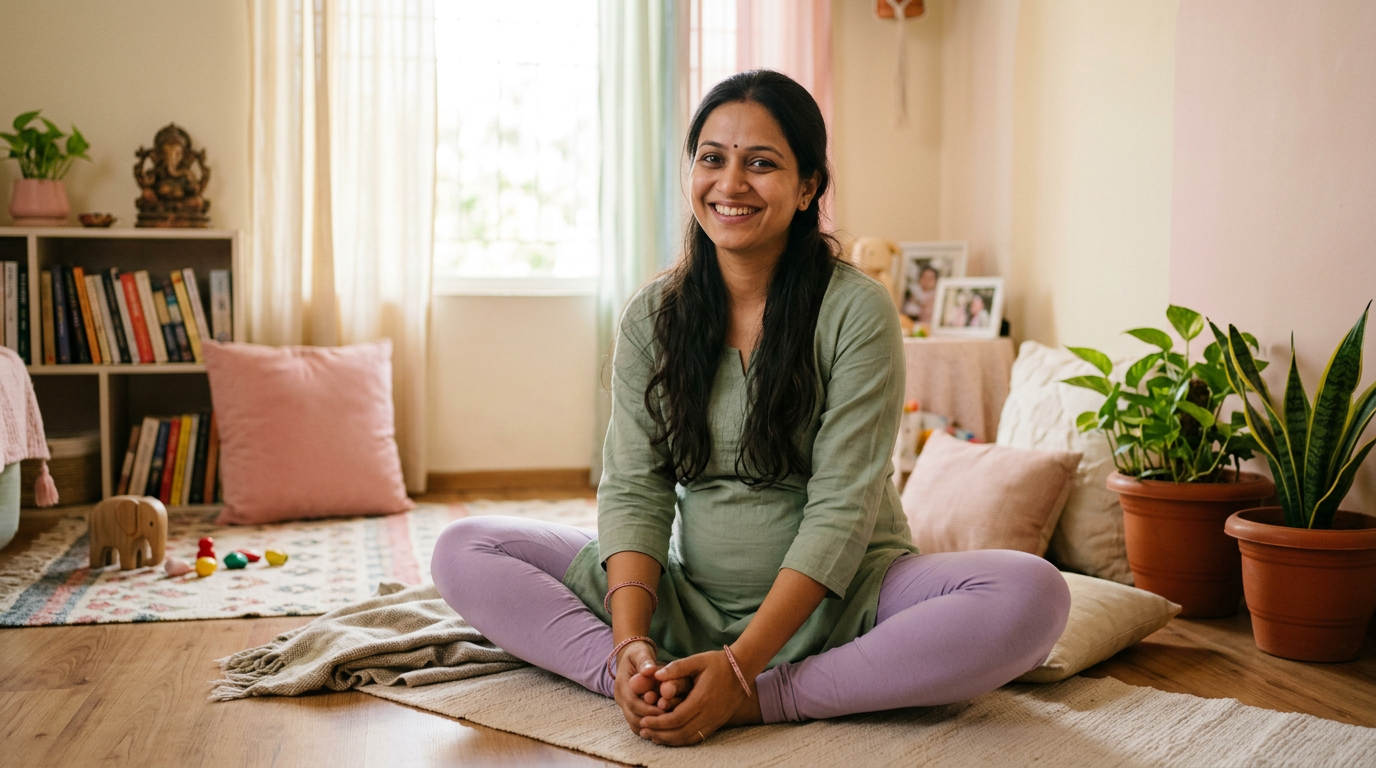
If you are currently tracking your cycle and wondering if fertility yoga can actually help you see those two pink lines, the answer is a resounding yes—but not for the reasons you might think. While yoga won’t magically unblock tubes, it is the ultimate tool for down-regulating your nervous system, improving pelvic blood flow, and balancing the hormones necessary for conception. In the high-pressure environment of Indian households where "good news" is expected yesterday, yoga becomes your sanctuary.
Does Fertility Yoga Really Help You Conceive?
The science behind fertility yoga focuses on the HPO axis (Hypothalamic-Pituitary-Ovarian axis). When we are stressed—whether it is work deadlines or the constant questioning from your sasu maa about the pau-pau—our bodies produce cortisol. High cortisol can suppress ovulation. Yoga poses, specifically those that target the pelvic floor and hip flexors, increase circulation to the reproductive organs, ensuring the ovaries and uterus receive nutrient-rich, oxygenated blood.
By integrating specific asanas with deep pranayama, you transition from 'fight or flight' to 'rest and digest'. This shift is crucial for hormonal balance. Many women find that combining yoga with ayurveda for conceiving creates a holistic environment that supports the body's natural rhythms.
Top Yoga Poses to Boost Reproductive Health
When practicing fertility yoga, we focus on opening the "pelvic bowl" and reducing stagnation. Here are the non-negotiables for your daily practice:
1. Baddha Konasana (Bound Angle Pose)
Commonly known as the Butterfly pose, this is the gold standard for opening the hips.
* How it helps: It stimulates the ovaries and ensures better blood flow to the pelvic region.
The Indian Way: Sit on a firm gadda* or a yoga block if your hips are tight.
2. Viparita Karani (Legs-Up-The-Wall)
This is a restorative powerhouse. Many practitioners recommend this pose immediately after intercourse, though its primary benefit is lymphatic drainage and deep relaxation.
* How it helps: It reduces anxiety and helps settle the pelvic organs.
Timing: Stay here for 10-15 minutes while listening to a calming mantra*.
3. Paschimottanasana (Seated Forward Bend)
* How it helps: This pose stretches the lower back and hamstrings while massaging the abdominal organs. It is excellent for toning the uterus.
* Note: Use a bolster if you cannot reach your toes; never strain your belly.
If you are just starting your journey, you can use our ovulation calculator to align your yoga intensity with your cycle—active flows during the follicular phase and restorative poses during the luteal phase.
Integrating Ayurveda and Indian Nutrition
In India, we know that what happens on the yoga mat is only half the battle. Your rasa (plasma) and shukra dhatu (reproductive tissue) need the right fuel. Yoga helps the body assimilate the foods to eat to get pregnant more efficiently.
* Shatavari: Often called the "queen of herbs," Shatavari is an Ayurvedic adaptogen that supports female hormones. A teaspoon in warm A2 milk at night is a classic remedy.
Phal Ghrit: This medicated ghee is frequently recommended by Ayurvedic practitioners in India (priced around ₹300–₹600 per 200g jar) to nourish the garbh* (womb).
Warm Foods: Avoid ice-cold water or salads during your period. Stick to khichdi, daliya, and warm soups to keep the "digestive fire" or agni* alive.
The Best Time to Conceive After Periods: Timing Your Yoga
Understanding your cycle is vital. While fertility yoga builds the foundation, you must know your fertile window. Generally, the best time to conceive after periods is between day 10 and day 17 of a standard 28-day cycle.
During your period, skip the heavy inversions (like headstands) and focus on gentle breathing. Once the flow stops, you can move into more vigorous Vinyasa flows to stimulate the follicles. As you approach ovulation, transition back to hip-opening poses to prepare the body for potential implantation. You might also want to consult our fertility diet plans to ensure your nutrition matches these energetic shifts.
Real Talk from Indian Moms
"I spent two years obsessing over thermometers and apps. It wasn't until I started a dedicated fertility yoga practice at my local community center in Pune that I finally felt my body relax. I conceived three months later. It wasn't a miracle; I just stopped being in a state of constant panic." — Megha S., Pune, Mom to 6-month-old.
"Everyone told me to eat more badam and akhrot, but nobody talked about the mental load. Yoga gave me a space where I wasn't just a 'potential mother' but a person. It helped me reconnect with my husband too." — Ananya R., Bengaluru, Mom to 1-year-old.
When to Call Your Gynaecologist
While yoga and lifestyle changes are powerful, they are not a replacement for medical intervention. You should seek a specialist if:
* You are under 35 and have been trying for 12 months without success.
* You are over 35 and have been trying for 6 months.
* You have extremely irregular periods (cycle shorter than 21 days or longer than 35 days).
* You experience severe pelvic pain during yoga or intercourse.
* You have a history of PCOS, endometriosis, or thyroid disorders that require clinical management.
* You have experienced two or more consecutive miscarriages.
Frequently Asked Questions
Can fertility yoga help me conceive a baby boy?
There is no scientific evidence or yoga pose that can influence the sex of the baby. While some traditional texts discuss how to conceive a baby boy, modern medicine and Indian law (PCPNDT Act) emphasize that the sex of the child is determined biologically at the moment of conception by the sperm. Yoga focuses on overall reproductive health, not gender selection.
What is the best time to conceive after periods for yoga practitioners?
The best time to practice stimulating yoga for conception is during the follicular phase (the days leading up to ovulation). Most women find their peak fertility about 12-14 days before their next period starts.
Is Ayurveda for conceiving safe to combine with yoga?
Yes, Ayurveda for conceiving and yoga are sister sciences. Both focus on balancing the doshas (Vata, Pitta, Kapha). Yoga provides the physical movement to clear blockages, while Ayurveda provides the internal nourishment through Ahara (diet) and Vihara (lifestyle).
Which foods to eat to get pregnant while doing yoga?
Focus on 'Sattvic' foods—fresh, organic, and seasonal. Incorporate leafy greens (palak, methi), lentils (moong dal), nuts, and seeds. In India, we highly value Makhana (fox nuts) for their cooling properties and ability to strengthen the uterine lining.
How often should I practice yoga when trying to conceive?
Consistency is better than intensity. A 30-minute daily practice of fertility yoga is more effective than a 2-hour session once a week. Focus on breathwork (Anulom Vilom) daily to keep stress levels low.
Can I continue yoga after I get pregnant?
Absolutely. You can transition into a prenatal-specific routine. Check out our pregnancy yoga guide to learn how to modify your practice for each trimester safely.
Conceiving is a journey of both the body and the spirit. By stepping onto your mat, you are telling your body that it is a safe, calm, and welcoming place for a new life to begin. You are doing enough, and you are exactly where you need to be.
Main hoon na—I am here to remind you that your breath is your greatest strength.
Sources & further reading
- FOGSI: Good Clinical Practice Recommendations
- ICMR: Guidelines for Management of Infertility
- NIN: Dietary Guidelines for Indians
- WHO: Sexual and Reproductive Health
Written by Priya Raman, Certified Prenatal Yoga Instructor & Mama of two
Reviewed by TheMamaCircle Editorial Team
Last updated: 12 August 2026
This article is for general information only and is not a substitute for personalised medical advice. Always consult your paediatrician or obstetrician for your specific situation.