First Foods for Baby Indian Guide: Top 5 Traditional Foods
Discover the best first foods for baby Indian traditions and science recommend. From Ragi to Moong Dal, get a clear guide to starting solids safely today.
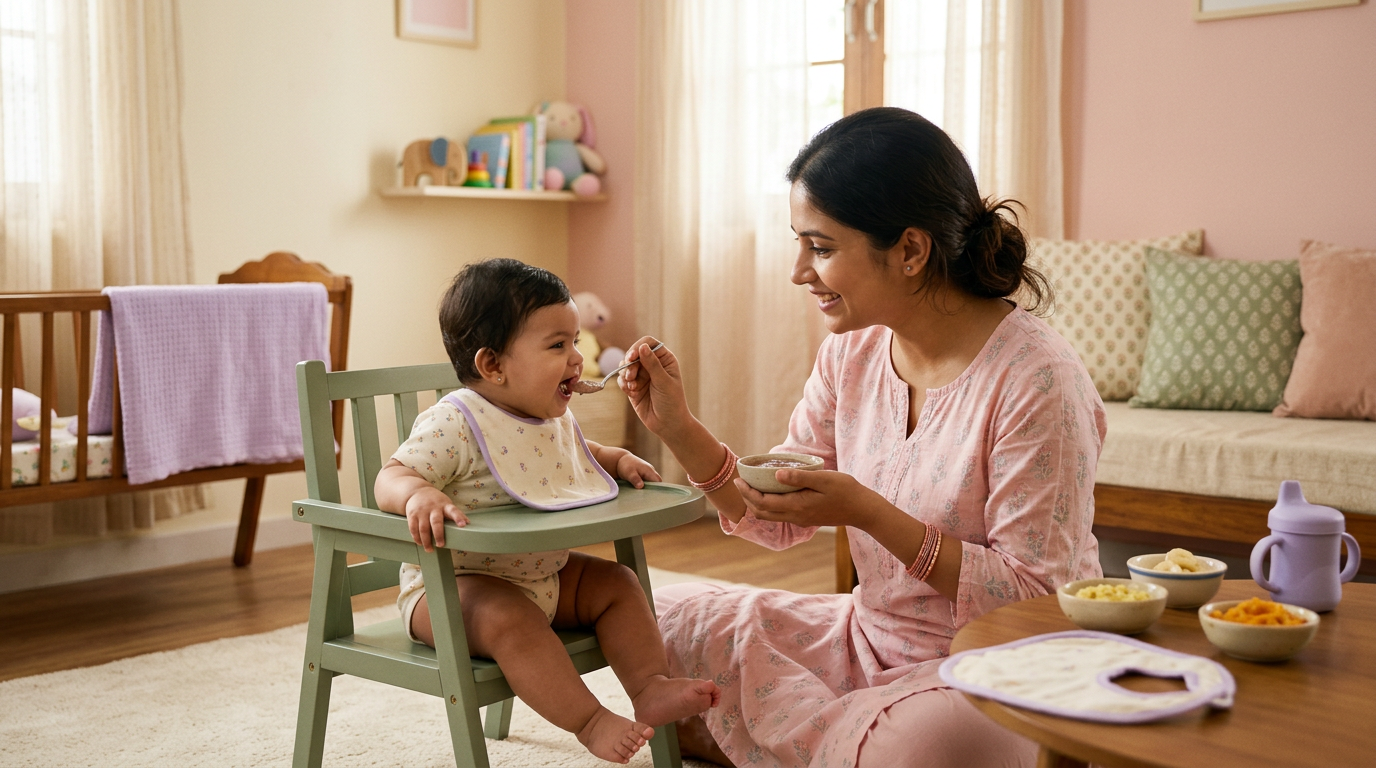
Starting solids is a monumental milestone, but for an Indian mom, it often comes with a side of unsolicited advice from the sasu maa and every neighbor in the colony. Choosing the right first foods for baby indian means moving beyond generic oatmeal to nutrient-dense, culturally rooted options like Ragi, Moong Dal, and seasonal purees. The World Health Organization (WHO) and the Indian Academy of Pediatrics (IAP) recommend exclusive breastfeeding for the first six months, after which "complementary feeding" begins. This isn't just about filling the tummy; it’s about introducing iron, zinc, and diverse textures while your little one is still getting their main nutrition from breast milk or formula.
What are the best first foods for baby Indian traditions recommend?
In India, we celebrate the Annaprashan or Choroonu (rice-eating ceremony), marking the formal introduction of solids. The goal is to start with foods that are easy on the tiny digestive system but high in energy. During this transition, your postnatal recovery (also called postnatal) is likely still a priority, so choosing foods that are easy to prep is a win for both you and the baby.
1. The Super-Grain: Ragi (Nachni/Finger Millet)
Ragi is arguably the gold standard for Indian weaning. It contains 10 times the calcium of wheat or rice and is naturally gluten-free.
* How to serve: Homemade Ragi porridge (sattu) made by soaking, sprouting, and grinding the grain is superior to store-bought versions.
* Pro-tip: Don't add sugar or salt; use a little breast milk or formula to adjust the consistency.
2. The Gentle Protein: Moong Dal Pani
While many start with just the "paani" (water), the IAP now suggests giving the mashed dal itself to ensure the baby gets the actual protein and fibre, not just flavored water.
* Prep: Pressure cook yellow moong dal with a pinch of turmeric until it is "mushy." Blend or mash thoroughly.
* Benefit: Extremely easy to digest and very low risk of allergies.
3. The Energy Booster: Kerala Banana Powder (Ethakka Podi)
Common in South India, sun-dried raw Kerala banana powder is excellent for weight gain. It is cooling and gentle on the stomach. You can track your little one’s progress using a baby growth chart to see how these nutrient-dense foods support their development.
6 Month Baby Food Chart: Starting the Journey
At six months, the "meal" is more of a tasting session. You aren't replacing feeds; you are introducing the concept of swallowing something other than liquid. Following a structured 6 month baby food chart indian helps maintain a routine.
The 3-Day Rule
Introduce one new food at a time and wait for three days. Watch for rashes, loose motions, or excessive gas. This is the safest way to identify any food sensitivities before moving on to a 7 month baby food chart indian.
Texture Progression
* Week 1-2: Silky smooth purees (strained if necessary).
* Week 3-4: Thick, yogurt-like consistency.
* Goal: By the time you reach the 8 month baby food chart indian stage, you should be moving toward mashed (lumpy) textures to encourage chewing.
Essential Nutrients for the Indian Infant Diet
The ICMR (Indian Council of Medical Research) highlights that Indian infants are often at risk for iron-deficiency anemia. While breast milk is perfect, its iron stores begin to deplete around 6 months.
* Iron: Found in Ragi, bajra, and pureed spinach (palak).
* Vitamin C: Essential for iron absorption. Add a few drops of lemon to dal or offer mashed papaya.
Fats: Do not be afraid of Ghee*. A half-teaspoon of desi ghee in their khichdi provides essential fatty acids for brain development.
* Zinc: Found in pulses and legumes.
If you are feeling overwhelmed by the transition or struggling with your own energy levels, remember that your health matters too. Checking your postnatal wellness assessment can help ensure you have the mental and physical bandwidth to handle the messy (but fun!) weaning phase.
Real talk from Indian moms
> "I was so scared of choking that I kept everything watery for too long. My doctor told me at 7 months that if I didn't give him lumps, he'd never learn to chew! We switched to mashed Khichdi, and he loved it."
> — Sunita R., Bengaluru (Mom to 9-month-old Arvan)
> "In our house, we started with Sooji Ki Kheer (without sugar). It was my Nani’s recipe. I just added a little cardamom for flavor, and it’s still my daughter’s favorite comfort food."
> — Meher V., Lucknow (Mom to 1-year-old Zoya)
The "No-Go" List for Babies Under 1 Year
In the Indian context, family members often want to share their tea or biscuits with the baby. Be firm about these boundaries:
When to call your paediatrician
While gagging is a normal part of learning to eat, certain signs require medical attention:
* Allergic Reaction: Hives, swelling of the lips/tongue, or difficulty breathing (Seek emergency care).
* Persistent Vomiting: If the baby cannot keep any food down.
* Chronic Constipation: If the baby hasn't passed stool for several days and seems in pain (often happens with too much rice or low fluid intake).
* Severe Diarrhoea: More than 6-8 watery stools in a day, risking dehydration.
* Refusing all solids: If the baby is over 7-8 months and shows zero interest in any food despite multiple attempts.
Frequently Asked Questions
What are the best first foods for baby Indian families recommend for weight gain?
For healthy weight gain, focus on calorie-dense foods like mashed banana, avocado (if available/affordable), Ragi porridge with a drop of ghee, and well-cooked mashed potato. These provide the necessary fats and carbohydrates for an active 6-month-old.
Can I follow a 7 month baby food chart indian if my baby started solids late?
If you started solids later than 6 months, it is best to spend at least 2 weeks on the 6-month introductory purees before jumping to a 7 month baby food chart indian. The digestive system needs time to adapt to new proteins and fibers regardless of the baby's chronological age.
Is Khichdi included in a 8 month baby food chart indian?
Yes, by 8 months, Khichdi is a staple. In an 8 month baby food chart indian, you should transition from blended khichdi to a well-mashed version that includes various vegetables like carrots, pumpkins, and peas to increase nutrient density.
How much water should a 6-month-old drink?
Once you start first foods for baby indian, you can offer 2-4 ounces (60-120ml) of boiled and cooled water per day in a sippy cup or open cup. This helps prevent constipation as they start eating solids.
When can I introduce spices to my baby's food?
You can introduce mild "aromatic" spices like turmeric (haldi), cumin (jeera), and coriander (dhaniya) as early as 6-7 months. However, avoid spicy heat like red chili powder or green chilies until the baby is much older.
Starting solids is a journey of exploration. Some days they will eat everything, and other days they will wear the food more than eat it. This is perfectly normal. Focus on variety and the joy of eating rather than the quantity. You are doing a great job, Mumma.
I am feeding my baby the best of nature and tradition.
Sources & further reading
- Indian Academy of Pediatrics (IAP) Guidelines on Complementary Feeding
- ICMR-National Institute of Nutrition: Dietary Guidelines for Indians
- WHO: Complementary Feeding Standards
Written by Neha Kapoor, RD (Registered Dietitian, Maternal & Child Nutrition)
Reviewed by TheMamaCircle Editorial Team
Last updated: 4 September 2026
This article is for general information only and is not a substitute for personalised medical advice. Always consult your paediatrician or obstetrician for your specific situation.