Garbh Sanskar Music: A Modern Indian Guide to Fetal Bonding
Explore the science of garbh sanskar music for fetal brain development. Learn about ragas, Indian rituals, and how to bond with your baby in the womb.
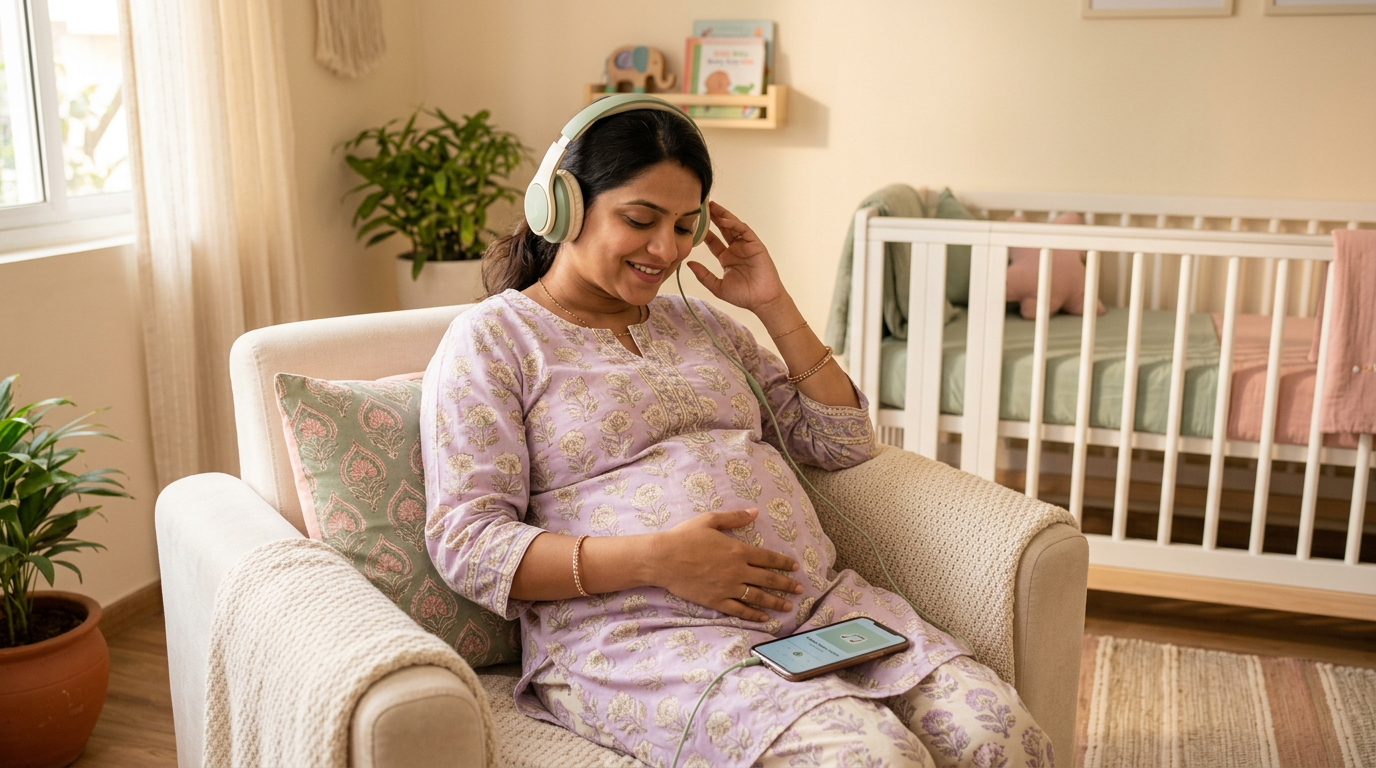
Listening to garbh sanskar music is more than just a cultural tradition; it is a scientifically backed method to stimulate fetal brain development and lower maternal cortisol. In India, we have known for centuries that a mother’s emotional state shapes the child, a concept now supported by the "fetal programming" theory. By choosing specific ragas or calming chants, you are essentially providing the first "classroom" experience for your baby while managing your own stress levels during pregnancy.
What is Garbh Sanskar Music and Why Does it Matter?
The term Garbh Sanskar translates to 'educating the womb.' While the practice encompasses diet, yoga, and positive thinking, music is its most potent tool. Around the 16th to 18th week of pregnancy, the baby’s inner ear is fully formed. By the 24th week, they are actively listening to your heartbeat, your digestion, and external sounds.
Using garbh sanskar music helps in three distinct ways:
If you are just starting your journey, you might want to understand what is garbh sanskar in its entirety, covering everything from shlokas to the Sattvic diet.
The Science of Sound: Ragas and Brain Waves
Indian classical music isn't just about melody; it's about the frequency and the time of day. According to Ayurvedic principles and modern sound therapy, certain ragas resonate with the body's energy centers.
Top Ragas for Pregnancy
* Raga Yaman: Known for its calming effect, it is often recommended for the evening to reduce anxiety.
* Raga Bageshri: Helps in stabilizing the heart rate and inducing deep sleep.
* Raga Malkauns: Often used for mental clarity and strength.
* Raga Kalyani: Popular in South India, it is believed to invoke a sense of joy and optimism.
When you listen to these, you aren't just passing time. You are practicing a form of auditory stimulation that many garbh sanskar classes emphasize as the foundation of fetal communication.
How to Practice Garbh Sanskar Music Daily
You don't need expensive equipment or a 2-hour window. Consistency is better than intensity. Here is how to integrate it into your Indian lifestyle:
The Morning Ritual: Start your day with Mantra Snanam or soft morning ragas like Ahir Bhairav. As you prepare your morning poha or upma*, let the music play in the background.
* Active Listening: Spend 15 minutes in the afternoon sitting in a quiet corner. Don't scroll on your phone. Close your eyes, place your hands on your belly, and focus on the melody.
* The Nightly Lullaby: Before sleeping, listen to a soft flute (Bansuri) track or a slow-tempo chant. This helps in lowering your blood pressure and prepares the baby for a rest cycle.
* DIY Playlists: You don't need to buy expensive CDs. You can find many resources or even a garbh sanskar pdf that lists specific chants for each month of pregnancy.
Pro-tip from Dr. Ritu: Don't put headphones directly on your belly! The amniotic fluid conducts sound very well. Playing music at a normal room volume (around 50-60 decibels) is perfectly safe and effective.
Beyond Music: The Role of Voice and Reading
While garbh sanskar music is excellent, the most beautiful sound for your baby is your own voice. The vibration of your vocal cords is felt directly by the fetus.
If you are feeling overwhelmed by the changes in your body while trying to maintain these rituals, checking your progress with a pregnancy week-by-week tracker can help you stay grounded and motivated.
Nutrition and Environment: The Support System
Music alone cannot work if you are constantly stressed or poorly nourished. The Indian Council of Medical Research (ICMR) emphasizes that maternal nutrition is the bedrock of fetal health.
Sattvic Foods: Incorporate ghee*, soaked almonds, walnuts, and fresh seasonal fruits like mangoes or pomegranates.
Hydration: Drink coconut water (nariyal pani) or buttermilk (chaas*) to keep your energy levels steady.
Avoid 'Rajasic' Stimulants: Limit excessive caffeine and very spicy pickles (achaar*) late at night, as these can make the baby hyperactive and disrupt your "music time."
For a deeper dive into what you should be eating while you listen to your ragas, see our pregnancy nutrition guide.
Real Talk from Indian Moms
> "I used to play Raga Desh every evening after coming home from my IT job in Bengaluru. My baby, Ishaan, is now 6 months old, and whenever he hears that specific flute track, he stops crying and starts searching for the sound. It’s like a secret signal between us." — Priyanka S., Bengaluru (Mom to 6-month-old)
> "My Sasu Maa insisted on me listening to the Vishnu Sahasranamam every morning. Initially, I did it just for her, but I realized it made me so much calmer during my Delhi metro commute. Now, I recommend garbh sanskar music to all my pregnant friends." — Megha R., Delhi (Mom to 1-year-old)
When to Call Your Paediatrician
While garbh sanskar focuses on the pregnancy phase, your awareness should continue into the postnatal period. Contact your paediatrician or neonatologist if you notice:
* The baby does not startle or react to loud noises after birth (potential hearing issues).
* Excessive high-pitched crying that cannot be soothed by the music used during pregnancy.
* Any signs of lethargy or poor feeding in the first few days.
* For immediate concerns about infant crying patterns, you can use an AI cry analyzer to understand if it's hunger, sleep, or colic.
Frequently Asked Questions
What is the best time to start garbh sanskar music?
While you can start anytime, the baby’s hearing begins to develop around week 16. Starting between the 4th and 5th month (second trimester) is ideal to ensure the baby can actively perceive the sounds.
Does garbh sanskar music really make a baby smarter?
While no study guarantees a "genius" baby, research in fetal psychology shows that rhythmic stimulation improves memory and neuro-plasticity. It sets a strong foundation for language acquisition and emotional intelligence.
Can I listen to garbh sanskar music in Hindi?
Absolutely. The language doesn't matter as much as the bhaav (emotion) and the frequency. Whether it is Sanskrit shlokas, Hindi bhajans, or Carnatic music, the goal is to induce a state of "Ananda" (bliss) in the mother.
How loud should the music be?
Keep it at a comfortable conversation level. Avoid loud rock music or high-bass tracks, as these can startle the baby and cause a spike in their heart rate, which is the opposite of what we want to achieve.
Do I need to join garbh sanskar classes for this?
Not necessarily, but classes can provide a structured curriculum and community support. They often teach you specific breathing techniques to pair with the music, which helps significantly during labor.
Is there a garbh sanskar pdf I can follow?
Many Ayurvedic centers provide a month-by-month guide in PDF format. These typically include a list of ragas, dietary changes, and specific mantras to chant for each stage of the baby's organ development.
The journey of pregnancy is your first act of parenting. By choosing to fill your home with the soothing vibrations of garbh sanskar music, you are telling your baby that the world they are entering is beautiful, calm, and welcoming. Trust your instincts, eat your laddu, and let the music do the rest.
I am a strong, calm, and capable mother, and my baby is thriving in my love.
Sources & further reading
- ICMR Guidelines on Maternal Nutrition
- FOGSI Pregnancy Care Protocols
- Ayush Ministry - Garbh Sanskar Guidelines
Written by Dr. Ritu Sharma, MD (Obstetrics & Gynaecology)
Reviewed by TheMamaCircle Editorial Team
Last updated: 22 August 2026
This article is for general information only and is not a substitute for personalised medical advice. Always consult your paediatrician or obstetrician for your specific situation.