Hospital Bag Labour Guide: Checklist for Indian Moms
Pack your hospital bag labour kit like a pro! From jhablas to Gond ke ladoo, here is what Indian moms actually need for a stress-free delivery. read more.
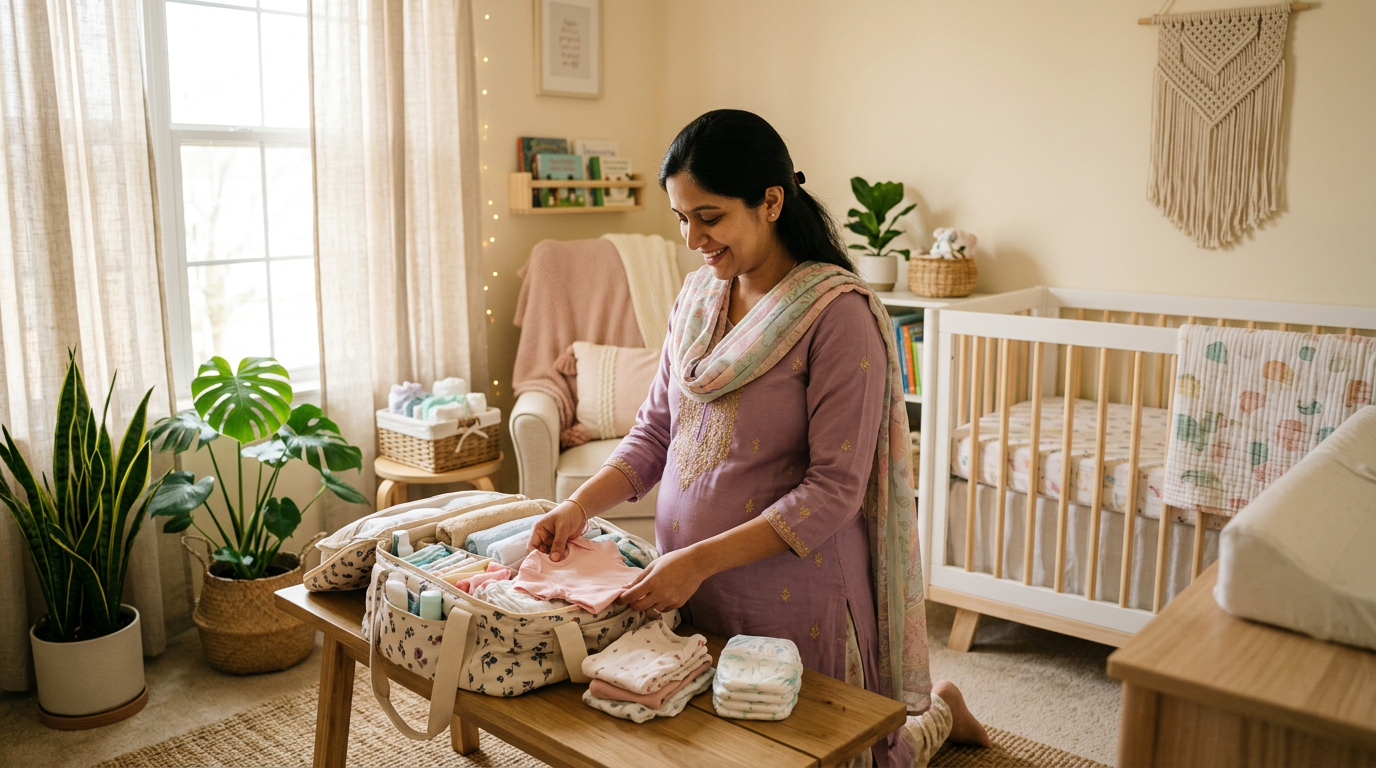
When that first real contraction hits, you won’t be thinking about your toothbrush; you’ll be thinking about meeting your baby. Preparing your hospital bag labour kit by the 34th or 35th week is the best gift you can give your future self. In India, hospital experiences range from high-end private rooms in Apollo or Cloudnine to busy government wards at AIIMS; knowing exactly what to pack—and what the hospital provides—saves you from frantic 2 AM calls to your sasu maa.
What Exactly Goes into a Hospital Bag Labour Kit?
The mistake most Indian moms make is packing like they are going for a week-long vacation. In reality, you need three distinct zones: the Labor Room bag, the After-Delivery bag, and the Baby bag. If you are aiming for a vaginal birth, your hospital bag labour needs focus on comfort and energy. If it’s a planned C-section, the focus shifts to post-op recovery and loose clothing that won't irritate your incision.
1. The Essentials for the Mother
* Documentation Folder: Carry your Aadhar card, TPA/Insurance papers, and every single ultrasound report from the first trimester onwards. Most Indian hospitals require the original "Mother and Child Tracking System" card if you have one.
Labour Gown: While hospitals provide one, many moms prefer their own front-opening cotton kaftans* or old nighties.
* Heavy-Duty Maternity Pads: Normal pads won't cut it for postpartum lochia. Look for brands like NewMom or Friends adult diapers for the first 24 hours.
* Nursing Bras: Pack at least three. Look for non-wired, cotton versions to avoid mastitis.
2. The Indian Hospital Reality: Feeding and Sustenance
Unlike Western countries where "ice chips" are the norm, many Indian doctors allow light liquids during early labour.
* Energy Boosters: Pack a small jar of homemade Gond ke Ladoo or dry fruit mix (dates, almonds) for immediate post-delivery energy.
* Hydration: A reusable water bottle with a straw.
Steel glass and spoon: Many Indian nursing homes expect you to bring your own basic cutlery for the dal-chawal or khichdi* they provide.
Is Your Hospital Bag Checklist for Delivery India-Ready?
When drafting your hospital bag checklist for delivery india, you must account for our climate. Whether it’s the humid monsoon in Mumbai or a freezing Delhi winter, your fabric choices matter.
For the Baby (The "Jhabla" Phase)
The Federation of Obstetric Surgeons of India (FOGSI) and the IAP emphasize keeping the baby warm (thermoregulation) immediately after birth.
* Cotton Jhablas: Pack 6-8 soft, pre-washed cotton vests. Avoid anything with plastic buttons or harsh zippers.
Swaddle Cloths: Simple Mulmul* (muslin) squares are the gold standard. They are breathable and get softer with every wash.
Bamboo or Organic Cotton Diapers: Newborns can go through 10-12 diapers a day. Even if you plan on using cloth langots*, keep a pack of disposable newborn diapers (Size 0) for the hospital stay.
* Quick Dry Sheets: A small (₹250–₹400) waterproof protector sheet is a lifesaver for those accidental leaks on the hospital mattress.
For the Partner/Attendant
In India, the "helper" (usually the husband or mother) often sleeps on a small sofa or a floor mat.
* Toiletries Kit: Your partner needs their own toothbrush, deodorant, and a change of clothes.
* Cash and Change: Small denominations (₹20, ₹50, ₹100) for hospital staff, canteen tea, or medicine runs.
* Chargers and Power Banks: Labor can last 18 hours; you don't want your phone dying right before the "first photo."
Special Requirements for C-Section vs. Normal Delivery
If you are preparing your maternity bag, remember that a C-section stay is usually 3-4 days longer than a vaginal birth.
* For C-Section: Bring high-waisted cotton panties that sit well above the stitch line. You will also need a "belly binder" or abdominal belt (as recommended by your obstetrician) to support your core while walking.
* For Normal Delivery: A small "peri-bottle" (squirt bottle) helps keep the area clean without wiping, which is a relief if you have tears or an episiotomy.
Real Talk from Indian Moms
"I forgot to pack a sweater for myself. Even in the peak of June, the hospital AC in the recovery ward was set to 18 degrees. I was shivering while trying to breastfeed my daughter." — Ananya R., Bengaluru (Baby 4 months)
"Don’t bother with fancy 'coming home' outfits for the baby. My son pooped on his silk romper within five minutes. Stick to 100% cotton jhablas from the local baby shop." — Meera K., Pune (Baby 1 year)
"Bring your own pillow with a bright-colored cover. Hospital pillows are often hard and covered in plastic. Having my own pillow helped me get some actual sleep during the early contractions." — Sana M., Delhi (Baby 7 months)
When to Call Your Paediatrician
Once the baby arrives and you are preparing to leave the hospital, watch for these red flags (as per IAP guidelines):
Poor Sucking: If the baby is not latching or shows no interest in stanpaan* (breastfeeding) for more than 4 hours.
* Jaundice: Golden-yellow tint on the palms or soles of the feet within the first 24 hours.
* Temperature: Anything above 37.5°C or the baby feeling unusually cold to the touch.
* Breathing Issues: Rapid breathing (grunting sounds) or the chest sinking in with every breath.
* Output: Less than 2 wet diapers in the first 24-48 hours.
Frequently Asked Questions
When should I start packing my hospital bag labour kit?
Ideally, have your hospital bag labour essentials ready by 34-35 weeks. Babies can be unpredictable, and you don’t want to be hunting for your insurance card while dealing with active labour.
What should be in a minimalist hospital bag?
If you want to keep your hospital bag light, focus on three things: your medical file, maternity pads, and 3-4 sets of baby clothes. Most other things can be bought from the hospital pharmacy if needed.
Do I need to pack formula in my hospital bag labor?
Generally, no. Indian hospitals (especially those following the Baby Friendly Hospital Initiative) encourage exclusive breastfeeding. If there is a medical need for formula, the hospital will provide it via a spoon or paladay to avoid nipple confusion.
How many clothes should I pack in my maternity bag for the baby?
Pack at least 6 sets. Babies spit up, leak through diapers, or get messy during the first few days of learning to feed. Always include a couple of caps and socks, even in summer, as newborns lose heat through their heads.
Can I carry my own food to the hospital?
Most private hospitals allow homemade food like moong dal khichdi or rotis. However, avoid heavy, oily "delivery foods" immediately. Stick to what your doctor advises for post-op or post-delivery recovery. If you are looking for a complete list, check our hospital bag labor guide for snacks.
Should I bring a breast pump to the hospital?
Unless you have been told otherwise by a lactation consultant, you usually don't need one for a 48-hour stay. Hand expression is often more effective for colostrum (the first yellow milk).
Your hospital bag labour preparation is the final step in your pregnancy journey. Don't overthink it—most things can be managed even if you forget them. Focus on your breathing, trust your body, and soon you'll be holding your little one.
Main ek sashakt maa hoon aur mera sharir is janm ke liye taiyaar hai. (I am a strong mother and my body is ready for this birth.)
Sources & further reading
- Indian Academy of Pediatrics (IAP) - Newborn Care
- FOGSI - Good Clinical Practice Recommendations
- National Health Portal (NHP) India - Maternal Health
Written by Dr. Ritu Sharma, MD (Obstetrics & Gynaecology)
Reviewed by TheMamaCircle Editorial Team
Last updated: 10 July 2026
This article is for general information only and is not a substitute for personalised medical advice. Always consult your paediatrician or obstetrician for your specific situation.