Moral Stories in English with Pictures: Indian Kids' Guide
Looking for moral stories in english with pictures? Explore short bedtime stories for kids that teach honesty, kindness, and wit. Start reading tonight!
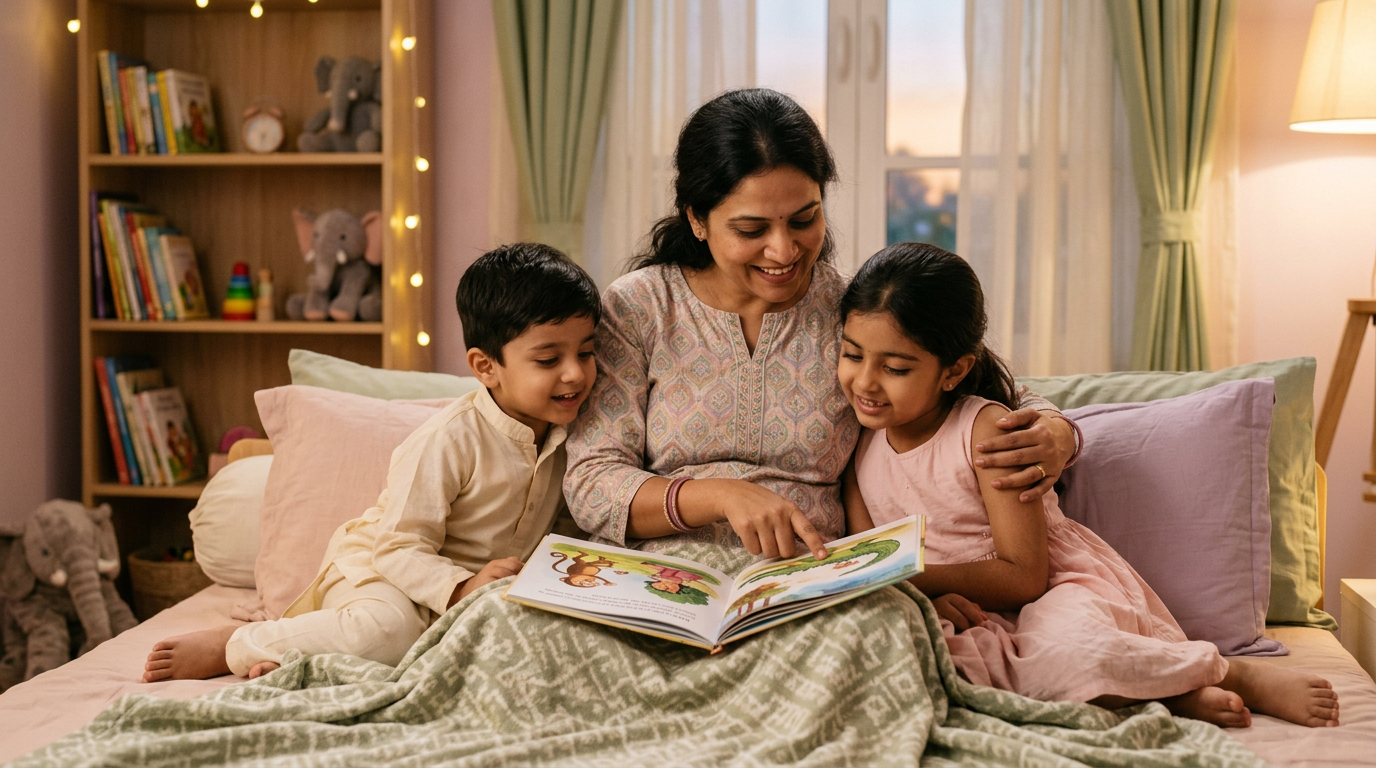
Reading moral stories in english with pictures to your little one is more than just a pre-sleep ritual; it is a powerful tool for cognitive development and emotional bonding. In an Indian household, where values like sanskaar and empathy are woven into our daily lives, these stories act as the first lessons in character building. Whether it is a clever rabbit outsmarting a lion or a thirsty crow using logic, these tales provide the foundation for your child's moral compass while improving their vocabulary and attention span.
Why Moral Stories in English with Pictures Matter for Indian Kids
In our busy lives, the time between dinner and lights-out is often the only window we get for undivided connection. Using moral stories in english with pictures helps bridge the gap between abstract concepts like honesty and the concrete world a child understands. Visuals are crucial for kids under 7 because their brains process images 60,000 times faster than text. When they see the ghada (pot) the crow is dropping pebbles into, the lesson of perseverance sticks.
The Developmental Benefits of Storytelling
* Language Acquisition: Exposure to structured sentences helps toddlers pick up English nuances faster.
* Empathy Building: When kids see a character feeling sad or happy in the illustrations, they learn to identify those emotions in themselves.
* Cognitive Focus: Following a plot from beginning to end improves concentration, which is vital before they start formal schooling.
* Cultural Connection: Even in English, we can choose panchatantra stories that reflect Indian landscapes, animals, and social dynamics.
Timeless Moral Stories for Your Nightly Routine
Here are four classic tales retold for the modern Indian parent. These are perfect bedtime stories for kids that take roughly 5 to 7 minutes to read—the sweet spot for a preschooler’s attention.
1. The Thirsty Crow (Hard Work Pays Off)
Once, a thirsty crow flew all over the fields looking for water. Finally, he saw a pot in a garden. But the water level was too low! Instead of giving up and flying away to find a nalka (tap) that wasn't there, he had an idea. He picked up small pebbles one by one and dropped them into the pot. Slowly, the water rose to the top.
* The Moral: Where there is a will, there is a way.
* Picture Tip: Point to the pebbles and ask your child to count them with you.
2. The Lion and the Mouse (No One is Too Small)
A tiny mouse accidentally woke up a sleeping lion. The lion was angry and ready to eat him, but the mouse begged, "Please let me go, maybe I can help you one day!" The lion laughed but let him go. Later, the lion got caught in a hunter’s net. The little mouse heard his roars and nibbled through the ropes to set him free.
* The Moral: Kindness is never wasted, and size doesn't define strength.
* Picture Tip: Show the contrast between the huge lion and the tiny mouse to discuss how everyone is special.
3. The Boy Who Cried Wolf (The Value of Honesty)
A shepherd boy got bored while watching his sheep and decided to play a prank. He shouted, "Wolf! Wolf!" The villagers ran to help him, only to find no wolf. He did this twice. The third time, a real wolf actually came! The boy screamed for help, but the villagers thought he was lying again and didn't come.
* The Moral: Never tell lies; no one believes a liar even when they speak the truth.
4. The Cap Seller and the Monkeys (Wit Over Worry)
A cap seller was resting under a large banyan tree. When he woke up, all his caps were gone! He looked up and saw monkeys wearing them. He tried shouting, but they just mimicked him. Finally, he took off his own cap and threw it on the ground. The monkeys, being copycats, threw their caps down too!
* The Moral: Thinking calmly can solve the toughest problems.
How Long Should a Bedtime Story Be?
As a paediatrician, I often get asked how much reading is "enough." The goal is to end the day on a calm note, not to finish a whole novel.
* Ages 0-2: 2-5 minutes. Focus on high-contrast pictures and simple sounds.
* Ages 3-5: 5-10 minutes. Use short stories for kids in english with clear morals and repetitive phrases.
* Ages 6-8: 15-20 minutes. You can start "chapter books" or longer bedtime stories where you read one part each night.
If your child is hitting their baby milestones tracker and starting to ask "Why?" at every sentence, congratulations! Their curiosity is peaking. Use that to engage them in the moral of the story.
Setting the Scene for Storytime in an Indian Home
To make moral stories in english with pictures effective, the environment needs to be right.
Real Talk from Indian Moms
"My 4-year-old, Advik, was struggling with sharing his toys during playdates in our Gurgaon society park. We started reading the story of 'The Ant and the Dove' every night. Now, he actually says, 'I am being a kind Dove' when he shares his bat!"
— Preeti S., Gurgaon, Mom to 4-year-old
"We live in a joint family, and nights are loud. Using picture books helps my daughter tune out the Sasu Maa's serials in the next room and focus just on my voice. It’s our little bubble."
— Meenakshi R., Chennai, Mom to 3-year-old
When to Call Your Paediatrician
While storytelling is a joy, sometimes a child's reaction to stories or their behaviour during quiet time can signal underlying issues. Consult your doctor if:
* Your child is over 3 and shows no interest in looking at pictures or following a simple plot.
* They consistently avoid eye contact during storytime.
* They exhibit extreme distress or "night terrors" that make bedtime a source of trauma.
* They struggle significantly with speech compared to peers (refer to IAP guidelines for speech milestones).
* They have persistent trouble staying awake or focusing for even 2 minutes at age 4.
Frequently Asked Questions
Which are the best moral stories in english with pictures for 5-year-olds?
For 5-year-olds, Panchatantra and Aesop’s Fables are perfect. Stories like "The Hare and the Tortoise" or "The Blue Jackal" are excellent because the illustrations are vibrant and the lessons are clear.
How do bedtime stories for kids help in brain development?
Reading bedtime stories for kids stimulates the brain's parietal lobe, which is responsible for processing sensory information and visual imagery. It builds the "mental muscle" required for future reading comprehension.
Are panchatantra stories too complex for toddlers?
Not if you simplify them! Focus on the animals and the basic action. For a toddler, a panchatantra stories retelling should focus on the "Lion goes Roar" and the "Monkey goes Jump" rather than the complex political allegories of the original Sanskrit text.
Can I use short stories for kids in english to teach Indian values?
Absolutely. Even if the language is English, the context can be Indian. You can talk about the importance of Bade Buzurg (elders) or being kind to street animals while reading any story about respect and kindness.
What is the best time for bedtime stories?
Ideally, start the routine 20 minutes before the actual sleep time. This allows the child's heart rate to slow down and transitions them from the "play mode" to "rest mode."
Should I use a tablet or a physical book for stories?
Physical books are always better. According to BIS (Bureau of Indian Standards) safety norms for toys and children's products, physical books offer tactile stimulation that screens cannot provide, without the harmful effects of blue light.
In our journey as parents, we often worry about the big things—schooling, health, and future success. But the smallest moments, like reading moral stories in english with pictures under a cozy quilt, are where the real magic happens. These stories aren't just about the words on the page; they are about the love in your voice.
You are building a beautiful world for your child, one story at a time.
Sources & further reading
- Indian Academy of Pediatrics (IAP) - Nurturing Care for Early Childhood Development
- AIIMS - Importance of Reading to Children for Cognitive Health
- WHO - Guidelines on physical activity, sedentary behaviour and sleep for children under 5 years of age
Written by Dr. Anjali Mehta, MBBS, DCH (Paediatrics)
Reviewed by TheMamaCircle Editorial Team
Last updated: 16 September 2026
This article is for general information only and is not a substitute for personalised medical advice. Always consult your paediatrician or obstetrician for your specific situation.