Newborn Essentials India: The Ultimate Desi Baby Gear Guide
Looking for the ultimate newborn essentials India list? From mulmul jhablas to BIS-safe baby hygiene products, here is exactly what your desi nursery needs.
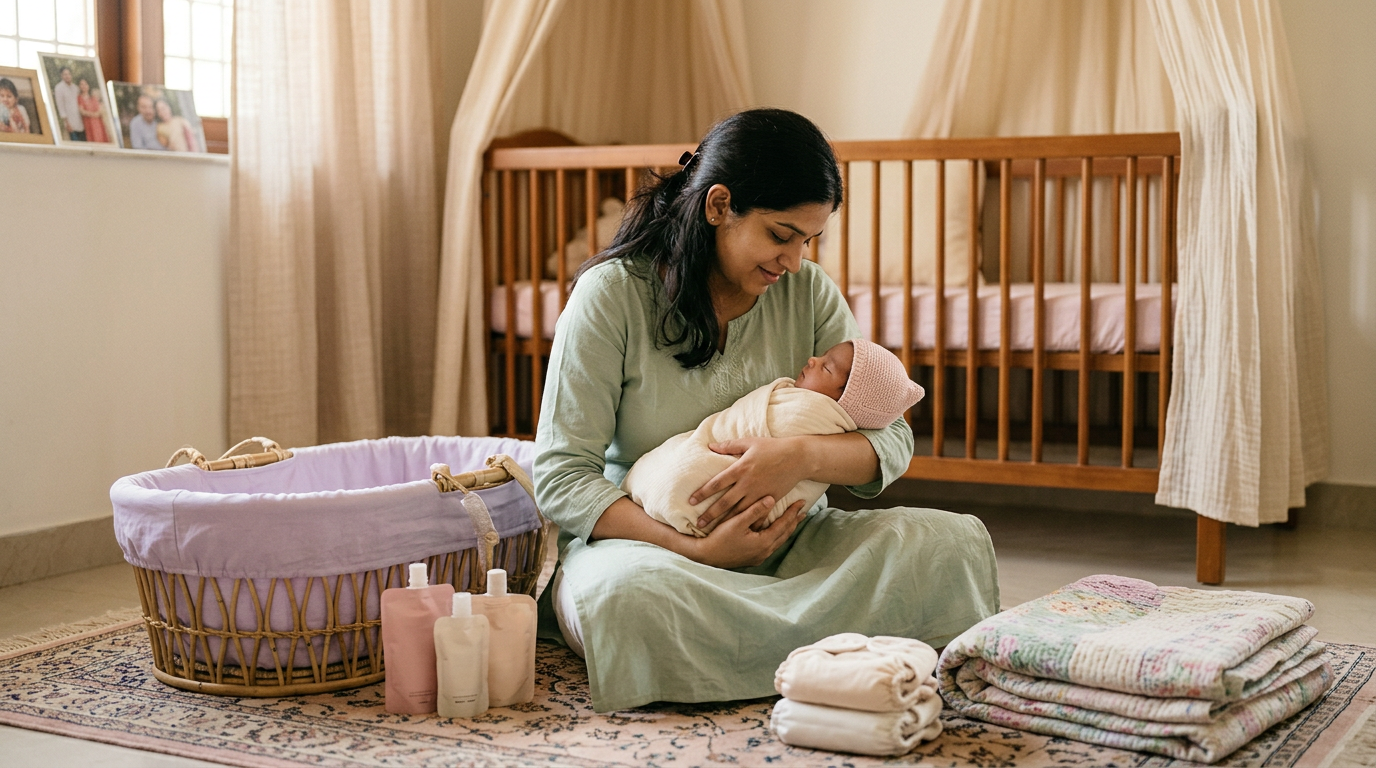
Setting up a nursery for your little one shouldn't feel like solved a complex math equation. If you are looking for newborn essentials India lists that actually work for our humid climate, joint families, and traditional practices, you are in the right place. From the softest mulmul jhablas to the specific BIS-approved hygiene products every Indian household needs, this guide cuts through the marketing fluff to give you what’s truly necessary for those first 40 days and beyond.
The Indian Newborn Wardrobe: Beyond Fancy Onesies
In India, the climate and traditional wisdom dictate what a baby wears. While those Pinterest-perfect velvet suits look cute, they are often too hot for our weather. Focus on breathable, natural fabrics that allow for easy diaper changes and skin-to-skin contact.
Clothing Essentials
* Mulmul Jhablas (8-10): These are the gold standard for newborn essentials India. Traditional cotton jhablas get softer with every wash and prevent heat rashes.
* Cloth Langots (10-12): Even if you plan on using disposables, having soft cotton tie-up langots is essential for "air time" to prevent diaper rash.
* Cotton Caps and Mittens: Even in summer, newborns can lose heat through their heads. Buy lightweight cotton ones, not thick wool unless you are in a Himalayan winter.
* Swaddle Wraps (4-6): Use thin cotton or bamboo muslin. Swaddling mimics the womb and helps prevent the moro (startle) reflex.
* Baby-Safe Laundry Detergent: Look for products certified under IS 4707 standards to ensure no harsh chemicals irritate the baby's thin skin.
Essential Baby Care Items for Daily Hygiene
Hygiene in an Indian household involves more than just a bath. It’s about managing humidity, dust, and the constant stream of visiting relatives (especially during the naming ceremony or Namkaran).
Bathing and Skin Care
* Tear-free Head-to-Toe Wash: Stick to pH-balanced (5.5) cleansers. Avoid heavy scents.
* Maalish Oil: Traditional sesame (til) or coconut oil is excellent. If you prefer brands, ensure they are mineral oil-free. The Indian Academy of Pediatrics (IAP) recommends gentle massage to improve circulation and bonding.
Soft Cotton Bath Towels: Also known as topis* or hooded towels to keep the head warm immediately after a bath.
* Baby Nail Scissors or Electric File: A newborn's nails grow surprisingly fast and are sharp enough to scratch their delicate faces.
Diapering and Sanitation
* Eco-friendly Disposables or Modern Cloth Diapers: If using disposables, look for brands with a wetness indicator.
* Water-based Wipes: Or simply use cotton balls soaked in warm water, which is the gentlest method for the first few weeks.
* Barrier Cream: Look for zinc oxide-based creams to treat redness immediately.
What are the most important baby care essentials for Indian homes?
When we talk about baby care essentials, we must account for the "Indian factor"—oil massages, humid summers, and the inevitable kaala teeka. Safety is paramount; ensure any plastic toys or feeders are BPA-free and meet IS 9873 safety standards.
Feeding and Support
Nursing Pillows: These are life-savers for your back during those 20-minute stanpaan* (breastfeeding) sessions.
* Burp Cloths (10-12): You can never have enough. Use old soft dupattas cut into squares if you want to be sustainable!
* Breast Pump: Useful if you need to relieve engorgement or if you plan to return to work.
* Sterilizer: Whether it's an electric one or a simple big pot for boiling (the traditional way), ensure all feeding equipment is sterile.
If you are currently recovering from birth while managing these essentials, don't forget your own health. Keeping track of your recovery is just as vital as the baby's gear. You might find our lochia analyzer helpful to ensure your postpartum bleeding is progressing normally.
Sleep and Safety: Creating a Safe 'Garbh' Outside the Womb
Safe sleep is a non-negotiable part of baby essentials. Many Indian families co-sleep, but the IAP recommends "room-sharing, not bed-sharing" to reduce the risk of SIDS (Sudden Infant Death Syndrome).
* Firm Crib or Bassinet: The surface must be flat and firm with a snugly fitted sheet.
* Mosquito Net: In India, this is a top-priority item. Whether it’s a standalone net or a "tent" style that overarches the crib, it protects against malaria and dengue.
* Dry Sheets: These waterproof, breathable undersheets are a godsend for midnight leaks, protecting your mattress.
* Baby Monitor: Useful if you live in a large house or have thick walls that muffle sound.
While you monitor your baby's sleep, keep an eye on their growth milestones using our baby growth chart to see how they compare to WHO standards for Indian children.
Real Talk from Indian Moms
> "I spent 5,000 Rupees on a fancy diaper bag, but honestly? I used my old gym bag and spent that money on high-quality organic mulmul jhablas. The heat in Chennai is no joke, and the baby was only comfortable in thin cotton."
> — Priya S., Chennai (Mom to 4-month-old)
> "Living in a joint family, everyone wanted to hold the baby. My must-have was actually an alcohol-free hand sanitizer station at the door and a good baby carrier so I could keep him close and away from 'over-handling' during the first month."
> — Meeta V., Pune (Mom to 6-month-old)
Must-Have Baby Hygiene Products for Health
The Indian environment can be dusty and prone to seasonal infections. Your toolkit should include:
If you are feeling overwhelmed by the transition to motherhood, please take a moment for yourself. Our postpartum wellness assessment can help you check in on your mental and emotional health during this intense period.
When to Call Your Paediatrician
Always keep your doctor's number on speed dial. Watch for these red flags:
* Fever: Any temperature above 100.4°F (38°C) in a newborn.
* Feeding Issues: If the baby refuses 2-3 consecutive feeds or seems too lethargic to suck.
* Dehydration: Fewer than 6 wet diapers in 24 hours.
* Jaundice: Yellowing of the skin or the whites of the eyes that seems to be increasing.
* Respiratory Distress: Fast breathing (more than 60 breaths per minute) or rib retractions (skin pulling in around the ribs).
* Changes in Stool: If the stool contains blood, mucus, or is consistently watery/green.
Frequently Asked Questions
Which baby care items are essential for the first month?
In the first month, focus on the basics: 10-12 cotton jhablas, 2-3 packs of newborn diapers, a digital thermometer, nasal drops, a firm sleep surface with a mosquito net, and mild, fragrance-free cleanser for sponges baths until the umbilical cord falls off.
What are the best newborn essentials India specific for summer babies?
For Indian summers, prioritize lightweight mulmul cotton clothing, dry sheets to prevent sweating against plastic mattresses, and prickly heat powder (only if recommended by your doctor, applied away from the face). Hydration for the mother is also key if breastfeeding.
How many baby care essentials should I buy before the birth?
Don't overbuy! Stock up on enough for the first 2 weeks (about 10 outfits, 100 diapers, 2 packs of wipes). You will receive many gifts, and you'll quickly realize which brands and styles work best for your baby's specific shape and skin type.
Are traditional maalish oils considered safe baby care items?
Yes, the IAP supports oil massage. However, ensure the oil is pure. Virgin coconut oil is generally safest for most Indian skin types. Avoid mustard oil in the summer as it can be too "heating" and irritating for some newborns.
What baby hygiene products are needed for umbilical cord care?
Actually, the current recommendation from most Indian paediatricians is "dry cord care." You generally don't need specific products; just keep the area clean and dry, and Ensure the diaper is folded down so it doesn't rub against the stump.
While picking out these newborn essentials India items, remember that the most important thing your baby needs isn't in a store—it's you. Your touch, your voice, and your scent are the ultimate essentials. You are exactly what your baby needs.
Maa, you’ve got this—one diaper change at a time.
Sources & further reading
- Indian Academy of Pediatrics (IAP) Guidelines on Newborn Care
- Bureau of Indian Standards (BIS) - Safety of Toys/Child Products
- WHO - Postnatal Care of the Mother and Newborn
- National Health Portal of India - Newborn Care
Written by Dr. Anjali Mehta, MBBS, DCH (Paediatrics)
Reviewed by TheMamaCircle Editorial Team
Last updated: 26 July 2026
This article is for general information only and is not a substitute for personalised medical advice. Always consult your paediatrician or obstetrician for your specific situation.