Postnatal Period Guide: Recovery & Meaning for Indian Moms
Understand the postnatal period (postnatal) in India. Learn about Jaapa, Pathyam, and healing week-by-week. Recovery starts here—you've got this, Mama!
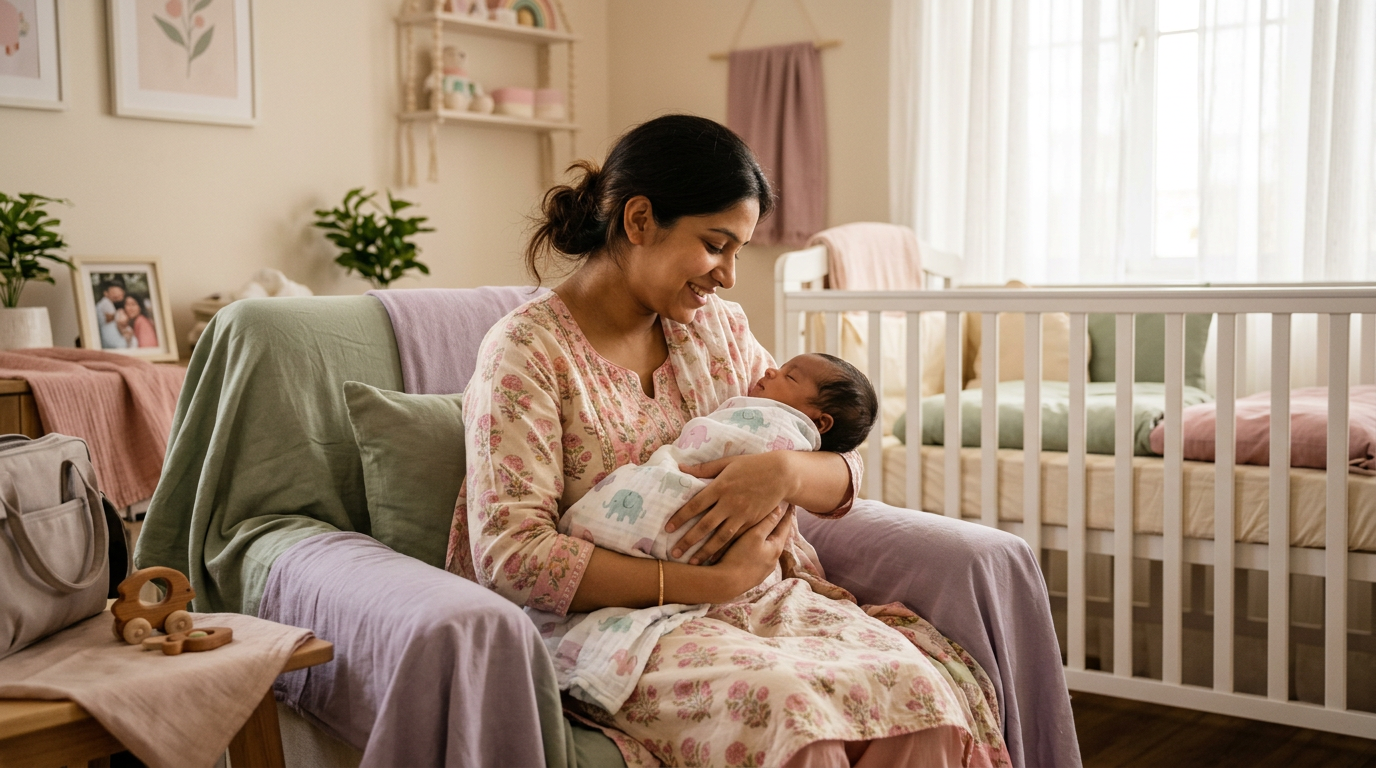
The postnatal period, often referred to by doctors as the postnatal period, is the six-week window (approximately 42 days) following childbirth. In India, we culturally recognize this as the Jaapa or Sutak period in the North, and Prasava Kaalam in the South. This is the time when your body undergoes intense physiological changes to return to its non-pregnant state. While your dadi or nani might focus on the traditional 40-day rest, medically, it is a critical recovery phase where your uterus shrinks, your hormones shift dramatically, and your surgical or vaginal wounds begin to heal.
What is the Postnatal Period and How Long Does It Last?
Technically, the postnatal period starts the second the placenta is delivered. While the first six weeks are the most intense, modern obstetrics (and most Indian moms who have been through it) will tell you that true recovery takes much longer. We often divide this time into three distinct phases:
* The Initial Phase: The first 24 hours after delivery. This is when the risk of clinical complications like postpartum haemorrhage is highest.
* The Early Phase: From day 2 to the end of week one. This is when your milk "comes in," lochia (postnatal bleeding) is heavy, and "baby blues" might peak.
* The Remote Phase: Week two through week six. This is when your uterus (garbh) returns to its pelvic position and you typically have your six-week postnatal check-up.
For many women in India, this time is defined by Pathyam (strict postnatal diet) and the presence of a Jhai or Maalish-wali who helps with traditional oil massages. While these traditions have merit, understanding the postnatal meaning from a biological perspective helps you advocate for your health when your family says "it’s just normal tiredness."
Physical Changes: What to Expect in Your Body
Your body doesn't just "bounce back"; it recalibrates. Whether you had a normal delivery or a C-section, the internal changes are monumental.
Uterine Involution
Immediately after birth, your uterus weighs about 1 kg. By the end of the postnatal period, it weighs only 60-100 grams. You will feel "afterpains"—cramps that feel like mini-contractions—especially while breastfeeding, as oxytocin helps the uterus shrink.
Postnatal Bleeding (Lochia)
You will experience vaginal discharge called lochia. It starts bright red (Lochia Rubra), turns pinkish-brown (Serosa), and ends as yellowish-white (Alba). If you are unsure if your bleeding is normal, you can use a lochia analyzer to track your progress and ensure you aren't passing large clots.
The C-Section Scar or Episiotomy
If you had a C-section, you aren't just a new mom; you are a surgical patient. In India, C-section rates are rising, and proper wound care is vital to prevent postpartum sepsis. Keep the area dry and watch for redness or oozing. For those worried about their incision healing, a scar analyzer can provide peace of mind regarding the appearance of the keloid or scar tissue.
Mental Health: Beyond the "Baby Blues"
In India, we often celebrate the baby so much that the mother’s mental health is sidelined. You might hear, "You have a healthy baby, why are you crying?" This ignores the reality of hormonal crashes.
* Baby Blues: Affects up to 80% of Indian moms. It usually passes by day 10.
* Postnatal Depression: This is a clinical condition requiring therapy or medication. It doesn't mean you are a bad mother; it means your brain chemistry needs support.
* Postpartum Psychosis: A rare but severe emergency involving hallucinations or delusions. This requires immediate hospitalization.
If you find yourself feeling disconnected or constantly anxious, taking a postnatal wellness assessment is a brave first step toward getting help.
Regional Perspectives: Postnatal Meaning in Hindi, Tamil, and Telugu
Understanding the postnatal period often involves translating medical advice into the language spoken at home. In many Indian households, the terminology used by elders dictates the care you receive.
Postnatal meaning in Hindi: Often referred to as Sutak or the Jaapa period. The focus is on Gondh ke ladoo, Ajwain water, and keeping the body "warm" to prevent vaat* (wind) from entering the body.
Postnatal meaning in Tamil: Known as Prasava Kaalam. Traditional care involves Pathyam food—very simple, non-spicy meals often including Manathakkali keerai (black nightshade leaves) to heal stomach ulcers and Suraikai* (bottle gourd) for hydration.
Postnatal meaning in Telugu: Usually called Purudu. The focus is on the Vepudu* (fry) powders made with garlic and lentils, believed to help in uterine cleansing and lactation.
Regardless of the language, the postnatal meaning in hindi or postnatal meaning in tamil always centers on one truth: the mother needs as much "mothering" as the baby does.
Nutrition and Recovery in the Indian Context
The Indian postnatal diet is legendary for a reason—it focuses on calorie-dense, easy-to-digest foods. The Federation of Obstetric and Gynaecological Societies of India (FOGSI) emphasizes iron and calcium supplementation for at least three months postnatal.
Avoid the pressure to "lose the weight" immediately. Your body needs these nutrients to heal the internal wound where the placenta was attached—a wound roughly the size of a dinner plate.
Real Talk From Indian Moms
"Everyone told me the 40 days of Jaapa would be like a spa. It wasn't. The maalish was painful at first, and I felt so guilty for crying when my son was sleeping. Knowing it was just my hormones helped me stop blaming myself."
— Ananya R., Mumbai (Baby aged 3 months)
"In our house, the Purudu rituals were very strict. I wasn't allowed to wash my hair for two weeks! While some of it felt outdated, having my mother-in-law handle all the cooking allowed me to focus entirely on breastfeeding."
— Lakshmi V., Hyderabad (Baby aged 5 months)
When to Call Your Paediatrician
While this guide focuses on you, your recovery is tied to your baby's health. Call your paediatrician (or a neonatologist) if your newborn shows:
* Jaundice: Yellowing of the skin or eyes (common, but needs monitoring).
* Poor Feeding: If the baby isn't latching or seems too lethargic to wake up for feeds.
* Fever: Any temperature above 100.4°F (38°C) in a newborn is an emergency.
* Dehydration: Fewer than 6 wet nappies in 24 hours after the first week.
* Umbilical Cord Redness: If the stump smells bad or the skin around it is red.
Frequently Asked Questions
What is the postnatal meaning in hindi?
In Hindi, the postnatal period is often called the Jaapa or Sutak period. It refers to the time of recovery and confinement after delivery, traditionally lasting 40 days, where the mother is given special foods like halwa and ladoos to regain strength.
What is the postnatal meaning in tamil?
In Tamil, the term is Prasava Kaalam or Theettu (in a ritual context). It signifies the recovery window after birth where specific Pathyam (dietary rules) are followed and the mother is given Prasava Legiyam to aid digestion and uterine health.
What is the postnatal meaning in telugu?
In Telugu, the postnatal period is known as Purudu. It involves specific ceremonial baths for the mother and baby (typically on day 11 or 21) and a diet rich in garlic and kura (curries) that avoid "cold" foods.
How long does the postnatal period actually last?
Medically, the acute postnatal period lasts 6 to 8 weeks. However, many experts now refer to the "Fourth Trimester," suggesting that full physical and emotional recovery can take 6 to 12 months.
When can I start exercising after delivery?
For a vaginal delivery, gentle walking can start within days. For a C-section, wait for your 6-week check-up. Always perform a free diastasis recti self-check before starting abdominal exercises to ensure your core muscles have realigned.
Is it normal to lose hair during this time?
Yes, this is called telogen effluvium. During pregnancy, high oestrogen keeps your hair from falling. After birth, those levels drop, and all that "saved" hair falls out at once. It usually stabilizes by the baby’s first birthday.
The postnatal period is not just a gap between being pregnant and being a "normal" person again. It is a transformative bridge. You are learning to nourish a new life while your own body literally knits itself back together. Be patient with your progress, eat your ladoos without guilt, and remember: you are doing the hardest work there is.
I am a mother, I am healing, and I am exactly what my baby needs.
Sources & further reading
- FOGSI Postpartum Care Guidelines
- NHP India: Postnatal Care
- WHO Recommendations on Postnatal Care of the Mother and Newborn
- ICMR Nutritive Value of Indian Foods
Written by Dr. Ritu Sharma, MD (Obstetrics & Gynaecology)
Reviewed by TheMamaCircle Editorial Team
Last updated: 2 September 2026
This article is for general information only and is not a substitute for personalised medical advice. Always consult your paediatrician or obstetrician for your specific situation.