Postnatal Recovery Kit India: Essential Postnatal Guide
Setting up a postnatal recovery kit India edition? From maternity pads to jaapa oils, here is your essential guide to healing after birth for Indian moms.
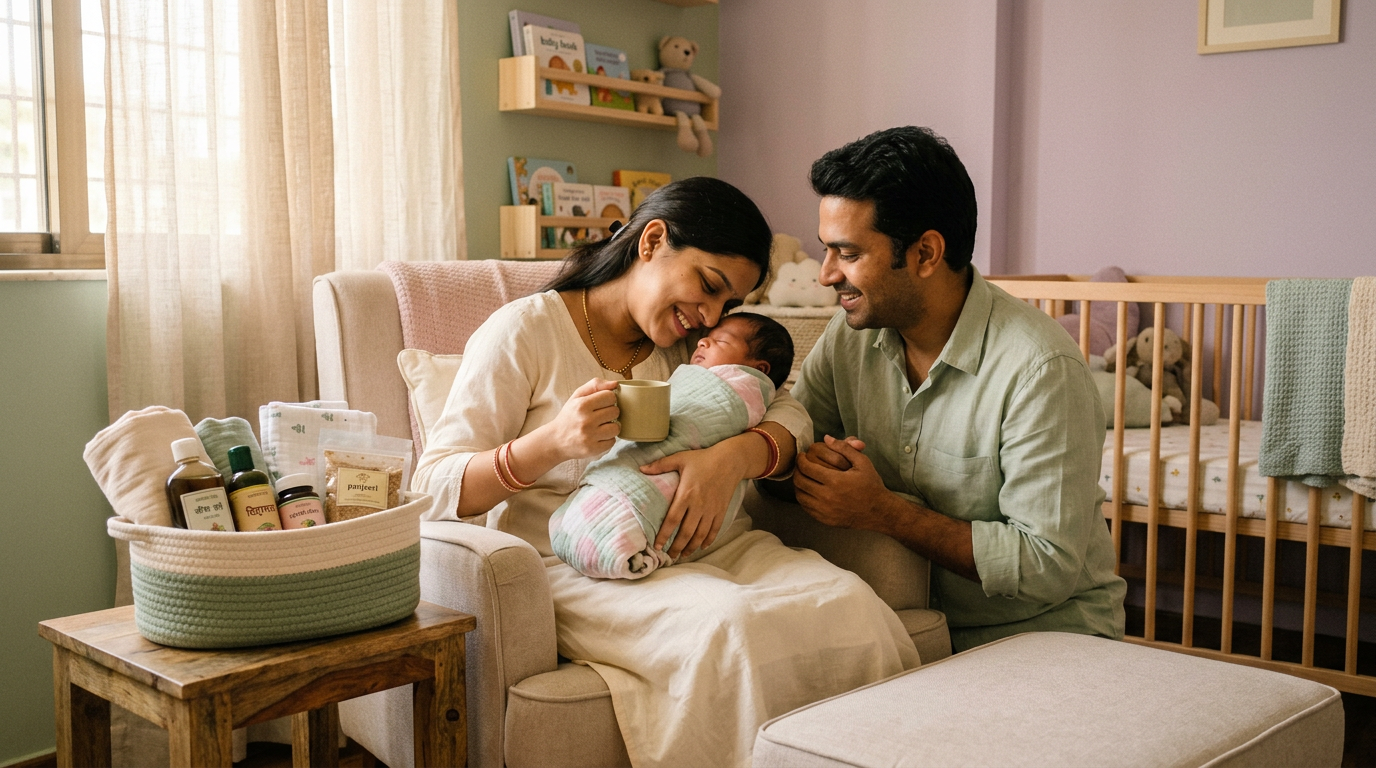
Setting up your postnatal recovery kit India edition means preparing for the "fourth trimester" with the same intensity you used for your godh bharai or baby shower. In India, we call this period Sutika Kaal or the Jaapa period, traditionally lasting 40 days. While your elders might focus on ajwain ka paani and heavy woollens, your modern recovery needs a blend of clinical hygiene and traditional comfort. This kit ensures you handle the lochia, the stitches, and the hormonal shifts without a midnight panic.
What is a Postnatal Recovery Kit India Edition?
A postnatal recovery kit India is a curated box of essentials that addresses physical healing, breastfeeding (stanpaan) support, and emotional well-being immediately after childbirth. Unlike the generic lists you see online, an Indian kit must account for our climate, our traditional diet, and the specific ways our healthcare system operates.
Whether you are aiming for a postnatal recovery after a vaginal birth or a C-section, your kit serves as your "survival station" usually placed right next to your bed or in your bathroom.
The Hygiene Essentials (The "Down There" Care)
The Nursing and Breast Care Toolkit
* Lanolin-free Nipple Butter: Brands like Mamaearth or The Moms Co offer nipple butters that don't need to be washed off before feeding.
* Cotton Nursing Bras: Buy at least 4-5. Your size will fluctuate significantly in the first month.
* Breast Pads: Washable bamboo inserts are more breathable for Indian summers than disposable plastic-backed ones.
* Silicone Manual Pump: Often called a "Haakaa," this is a lifesaver for catching let-down on the opposite breast while baby feeds.
Postnatal Recovery After C-Section: Specific Additions
If you are preparing for a postnatal recovery after c section, your kit needs a few surgical-specific tweaks. Your focus is on protecting the incision and managing gas pain (a common post-op woe in India).
* Abdominal Binder: A soft, adjustable belt that provides compression. Check with your OB-GYN before use, but most Indian doctors recommend it after the first week to support the "empty" feeling in the abdomen.
* High-Waisted Cotton Briefs: You want the waistband to sit far above your bikini-line incision to avoid friction.
* Scar Gel: Once the staples or sutures are removed, silicone-based gels (like Dermatix) are often recommended by Indian dermatologists to minimize scarring. You can use our scar analyzer to check your healing progress.
* Stool Softeners: The first bowel movement after a C-section is famously terrifying. Keep doctor-prescribed syrups (like Cremaffin) handy.
The Traditional Jaapa Essentials (With a Modern Twist)
Indian recovery is incomplete without the wisdom of our grandmothers, but we filter it through medical science.
1. The Maalish Oil
A daily maalish (massage) by a dai or a family member is a cornerstone of Indian postnatal care. Look for Ayurvedic oils containing Dhanwantharam Thailam or simple cold-pressed sesame oil. It improves circulation and helps with the postnatal recovery time by reducing body aches.
2. The Binding Cloth (Belly Wrapping)
While many modern moms prefer elastic binders, the traditional Saree or cotton mulmul wrap is still widely used. This "Bandhan" provides back support, though it does not "shrink the uterus"—that happens naturally thanks to oxytocin.
3. Nutrition and Galactagogues
Your kit should include a jar of homemade Gondh ke Laddoo or Methi (fenugreek) preparations. These are calorie-dense and help with milk production. Ensure you have a 2-litre copper or steel water bottle by your side at all times. Hydration is the most underrated part of the postnatal recovery process.
Real talk from Indian moms
> "I thought I just needed diapers for the baby. I didn't realize I'd be wearing adult diapers too! My postnatal recovery kit India must-have was definitely the electric heating pad for my back and the peri-bottle."
> — Ananya S., Bengaluru (Mom to 3-month-old)
> "My Sasu Maa insisted on no fan and heavy blankets in 35-degree Mumbai heat. My doctor helped me compromise: cotton clothes and a moderate AC setting. My kit included a lot of cooling talc-free powder for skin folds!"
> — Meera K., Mumbai (Mom to 6-week-old)
Understanding the Postnatal Recovery Time in India
The postnatal recovery time is not a race. While the 40-day Jaapa suggests you are "done" by 6 weeks, internal healing—especially of the pelvic floor and abdominal wall—takes 6 to 12 months.
In India, we often face pressure to "get back to shape" for family events or weddings. However, jumping into postnatal recovery exercises too early can lead to pelvic organ prolapse or worsening of Diastasis Recti.
* Weeks 1-2: Pelvic tilts and gentle walking inside the house.
* Weeks 3-6: Deep diaphragmatic breathing (Belly Breathing).
* Post 6 Weeks: After your OB-GYN clearance, you can start a free diastasis recti self-check and begin structured core rehab.
Estimated Budget for your Kit
A comprehensive postnatal recovery kit India will typically cost between ₹3,000 and ₹7,500 depending on the brands you choose.
* Hygiene basics: ₹1,500
* Breastfeeding tools: ₹2,500
* Traditional oils/foods: ₹2,000
* Comfort wear: ₹1,500
When to Call Your Paediatrician (and your OB-GYN)
While the kit helps with physical comfort, you must watch for clinical red flags. As per IAP (Indian Academy of Paediatrics) and FOGSI guidelines, seek help immediately if:
For the Mother (Call your OB-GYN):
Fever: Temperature above 100.4°F (38°C) which could indicate postpartum endometritis or postpartum sepsis*.
* Heavy Bleeding: Soaking more than one large pad every hour.
* Leg Pain: Swelling or redness in one calf (potential DVT).
Severe Headache: That doesn't go away with rest (sign of postpartum preeclampsia*).
Mental Health: Feeling "checked out," unable to bond, or having scary thoughts (signs of postnatal depression or postpartum psychosis*). You can take a postnatal wellness assessment for a quick check.
For the Baby (Call your Paediatrician):
* Jaundice: Deep yellowing of the skin or whites of the eyes.
* Poor Feeding: Baby is too sleepy to wake up for feeds or cannot latch.
* Dehydration: Fewer than 6 wet diapers in 24 hours (after day 5).
* Umbilical Cord: Redness, foul smell, or pus at the cord site.
* Crying: Inconsolable crying that sounds like pain (use our AI cry analyzer to help identify the type of cry).
Frequently Asked Questions
How long is the postnatal recovery time for Indian moms?
The initial healing of the uterus and skin takes about 6 weeks. However, full postnatal recovery time for bones, muscles, and iron stores can take up to a year. In India, the 40-day rest period is a great start, but don't expect to be "100%" the day it ends.
What should I include in a postnatal recovery after c section kit?
Besides standard hygiene, include a silicone scar sheet, high-waisted cotton panties, a small pillow to hold against your tummy when you cough or laugh, and a stool softener. Avoid lifting anything heavier than your baby for the first 6 weeks of postnatal recovery after c section.
When can I start postnatal recovery exercises in India?
Most Indian doctors advise waiting until the 6-week check-up. You can start gentle walking and Kegels within the first week if you feel up to it, but avoid heavy lifting or crunches. Always check for Diastasis Recti before starting any postnatal recovery exercises.
Is a "Bandhan" (belly wrapping) necessary for recovery?
It is not medically necessary for "shrinking" the belly, but it provides excellent postural support for your back during breastfeeding. Use a soft cotton cloth and ensure it is not so tight that it pushes your pelvic floor downwards.
Can I eat normal food during postnatal recovery?
While traditional Pathyam (dietary restrictions) are common, the ICMR (Indian Council of Medical Research) recommends a diverse diet. You need an extra 500-600 calories if breastfeeding. Include lentils, ghee, green leafy vegetables, and plenty of fluids.
Your recovery is just as important as the baby's growth. By preparing your postnatal recovery kit India essentials ahead of time, you give yourself the grace to heal without stress. Your body has performed a miracle; now, let it rest.
"I am healing a little more every day, and my strength is returning in its own time."
Sources & further reading
- FOGSI Postpartum Care Guidelines
- IAP Guide for Parents: Postnatal Care
- ICMR Dietary Guidelines for Lactating Mothers
- WHO Postnatal care of the mother and newborn
Written by Dr. Ritu Sharma, MD (Obstetrics & Gynaecology)
Reviewed by TheMamaCircle Editorial Team
Last updated: 6 August 2026
This article is for general information only and is not a substitute for personalised medical advice. Always consult your paediatrician or obstetrician for your specific situation.