Postpartum Recovery After C Section: 6-Week India Guide
Recovering from a C-section in India? From Jaapa traditions to medical milestones, here is your guide to postpartum recovery and 6-week healing tips.
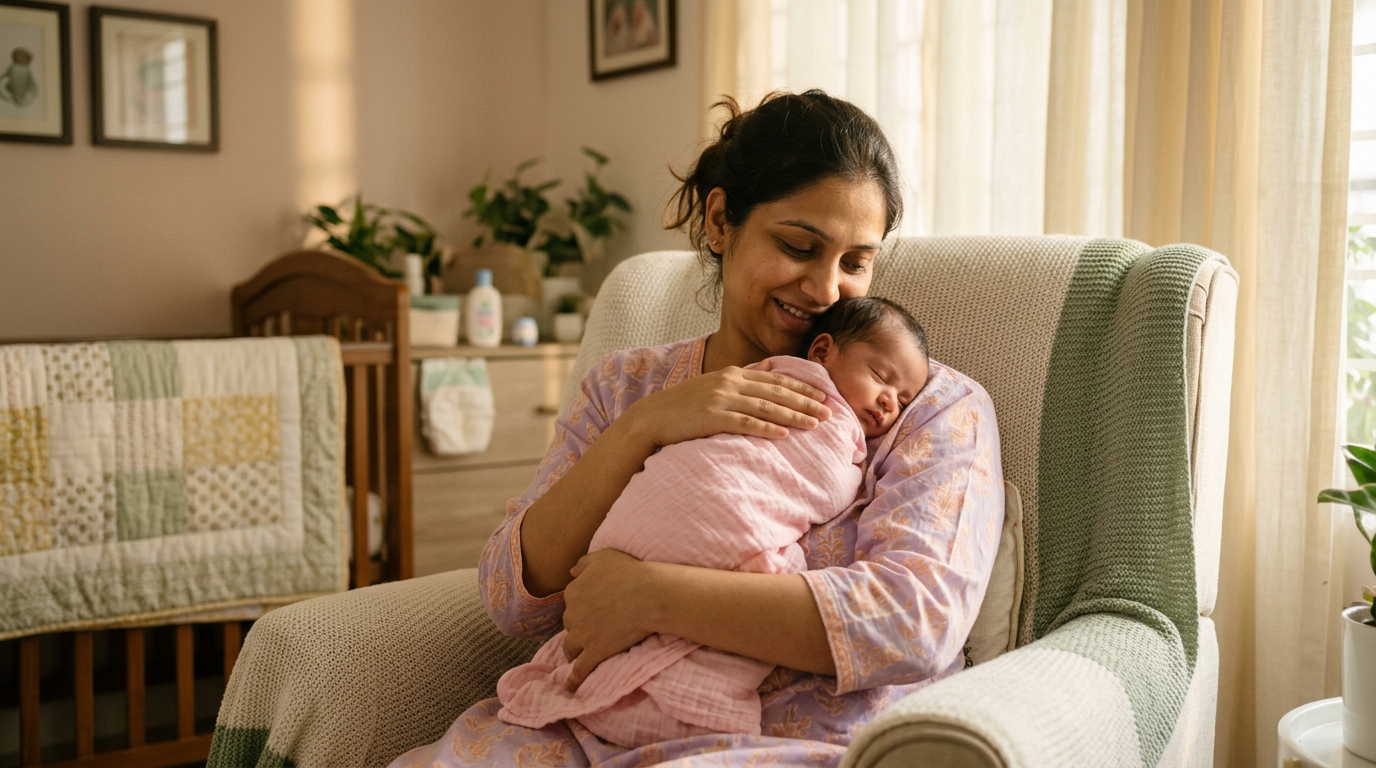
Postpartum recovery after c section: Your 6-week Indian guide
If you just had a cesarean delivery, you aren’t just recovering from childbirth; you are recovering from major abdominal surgery while keeping a tiny human alive. Real postpartum recovery after c section in an Indian household is a unique blend of modern medical advice and the traditional 40-day Sawa Mahina (confinement) period. While your Sasu Maa might insist on no fans and gallons of Ghee, your doctor wants you walking to prevent blood clots. Balancing both is the key to healing faster and stronger.
Healing typically takes 6 to 8 weeks, but the "fog" begins to lift significantly by day 10. This guide breaks down the clinical milestones and the cultural nuances of recovering in India.
How long does postpartum recovery after c section take in India?
The standard postpartum recovery time for a C-section is technically 6 weeks for the uterine incision to heal, but "feeling like yourself" can take 6 months to a year. In India, we often follow the Jaapa tradition, which provides 40 days of protected rest. While we don't support the "no bathing" myths, the structured rest of Jaapa is actually scientifically sound for tissue repair.
The Timeline of Healing
* Days 1-3 (Hospital): Focus on pain management and passing gas (the "Golden Fart"). Nurses will help you sit up.
Week 1-2 (Home): Skin incision closes. You’ll transition from heavy painkillers to Paracetamol. Focus on postpartum recovery food like Daliya and Moong Dal Khichdi*.
* Week 6: The internal sutures are generally secure. This is when your OB-GYN will likely clear you for light activity.
The Indian 'Jaapa' vs. Medical Reality: What stays and what goes?
In many Indian homes, the arrival of a baby triggers a whirlwind of traditions. Not all are created equal when it comes to postpartum recovery after c section.
1. The Maalish (Massage) Debate
Traditional Maalishwalis are experts at lymphatic drainage, but they can be aggressive.
* The Rule: You can start leg and arm massages a week after birth, but avoid the abdomen for at least 6 weeks. A C-section incision is a deep wound; any vigorous rubbing can lead to a hernia or wound dehiscence.
* The Oil: Use simple coconut or sesame oil. Avoid "secret" herbal oils that might irritate the skin.
2. The 'Bandhan' (Belly Wrapping)
You’ll likely be told to tie a cotton saree or dupatta around your waist.
* Modern Take: Don't do this to "get your shape back"—it doesn't work that way. However, a medical-grade abdominal binder (costing ₹800–₹2,500) provides excellent support for the incision, making it less painful to cough, sneeze, or laugh. It provides the stability your core lacks right now.
3. The 40-Day Lockdown
While the Jaapa room provides peace, staying in a dark, unventilated room increases the risk of postpartum depression and Vitamin D deficiency. Open the windows. Use the AC or fan at a comfortable setting (24-26°C), just ensure it isn't blowing directly on you or the baby.
Postpartum recovery food: The Indian healing kitchen
Nutrition is the backbone of postpartum recovery. In India, we have a rich heritage of Galactogogues (milk-boosting foods).
Laddoos for Repair: Gond (edible gum) laddoos are excellent for joint health, and Methi* (fenugreek) laddoos help with uterine involution and milk supply. Keep the sugar moderate to avoid gestational diabetes "hangover."
The Power of Ajwain: Drinking Ajwain* (carom seeds) water helps with the intense gas pains many women feel after a C-section. It also aids digestion for the baby via breast milk.
Protein is King: The Indian Council of Medical Research (ICMR) recommends an extra 25g of protein daily for lactating moms. Include Paneer*, eggs, sprouts, and lean meats to help the muscle layers of your abdomen knit back together.
Movement and postpartum recovery exercises
You cannot jump back into HIIT or heavy yoga immediately. Your core—specifically the Transverse Abdominis—has been compromised.
Gentle First Steps
Wait for the 6-week clearance before starting formal postpartum recovery exercises. If you experience a "bulge" in your midline when sitting up, you may have Diastasis Recti (abdominal separation), which requires specialized physiotherapy.
Real talk from Indian moms
> "I thought I'd be back in my jeans in a month. The reality? I spent 4 weeks in my husband’s oversized kurtas because anything touching the incision felt like fire. Don't rush the vanity; focus on the rest." — Ananya, Mumbai, Mom to a 4-month-old.
> "My mother-in-law wouldn't let me drink cold water. While I didn't believe in the 'cold' theory, drinking warm water actually helped my constipation, which is the secret enemy of C-section recovery!" — Priyanka, Bengaluru, Mom to a 10-month-old.
When to call your doctor (Maternal Red Flags)
C-section complications are rare but serious. Contact your OB-GYN or visit the ER if you notice:
* Redness, swelling, or foul-smelling discharge from the incision site.
* Fever over 100.4°F (38°C).
* Sudden, heavy vaginal bleeding (soaking a pad in an hour).
* Severe pain in one calf (potential blood clot).
* Feelings of extreme sadness or thoughts of harming yourself or the baby.
When to call your paediatrician (The Baby Checklist)
According to Indian Academy of Pediatrics (IAP) guidelines, seek immediate help for:
* Jaundice: Yellowing of eyes or skin, especially if it reaches the palms or soles.
* Feeding Issues: If the baby is too drowsy to wake for feeds or has fewer than 6 wet nappies in 24 hours.
* Fever: Any temperature above 100.4°F in a newborn is an emergency.
* Breathing: Rapid breathing, grunting sounds, or the chest pulling in deeply (retractions).
* Umbilical Cord: Foul smell, pus, or active bleeding from the navel.
Frequently Asked Questions
What is the average postpartum recovery time after a C-section?
While you will be mobile within 24 hours, full healing of all seven layers of tissue takes roughly 6 to 8 weeks. However, internal remodeling of the scar tissue continues for up to a year. Patience is vital.
When can I start postpartum recovery exercises?
Walking can and should start within 24 hours of surgery. However, core-specific exercises, lifting anything heavier than your baby, and brisk exercise should only begin after your 6-week postnatal check-up and clearance from your doctor.
What are the best postpartum recovery food options in India?
Focus on iron-rich foods like Palak (spinach), protein-heavy Dals, and традиционный items like Gond Laddoos and Panjiri. Ensure you stay hydrated with at least 3 litres of water daily to support breastfeeding and prevent constipation.
Can I have a Maalish during postpartum recovery after c section?
Yes, but with strict conditions. Avoid the abdominal area entirely for 6-8 weeks. Ensure the Maalishwali uses clean hands and gentle pressure on your limbs and back. If you have high blood pressure or a history of clots, consult your doctor first.
Why is my back hurting after the C-section?
This is common due to the spinal anaesthesia, the shift in your center of gravity, and "nursing slouch." Focus on lumbar support while breastfeeding and keep your back straight. The pain usually subsides within a few weeks.
The most important thing to remember during postpartum recovery after c section is that your body performed a miracle, then underwent surgery. You aren't "failing" if you need help getting off the sofa or if you cry because the Methi water tastes bitter.
I am healing a little more every single day.
Sources & further reading
- FOGSI: Post-Cesarean Care Guidelines
- Indian Academy of Pediatrics (IAP) - Newborn Care
- ICMR - Nutrient Requirements for Pregnancy and Lactation
Written by Dr. Ritu Sharma, MD (Obstetrics & Gynaecology)
Reviewed by TheMamaCircle Editorial Team
Last updated: 7 July 2026
This article is for general information only and is not a substitute for personalised medical advice. Always consult your paediatrician or obstetrician for your specific situation.