Postpartum Belt After Delivery: India Recovery Guide & Chart
Looking for the best postpartum belt after delivery? Discover India-specific tips on C-section binders, traditional wraps, and recovery kits for new moms.
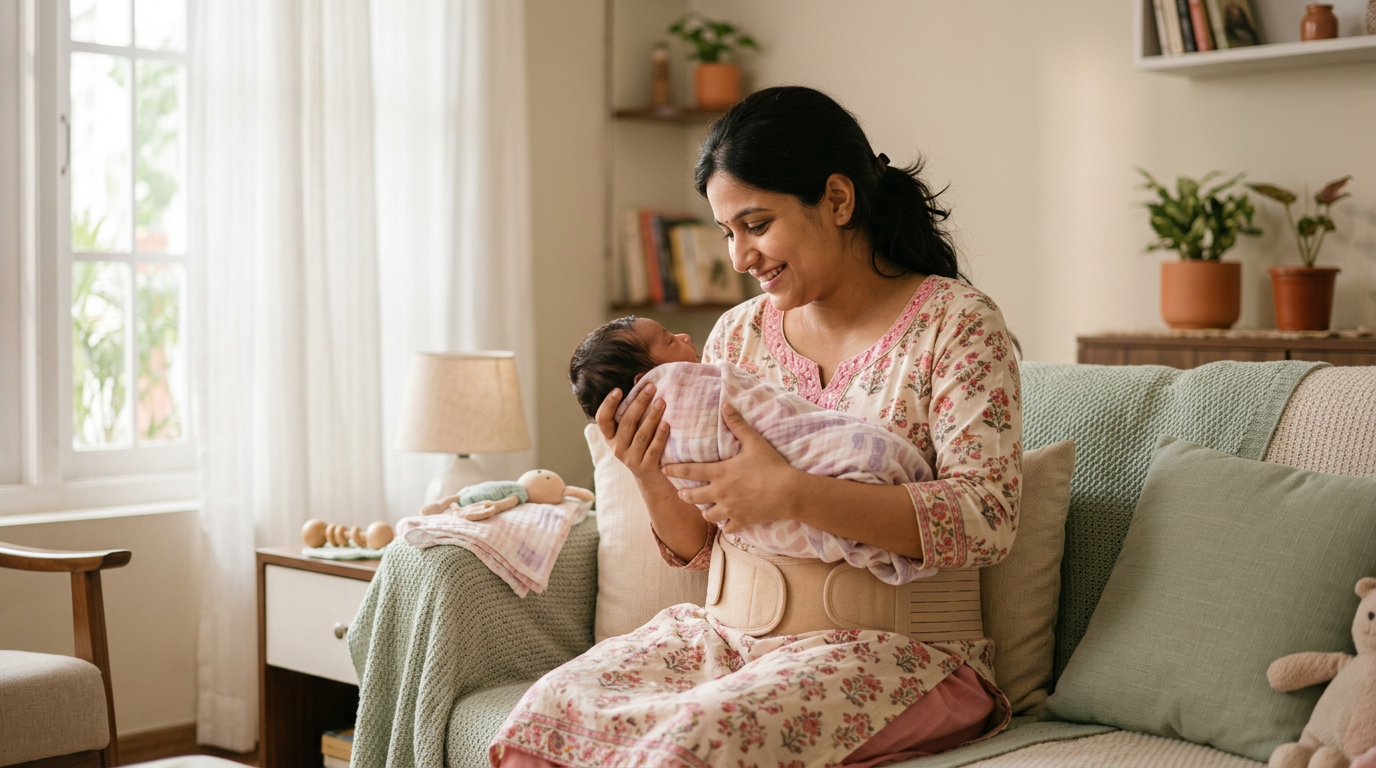
Should you wear a postpartum belt after delivery? The short answer is yes, but with major caveats. In India, the tradition of pet bandhna (belly wrapping) using a cotton dupatta or saree has existed for generations. Modern abdominal binders serve the same purpose: providing external support to your overstretched core, reducing lower back pain, and helping you feel "held together" while your internal organs settle back into place.
Why you need a postpartum belt after delivery in India
After nine months of expansion, your abdominal muscles (the rectus abdominis) are stretched out, and your centre of gravity has shifted. Whether you had a vaginal birth or a C-section, your core is temporarily weakened. A postpartum belt after delivery acts as a splint. It doesn’t "melt fat"—let’s be very clear about that—but it does provide the stability needed to move around comfortably, especially during those early days of postpartum recovery products usage.
In the Indian context, where we often sit on the floor for poojas or carry heavy steel baltis, that extra lumbar support is a lifesaver. Without it, many Indian moms suffer from chronic lower back pain during the first six months of stanpaan (breastfeeding).
Types of postpartum belts: Which one belongs in your kit?
Choosing the right support is part of building your postpartum kit. Not all belts are created equal, and wearing the wrong one can actually increase pressure on your pelvic floor.
1. The 3-in-1 Postpartum Recovery Belt
These are popular on Amazon India and typically include three separate pieces: a belly belt, a waist belt, and a pelvis belt.
* Best for: Comprehensive support after the first 2 weeks.
* Pro Tip: Look for breathable cotton mesh fabrics (especially in humid cities like Mumbai or Chennai) to avoid sweat rashes.
2. C-Section Recovery Binders
If you’ve had a Caesarean, you need a belt that doesn't rub against your incision. These are usually softer and wider.
* Benefits: It protects the stitches while you cough, sneeze, or laugh (the "Ouch" moments).
* Caution: Always wait for your Gynaecologist to give the green light, usually after the staples are removed or the wound is dry. You can use our scar analyzer to monitor your healing progress.
3. The Traditional Cotton Mulmul Wrap
The Sasu Maa approved method. It’s a long strip of soft cotton cloth wrapped firmly but not too tightly.
* Best for: The first few days when skin is extremely sensitive.
* Cons: It tends to bunch up and requires someone else’s help to tie it correctly.
How to use a postpartum belt safely
Wearing a belt isn't just about velcroing it on as tight as possible. In fact, if you feel "downward pressure" on your vagina, it is too tight and could lead to prolapse.
* Timing: For a vaginal delivery, you can often start within 24–48 hours. For C-sections, wait for 7–14 days depending on your doctor's advice.
* The Bottom-Up Rule: Always tighten the belt from the bottom (near the pubic bone) upwards. This "lifts" the organs rather than pushing them down.
* Duration: Wear it for 2–4 hours at a time. Do NOT sleep in it. Your muscles need to do some work on their own to regain strength.
* Check your core: If you notice a "pooch" that doesn't go away, you might have Diastasis Recti. Use our free diastasis recti self-check to see if you need specialized physiotherapy.
Quality and Budget: What to buy in India
When shopping for postpartum essentials, you don't need to spend a fortune.
* Budget Tier (₹400 - ₹800): Basic elastic binders available at local chemists or brands like Flamingo. They do the job but can be scratchy.
* Mid-Range (₹900 - ₹2,500): Brands like Tynor, Newmom, or Mylo. These often feature better Velcro and breathable materials.
* Premium Tier (₹3,000+): Imported brands like Belly Bandit or high-end ergonomic wraps.
Ensure any product you buy complies with BIS (Bureau of Indian Standards) for textile safety, ensuring no harmful dyes irritate your garbh (womb) recovery area.
Real talk from Indian moms
> "I thought the belt would make my tummy flat instantly. It didn't. But it stopped that weird 'jiggly' feeling every time I walked to the kitchen to get my ajwain paani." — Anjali S., Bengaluru, Mom to a 4-month-old.
> "My mother-in-law insisted on the saree wrap, but it was so hot in Delhi's June heat. I switched to a breathable 3-in-1 postpartum belt, and my back pain vanished during breastfeeding." — Preeti K., Noida, Mom to a 2-month-old.
Essential items to pair with your belt
A belt is just one part of your postpartum kits for moms. To ensure a holistic recovery, your kit should also include:
When to see your doctor (Red Flags)
While a postpartum belt after delivery is generally safe, stop using it and call your OB-GYN or paediatrician if you experience:
* Increased pain at the C-section incision site.
* Shortness of breath or feeling "suffocated" by the belt.
* Bulging or pressure in the pelvic floor area.
* Heavy bright red bleeding after it had started to taper off.
* Fever or foul-smelling discharge.
If you are worried about your baby's constant crying while you're trying to recover, you can use the AI cry analyzer to understand if it's hunger, sleep, or gas.
Frequently Asked Questions
Does a postpartum belt after delivery reduce belly fat?
No. A postpartum belt is for support and posture, not weight loss. Reducing the "mummy tummy" requires a combination of breastfeeding, a balanced diet (look at our pregnancy nutrition guide for inspiration as it carries over), and gradual core-strengthening exercises once cleared by a doctor.
Can I wear a postpartum belt after a C-section?
Yes, but timing is everything. Most Indian gynaecologists recommend waiting until your incision is no longer "wet" and the initial soreness has subsided. It provides essential support to the abdominal wall which was incised during surgery.
Are postpartum kits for moms worth the money?
Pre-assembled postpartum kits for moms are excellent for convenience. They usually bundle the belt, maternity pads, and healing ointments. If you are a first-time mom, they take the guesswork out of what you need at 3 AM.
Which are the most important postpartum recovery products?
The most important postpartum recovery products include a supportive belt, high-absorbency maternity pads, a comfortable nursing bra, and stool softeners (to avoid straining).
How long should I wear the belt each day?
Aim for 2 to 6 hours during the day, specifically when you are most active (walking, bathing the baby, or sitting up). Take it off while sleeping or resting to allow for natural blood circulation.
Recovery isn't a race to get back to your "pre-baby body"; it's a slow blooming back into yourself. Wear the belt for the support you deserve, eat your gondh ke ladoos, and give your body the time it needs to heal.
I am a strong, healing mother, and my body knows the way.
Sources & further reading
- Federation of Obstetric and Gynaecological Societies of India (FOGSI)
- Postpartum Care of the Mother and Newborn (Amniotic) - NHP India
- WHO recommendations on postnatal care of the mother and newborn
Written by Dr. Ritu Sharma, MD (Obstetrics & Gynaecology)
Reviewed by TheMamaCircle Editorial Team
Last updated: 29 July 2026
This article is for general information only and is not a substitute for personalised medical advice. Always consult your paediatrician or obstetrician for your specific situation.