Postpartum Depression Treatment: An Indian Mom's Guide
Looking for postpartum depression treatment in India? Learn about SSRIs, CBT, and how to manage PPD symptoms while navigating family life. You're not alone, Ma.
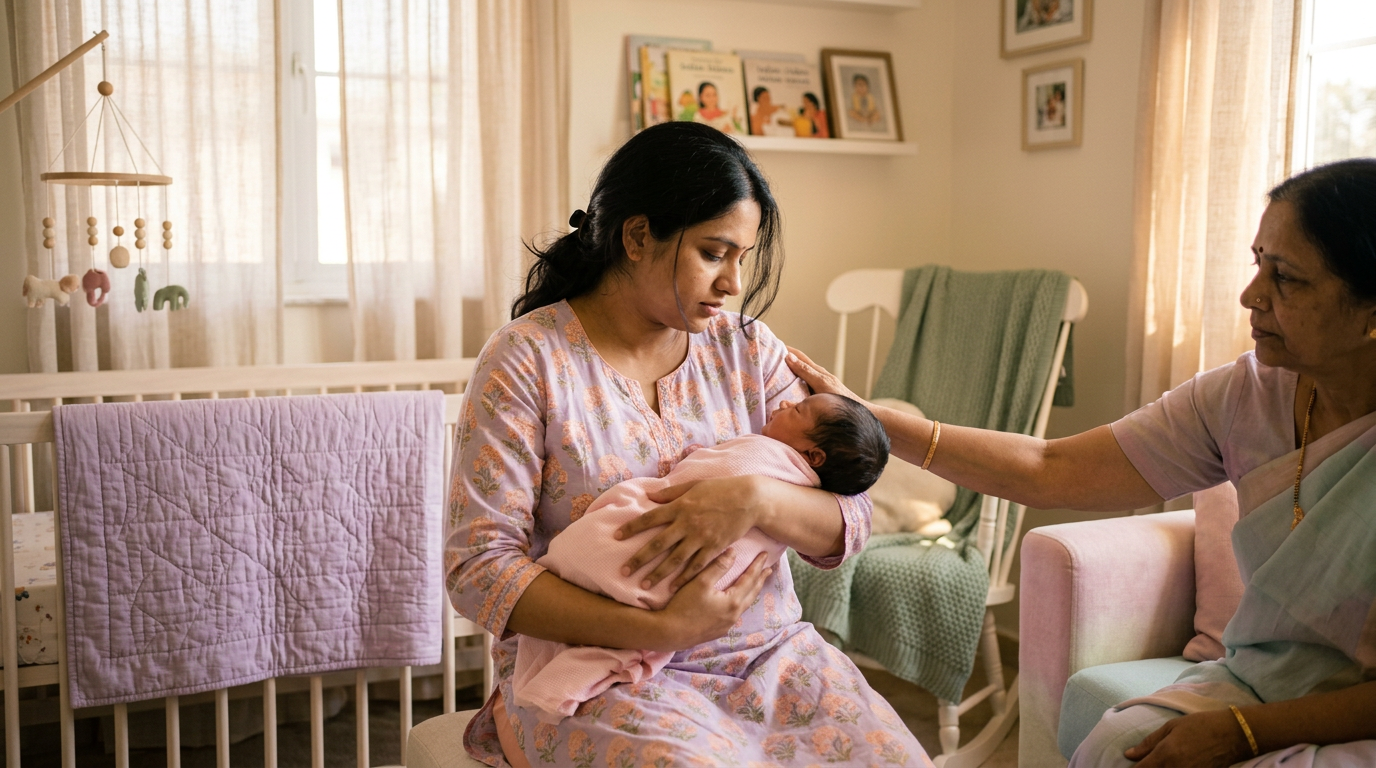
Finding the right postpartum depression treatment in India involves a combination of medical intervention, psychological therapy, and robust social support. While many families dismiss low moods as just "tiredness," clinical PPD requires professional help. Treatment typically includes Selective Serotonin Reuptake Inhibitors (SSRIs) that are safe for breastfeeding, Cognitive Behavioural Therapy (CBT), and lifestyle adjustments that involve the extended family (sasu maa, husband, and sisters) to ensure the mother gets adequate rest and nutrition.
Understanding Postpartum Depression Treatment Options in India
In our culture, the "Sawa Mahina" (first 40 days) is meant for recovery, but often it becomes a source of stress due to rigid traditions or isolation. When the "baby blues" don't fade after two weeks, it is time to look at clinical postpartum depression treatment.
1. Medical Management (Pharmacotherapy)
Many Indian mothers fear taking medication because of stanpaan (breastfeeding). However, psychiatrists often prescribe SSRIs like Sertraline or Fluoxetine, which have very low transfer rates into breast milk. According to FOGSI guidelines, untreated maternal depression poses a greater risk to the infant's development than the negligible traces of medicine in milk.
* Cost Expectation: Monthly medication can range from ₹300 to ₹1,200 depending on the brand and dosage.
* Duration: Usually, treatment continues for 6–12 months to prevent a relapse.
2. Psychotherapy and Counselling
Talking to a professional is not a sign of weakness; it is a clinical necessity.
* Cognitive Behavioural Therapy (CBT): Helps in identifying negative thought patterns, like "I am a bad mother because I can’t stop crying."
* Interpersonal Therapy (IPT): Focuses on your relationships. This is particularly helpful in Indian joint families where boundary-setting with in-laws might be a trigger.
* Online Therapy: Platforms like the Vandrevala Foundation or NIMHANS offer tele-counseling, making it easier for moms who cannot travel with a newborn.
How to manage postpartum depression symptoms at home
While clinical treatment is non-negotiable, your daily environment plays a massive role in recovery. We need to move beyond just Gondh Ke Ladoo and Ajwain water and focus on the mother’s brain health.
The Role of Nutrition
* Omega-3 Fatty Acids: Found in walnuts and fatty fish (like Rohu or Bangda), these are essential for brain function.
* Iron & B12: Postpartum anaemia is a huge trigger for postpartum depression symptoms. If your Ferritin levels are low, you will feel exhausted and "weepy." Ask your doctor for a blood test.
Warm, Comforting Foods: Traditional Indian diets including Moong Dal Khichdi and Dalia* are easy on the gut, which is closely linked to serotonin production.
Rethinking the "Maalish"
While a traditional maalishwali can help with physical pain, if her constant chatter about "milk supply" or "baby’s weight" triggers your anxiety, it is okay to let her go. Your mental peace is worth more than a massage.
Postpartum Depression Treatment: Breaking the Silence in Joint Families
One of the biggest hurdles in India is the "Log Kya Kahenge" (what will people say) syndrome. Often, elderly family members might say, "We had five kids and never had time to be depressed."
It is vital to explain that postpartum depression causes are biological—linked to a massive drop in estrogen and progesterone—not a lack of willpower. Use the term postpartum depression in hindi (Prasavottar Avsaad) if it helps elders understand that this is a recognized medical condition in our own language.
Steps for the Spouse:
* Night Duty: If the mom is on medication, she needs 4–6 hours of uninterrupted sleep. The father should take over at least one night feed using expressed milk or formula.
Gatekeeping: Shield the mother from intrusive relatives who offer unsolicited advice on everything from the baby's kajal* to the mother's weight.
Real talk from Indian moms
> "I felt like a robot. I was doing the shishu abhyanga (baby massage) and feeding perfectly, but I felt zero connection. My doctor started me on a low-dose antidepressant, and within three weeks, the 'grey veil' lifted. I could finally enjoy my daughter." — Ananya S., Bengaluru (Mom to a 5-month-old)
> "In my house, they said it was 'nazar.' I spent weeks doing pujas when I actually needed a therapist. Once my husband took me to a psychiatrist at AIIMS, things changed. There is no shame in medicine." — Preeti K., Delhi (Mom to an 8-month-old)
When to call your paediatrician
While you focus on your postpartum depression treatment, keep an eye on these red flags during your baby's check-ups:
* Lack of bonding: You feel no "spark" or love for the baby, or you feel like the baby is a stranger.
* Intrusive thoughts: Scaring yourself with "what if" scenarios involving the baby's safety.
* Inability to care: You find it physically impossible to bathe or change the baby.
* Suicidal ideation: Thinking that the baby or your family would be "better off" without you. This is a psychiatric emergency.
Frequently Asked Questions
What is the most common postpartum depression treatment?
The most common approach is a combination of psychotherapy (like CBT) and antidepressant medication (SSRIs). In India, doctors also focus heavily on correcting nutritional deficiencies like Vitamin D3 and Iron, which can mimic or worsen depression.
What are the main postpartum depression symptoms?
postpartum depression symptoms include persistent sadness, severe anxiety, insomnia (even when the baby is sleeping), loss of appetite, and thoughts of harming yourself or the baby. It is much more intense than the "baby blues."Can I get postpartum depression treatment for free in India?
Yes. Government hospitals like AIIMS and various District Hospitals under the National Mental Health Programme offer free or highly subsidized psychiatric consultations and medications. National helplines also provide free tele-counselling.
What are the underlying postpartum depression causes?
While the exact cause is unknown, postpartum depression causes are generally linked to the 90% drop in hormone levels after birth, combined with sleep deprivation, physical exhaustion, and the psychological shift into motherhood.
How do I explain postpartum depression in Hindi to my family?
You can explain postpartum depression in hindi as "Prasav ke baad hone wala avsaad." Tell them it is a hormonal imbalance (hormonal santulan bigadna) just like thyroid or diabetes, and it requires a doctor's help, not just "rest."
Is postpartum rage part of PPD?
Yes, many moms don't feel "sad"—they feel "mad." Irritability, shouting at your partner, or feeling "touched out" are common manifestations of postpartum depression and anxiety.
Managing your mental health is the greatest gift you can give your child. A healthy "Mama" makes for a happy "Bacha." Don't let the stigma of "Log Kya Kahenge" stop you from seeking the postpartum depression treatment you deserve.
You are doing a great job, and it is okay to ask for help to get back to being yourself.
Sources & further reading
- FOGSI Position Paper on Perinatal Mental Health
- National Health Portal of India - Postpartum Depression
- IAP Guide to Postnatal Care
Written by Dr. Ritu Sharma, MD (Obstetrics & Gynaecology)
Reviewed by TheMamaCircle Editorial Team
Last updated: 7 July 2026
This article is for general information only and is not a substitute for personalised medical advice. Always consult your paediatrician or obstetrician for your specific situation.