Postpartum Hair Loss Treatment: An Indian Mom's Guide
Looking for a postpartum hair loss treatment? Understand why postpartum hair fall happens and how to manage the 4-month shed with expert-backed tips.
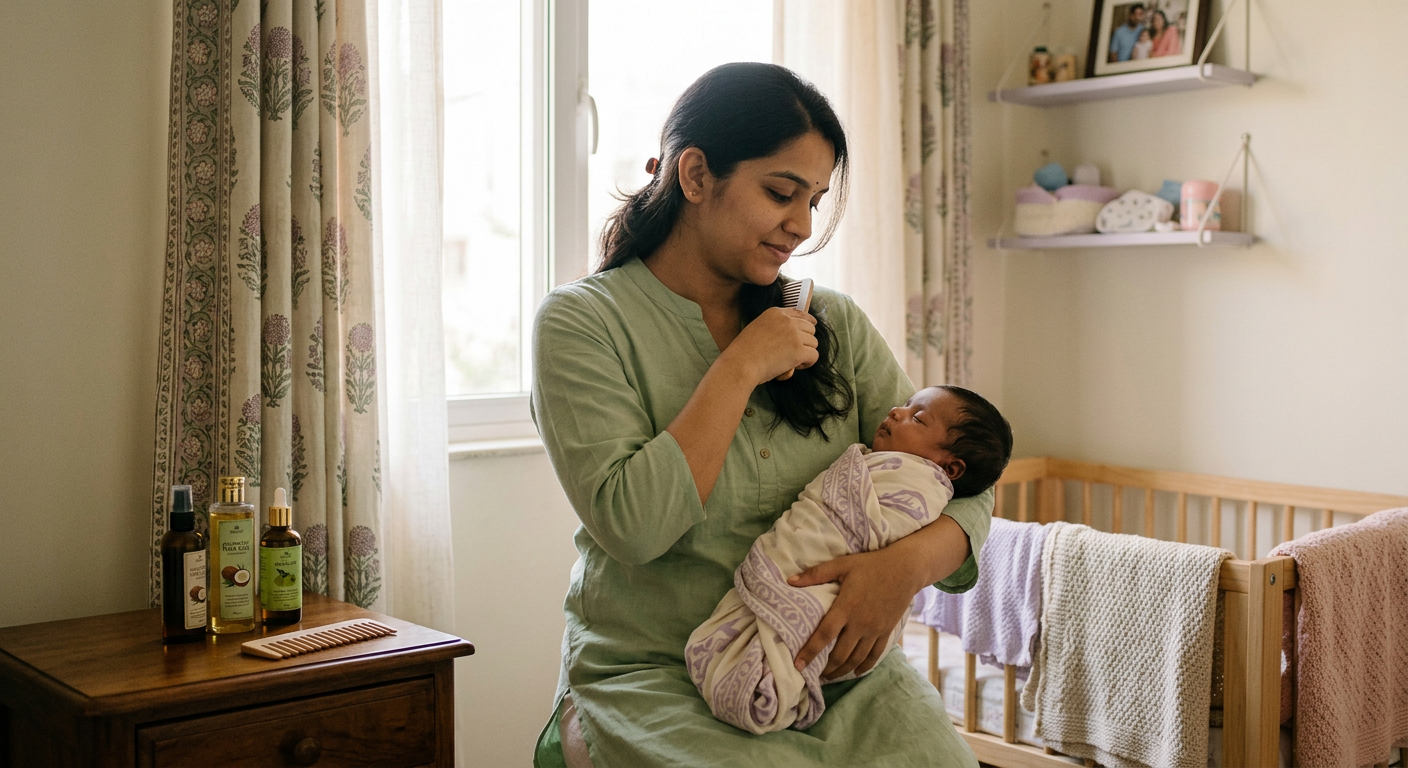
Finding a postpartum hair loss treatment that actually works feels like a race against time when you are seeing clumps of hair in your shower drain every morning. This condition, medically known as telogen effluvium, usually peaks around the 3-to-4-month mark after delivery. While it is a natural part of postpartum body changes, it can be incredibly distressing for new mothers. The good news? It is almost always temporary, and with the right nutritional and topical approach, you can support your regrowth effectively.
Why is my hair falling out in clumps?
During pregnancy, your body is flooded with oestrogen. This hormone keeps your hair in the 'growth' (anagen) phase for longer than usual. You probably noticed your hair was thicker and shinier than ever during your second trimester. However, once the baby is born, those hormone levels plummet.
This sudden drop triggers a massive shift, pushing a large percentage of your hair follicles into the 'resting' (telogen) phase simultaneously. About 90 to 120 days later, those hairs begin to shed to make room for new growth. This is exactly why postpartum hair loss usually hits its peak just as you are starting to get the hang of motherhood.
Postpartum hair loss treatment: What works and what is a myth?
When looking for a postpartum hair loss treatment, you need to distinguish between marketing gimmicks and medical reality. Your hair isn't falling out because you changed your shampoo; it's falling out because of an internal hormonal shift.
1. Nutritional Support and Postpartum Supplements
Your body prioritises healing the uterus and producing breast milk (stanpaan) over growing hair. If you are deficient in key nutrients, your hair will be the first thing to suffer.
* Iron (Ferritin): Indian women are statistically more prone to anaemia. Ensure your ferritin levels are above 70 ng/mL for optimal hair growth.
* Biotin and Zinc: These are the building blocks of the hair shaft.
* Continue your Prenatal Vitamins: Most OB-GYNs in India recommend continuing your prenatal vitamins for at least 6 months postpartum.
2. Scalp Care and Microcirculation
While you can't stop the hormonal shed, you can ensure the new hair has a healthy environment to grow in.
* Peptide-based Serums: Look for ingredients like Redensyl or Procapil. These can help extend the growth phase of the remaining hair.
* Avoid Harsh Chemicals: Skip the keratin treatments or heavy chemical rebounding for the first year. Your hair is in a fragile state.
3. The Role of Ayurvedic Tradition
In India, the tradition of Champi (oil massage) is more than just a ritual.
* Coconut and Curry Leaf Oil: Curry leaves (Kadi Patta) are rich in antioxidants and amino acids.
* Bhringraj Oil: Known in Ayurveda as the 'King of Hair', it helps in cooling the scalp and reducing stress-related shedding.
* Gentle Massage: Use your fingertips to stimulate blood flow to the follicles, but don't pull—the hair is already loose at the root.
How to manage postpartum hair fall daily
Managing the daily mess and the visual impact of thinning hair is half the battle.
* The "Mom Chop": Many Indian moms opt for a shorter haircut after delivery. Shorter hair puts less weight on the follicle and makes thinning less obvious.
* Volumising Products: Use a lightweight, sulphate-free shampoo. Avoid heavy conditioners on the roots, which can weigh hair down and make patches more visible.
* Gentle Detangling: Use a wide-tooth Neem wood comb (available for ₹200–₹500) rather than a fine brush. Start from the ends and move upward to prevent breakage.
Real talk from Indian moms
"I used to cry every time I washed my hair. My sasu maa told me it’s because the baby is starting to recognise me (a common Indian myth!), but Dr. Ritu explained it was just hormones. I started eating more drumstick (moringa) leaves and amla, and by month 9, the 'baby bangs' started appearing."
— Ananya S., Bengaluru (Mom to 10-month-old)
"The postpartum stretch marks didn't bother me as much as the hair loss. I felt like I was losing my identity. I switched to a silk pillowcase and stopped tying my hair in a tight bun (the classic 'mom bun'). It made a huge difference in reducing breakage."
— Meher P., Mumbai (Mom to 6-month-old)
When to see a Dermatologist or Endocrinologist
While most shedding is normal, you should seek professional help if:
* You see bald patches (alopecia areata) rather than general thinning.
* The shedding is accompanied by an itchy, flaky, or red scalp.
* Your hair fall persists at the same intensity beyond 12 months.
* You have other symptoms like extreme fatigue, unexplained weight gain, or feeling cold—this could indicate postpartum thyroiditis, a condition affecting nearly 1 in 20 Indian women according to FOGSI guidelines.
When to call your paediatrician
While postpartum hair loss affects you, certain changes in your health can impact your baby, especially if you are breastfeeding.
* If you are taking new supplements: Always clear herbal "hair growth" supplements with the paediatrician to ensure they don't affect your milk supply or the baby.
* If you feel extreme "Baby Blues" or PPD: Intense hair loss can trigger significant distress. If your mood is affecting your ability to bond with the baby, reach out immediately.
* Hair Tourniquets: This is a medical emergency for infants. Check your baby's toes, fingers, and penis daily. A strand of your fallen hair can wrap tightly around a digit, cutting off circulation. If you see a swollen, red toe with a hair wrapped around it that you cannot easily remove, go to the emergency room immediately.
Frequently Asked Questions
What is the best postpartum hair loss treatment in India?
There isn't a single "cure," but the best approach is a combination of a high-protein diet (dal, paneer, eggs), continued prenatal vitamins, and avoiding heat styling. For clinical treatments, dermatologists often prescribe Minoxidil (only if not breastfeeding) or peptide scalp serums.
Does postpartum hair loss happen to everyone?
Most women experience some degree of shedding, but it varies. Those with very thick hair may notice it more. If you are curious about other changes, you might also be looking for a postpartum stretch marks cream to handle the skin's recovery alongside your hair.
When does postpartum hair fall finally stop?
Typically, the shedding slows down by the 6-to-9-month mark. Most women see their normal growth pattern return by the baby’s first birthday. If it continues longer, get your iron and thyroid levels checked as per ICMR standards.
Can I colour my hair during this phase?
It is better to avoid harsh ammonia-based dyes. If you must, look for organic or henna-based alternatives, but be aware that your hair is already weak, and chemical processing can lead to more breakage (which is different from the hormonal root shed).
Are there any specific foods to stop hair fall?
Incorporate Iron-rich foods like Palak (spinach), Beetroot, and Methi (fenugreek). Biotin-rich foods like walnuts and almonds are also excellent. The National Institute of Nutrition (NIN) recommends a balanced diet with extra calories if you are lactating to support both the baby and your recovery.
The mirror might show you something different today than it did nine months ago, but remember that your body has just performed a miracle. This shedding is just a temporary recalibration. Treat yourself with the same gentleness you use for your little one. You are still beautiful, even with the baby bangs.
Acknowledge the change, nourish your soul, and your hair will follow.
Sources & further reading
- FOGSI - Postpartum Care Guidelines
- National Health Portal - Postpartum Period
- NIN - Dietary Guidelines for Indians
Written by Dr. Ritu Sharma, MD (Obstetrics & Gynaecology)
TheMamaCircle Editorial Team
Last updated: 5 July 2026
This article is for general information only and is not a substitute for personalised medical advice. Always consult your paediatrician or obstetrician for your specific situation.