Postpartum Massage at Home: Essential Indian Guide & Oils
Recover faster with a postpartum massage at home. Learn the best oils, C-section safety, and traditional Indian maalish tips for your 40-day recovery.
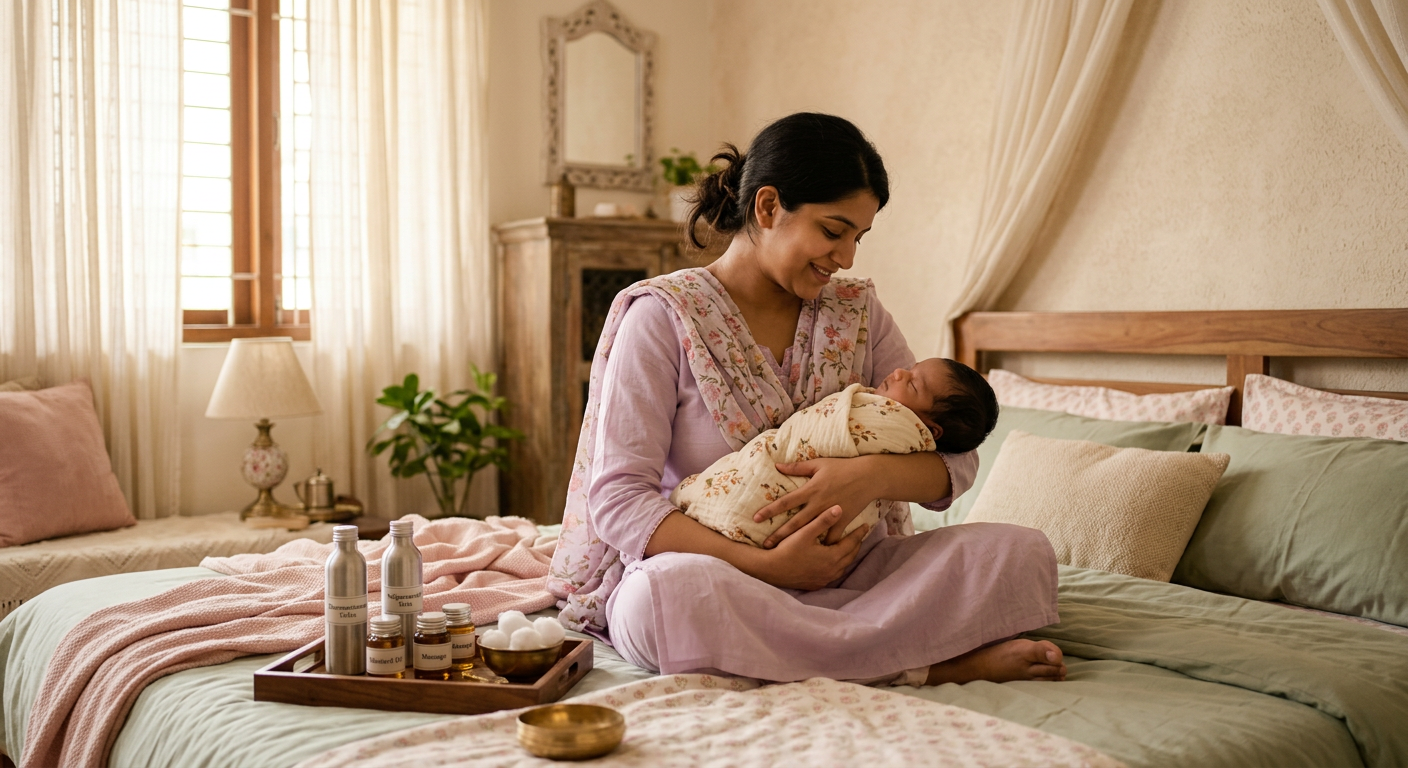
Booking a expert postpartum massage at home is the first step toward reclaiming your body after the marathon of childbirth. In India, the tradition of Sutika Paricharya (postnatal care) isn’t just about pampering; it is an essential physiological recovery tool. Whether you are in a bustling metro or a quiet town, a professional maalish helps drain excess fluids, boosts oxytocin for better breastfeeding, and realigns the pelvic muscles strained during delivery.
Why Postpartum Massage At Home is an Indian Tradition for a Reason
The 40-day 'confinement' period, known as Sawa-mahina in North India or Banantipon in Maharashtra, is rooted in the belief that a mother's body is 'open' and vulnerable after birth. While we no longer advocate for staying in a dark room, the science behind the postpartum massage is sound.
A skilled jaapa maid or a certified therapist can help with:
* Lymphatic Drainage: Reducing the swelling (oedema) in your ankles and feet.
* Hormonal Balance: Reducing cortisol levels to help fight the 'baby blues.'
* Uterine Involution: Gentle abdominal strokes help the uterus return to its pre-pregnancy size.
* Better Sleep: Even a 20-minute nap post-massage can feel like four hours of deep sleep.
When Can You Start Your Maalish?
Timing is everything, especially when you are recovering from a major surgery or a vaginal delivery. As per FOGSI guidelines, recovery varies for every woman, but general rules apply:
Choosing the Best Postpartum Massage Oil for Indian Weather
The choice of postpartum massage oil depends heavily on your body type (prakriti) and the regional climate.
1. Dhanwantharam Thailam
The gold standard in Kerala-style Ayurvedic care. It is a potent mix of herbs like Bala and Ashwagandha. It is excellent for strengthening the nerves and muscles.
2. Virgin Coconut Oil
Best for the humid climates of Mumbai, Chennai, or Kolkata. It is cooling, anti-fungal, and absorbs quickly without leaving a sticky residue on your nursing bras.
3. Mustard Oil (Sarson ka Tel)
Commonly used in Northern India during winters. It is warming and believed to help 'dry out' excess fluid, though it can be a bit strong for sensitive skin.
4. Sesame Oil (Til ka Tel)
A balanced oil that is rich in linoleic acid and works well across most Indian seasons.
How to Set Up Your Home for a Postpartum Massage
To get the most out of your session, you don’t need a fancy spa bed. You need a setup that protects your back.
The Surface: Many dais insist on a hard floor, but if you’ve had a C-section, getting down and up can be agonizing. A firm mattress or a high wooden takhat* (bench) is better.
* The Temperature: Ensure the room is warm. Turn off the AC. If you are in Delhi or Bangalore in December, use a small room heater to keep the air cozy.
The Post-Massage Bath: Traditionally, this is followed by a bath in very warm water infused with neem leaves or Vayu* (carom) seeds. The steam helps the oil penetrate deeper.
Finding Professional Care: Postpartum Massage Delhi and Gurgaon
If you live in the National Capital Region, you have access to both traditional jaapa maids and modern home-healthcare services.
If you are looking for a postpartum massage Delhi service, look for agencies that background-check their staff. In high-rise apartments where you might not have a badi-bi nearby to supervise, professionally trained therapists who understand ergonomics are vital. Similarly, if you are searching for postpartum massage Gurgaon, prioritize services that offer specialized C-section recovery packages, as the lifestyle in Cyber City often involves later pregnancies where core recovery takes longer.
Diet to Complement Your Massage Routine
A massage works from the outside in, but you need to fuel from the inside out. Complement your maalish with:
* Gond Ke Laddu: Edible gum resin, nuts, and ghee to strengthen bones.
* Ajwain Pani: To help with digestion and reduce bloating.
Methi (Fenugreek): Often prescribed by Indian elders to boost breast milk supply (stanpaan*).
Real Talk from Indian Moms
> "I thought the maalish-wali was an unnecessary expense until she started working on my lower back. The relief from 'nursing slouch' was instant. I used Dhanwantharam oil, and it smelt like a temple, but my skin never looked better."
> — Ananya, 31, Bengaluru (Mom to 4-month-old)
> "Living in a joint family in Jaipur, my Sasu Maa insisted on 40 days of massage. At first, I felt shy, but it became the only hour of the day I wasn't being touched by a baby. It was my mental health sanctuary."
> — Megha, 28, Jaipur (Mom to 6-month-old)
When to Call Your Paediatrician or OB-GYN
While massages are therapeutic, you must stop immediately and consult a doctor if you experience:
* Redness or Heat in your calves (could indicate Deep Vein Thrombosis/DVT).
* Increased Vaginal Bleeding (Lochia) after a session.
* Fever or Chills (could be an infection이나 mastitis).
* Pus or Oozing from a C-section incision.
* Severe Postpartum Depression: If the massage feels overwhelming rather than relaxing.
Frequently Asked Questions
Is it safe to get a postpartum massage at home?
Yes, it is entirely safe and highly recommended in Indian culture. However, ensure your therapist is experienced in postnatal care and not just general beauty massages. They must know how to handle a delicate postpartum body.
What is the typical cost of a postpartum massage?
In India, the price varies widely. A local jaapa maid might charge ₹15,000 to ₹25,000 for a 40-day cycle (excluding oil and food). Professional agencies in cities like Mumbai or Bangalore may charge ₹800 to ₹1,500 per session.
Can I get a postpartum massage Delhi if I had a C-section?
Absolutely, but you must wait at least 3 weeks or until your doctor confirms the internal healing is progressing well. In postpartum massage Delhi circles, many specialized therapists focus on 'scar tissue' mobilization once the wound is fully closed.
Which is the best postpartum massage oil for winter?
Mustard oil (Sarson) or Sesame oil (Til) are excellent for Indian winters as they provide 'Garm' (heat) to the body and improve circulation during the cold months.
Do I need a specific postpartum massage Gurgaon service for twins?
Carrying twins puts immense pressure on the pelvic floor and lower back. If you are seeking a postpartum massage Gurgaon, look for therapists who specialize in "high-risk recovery" to ensure they don't overstretch your abdominal muscles (Diastasis Recti).
Can I get a massage if I am breastfeeding?
Yes. In fact, postpartum massage can help with let-down by reducing stress. Just ensure the therapist avoids putting direct pressure on engorged breasts to prevent discomfort.
Your body just grew a whole human; it deserves the time and space to heal properly. Treat your daily maalish as a non-negotiable part of your recovery, not a luxury.
I am a mother, I am strong, and I deserve this time to heal.
Sources & further reading
- FOGSI Postpartum Care Guidelines
- Ministry of Health & Family Welfare - Postnatal Care
- Ayush - Postnatal Care in Ayurveda (Sutika Paricharya)
Written by Dr. Ritu Sharma, MD (Obstetrics & Gynaecology)
Reviewed by TheMamaCircle Editorial Team
Last updated: 18 July 2026
This article is for general information only and is not a substitute for personalised medical advice. Always consult your paediatrician or obstetrician for your specific situation.