Postpartum Massage Delhi: Best Guide for Indian New Moms
Looking for the best postpartum massage Delhi offers? Learn about traditional maalish, Ayurvedic oils, and recovery tips for Indian moms. Book your healing today!
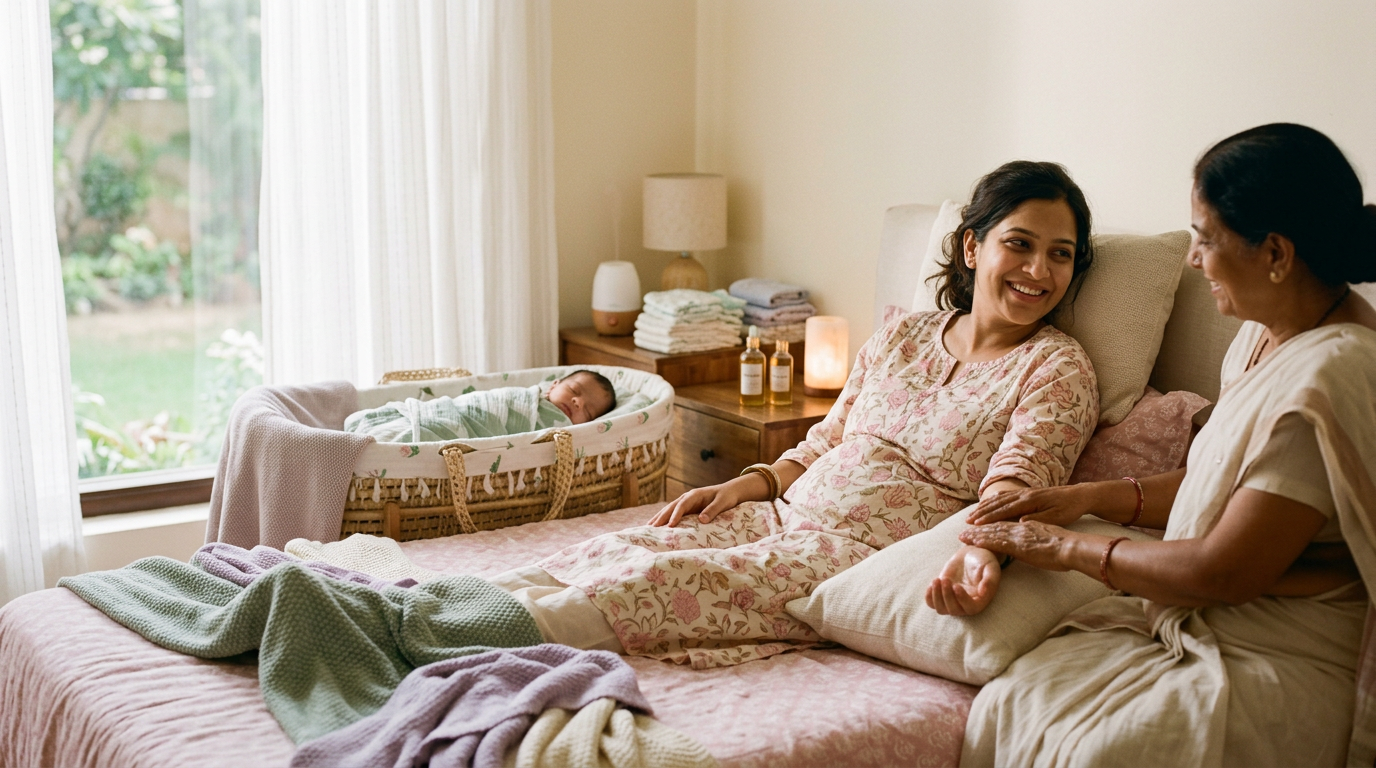
In the chaotic, beautiful weeks following childbirth, finding the best postpartum massage Delhi has to offer isn't just about luxury; it’s about survival and recovery. Whether you are recovering from a vaginal birth or a C-section, the traditional Indian maalish is a biological necessity that aids uterine involution, reduces swelling, and provides much-needed emotional release. In Delhi’s fast-paced environment, this ancient ritual helps new mothers regain their strength amidst the sleepless nights of early motherhood.
Why Postpartum Massage Delhi Services are Essential for Recovery
Postpartum recovery in India has always been a community effort, often led by the experienced Dais or specialized Japa-maids. In a city like Delhi, where nuclear families are common, professional postpartum massage at home services have bridged the gap between traditional wisdom and modern convenience.
The physiological benefits are backed by many medical practitioners:
Lymphatic Drainage: Reduces the oedema* (swelling) in legs and feet, a common complaint for Delhi moms after delivery.
* Hormonal Balance: Helps regulate cortisol levels, reducing the risk of postpartum blues.
* Uterine Health: Gentle abdominal strokes (after 6-8 weeks for C-sections) encourage the uterus to return to its pre-pregnancy size.
Muscle Relief: Targets the "feeding hunch" – the back and shoulder pain caused by constant stanpaan* (breastfeeding).
When Can You Start Your Maalish?
The timing of your postpartum massage depends entirely on your mode of delivery and your doctor's clearance.
After a Normal Vaginal Delivery
Most nani-dadi wisdom suggests starting as early as day 5 or 10. However, the Federation of Obstetric and Gynaecological Societies of India (FOGSI) generally recommends waiting until you feel physically stable, usually around the one-week mark.
After a C-Section (Caesarean)
If you’ve had a C-section at a hospital like Max or Apollo, your incision needs time to heal. Generally, you can start massage for your limbs and back after 2 weeks, but the abdominal area remains strictly off-limits for at least 6 to 8 weeks. Always consult your OB-GYN before the maalishwali starts her work.
Choosing the Right Postpartum Massage Oil
The choice of postpartum massage oil is crucial because your skin is your body's largest organ, and some of what is absorbed can enter your system.
* Dhanwantaram Thailam: A classic Ayurvedic choice used widely in Kerala-style massages. It is excellent for strengthening muscles and bones.
* Virgin Coconut Oil: Cooling for the Delhi summers; it’s also safe if the baby accidentally touches your skin.
Mustard Oil (Sarson ka Tel): Traditional in North India during winters for its warming properties, often infused with ajwain* (carom seeds) and garlic.
* Sesame Oil (Til ka Tel): Highly recommended by the National Institute of Ayurveda for its deep-penetrating and nourishing qualities.
What to Expect from Professional Postpartum Massage Delhi Services
When booking a service in areas like Vasant Kunj, GK, or Rohini, you should ensure the therapist understands the "Delhi lifestyle" recovery needs.
1. The Setup
Professional services often bring their own disposable sheets or a portable massage table. If you are doing it at home, ensure the room is warm and draft-free—Dais often insist on turning off the AC, but in a 45-degree Delhi June, a mild fan or a high-set AC (26°C) is usually permissible to prevent heatstroke for both mom and baby.
2. The Technique
The massage should be firm but not painful. It typically starts with the limbs, moves to the back, and ends with a gentle head massage (champi).
3. The Price Point
In Delhi and the NCR region, professional postnatal massage packages typically range from ₹15,000 to ₹35,000 per month (for 30 sessions), depending on the expertise of the therapist and the oils used.
Post-Massage Rituals: The Snana and Ubtan
In our Indian tradition, the massage is followed by a hot water bath (Snana). Many Delhi moms still use a traditional ubtan made of besan (gram flour), haldi (turmeric), and cream to help with skin pigmentation and "pregnancy glow" restoration.
Ensure the water is comfortably hot but not scalding. After the bath, it is standard practice to wrap the abdomen with a soft cotton saree or a postnatal belt to support the abdominal wall—though modern medicine suggests using a proper Velcro binder for better ergonomic support.
Real Talk from Indian Moms
> "I was hesitant about having a stranger touch me after my C-section, but booking a postpartum massage Delhi service was the best decision. My back pain from the epidural actually started to fade by the 15th session." — Ananya, 29, Dwarka (Mom to 3-month-old)
> "In Punjabi households, the maalish is non-negotiable. My therapist used warm sesame oil and followed it up with a hot water bath. It was the only 45 minutes of the day I felt like myself again and not just a milk machine." — Harpreet, 34, Karol Bagh (Mom to 5-month-old)
When to Call Your Paediatrician or OB-GYN
While massage is healing, certain red flags mean you need to pause the maalish and call your doctor immediately:
* Fever: Any temperature above 100.4°F (38°C) could indicate a postpartum infection.
Excessive Bleeding: If the massage causes a sudden surge in lochia* (postpartum discharge) or bright red heavy bleeding.
* Leg Pain and Redness: If one leg is more swollen, red, or painful than the other, it could be a sign of Deep Vein Thrombosis (DVT).
* Incision Issues: Redness, pus, or gaping at your C-section or episiotomy site.
* Sudden Headache: Especially if accompanied by blurred vision (potential postpartum preeclampsia).
Frequently Asked Questions
Is it safe to get a postpartum massage Delhi service during the monsoon?
Yes, but hygiene is paramount. Ensure your therapist washes their hands and change of clothes upon arrival. Ensure the room is dry and use warming oils like mustard oil to prevent catching a cold.
How long does a typical postpartum massage session last?
Generally, a session lasts between 45 to 60 minutes. This includes the body massage and the head massage.
Can I get a postpartum massage at home if I live in a high-rise in Gurgaon?
Absolutely. Most postpartum massage Gurgaon services are accustomed to working in apartment complexes and can bring all necessary equipment to your doorstep.
Which postpartum massage oil is best for sensitive skin?
Cold-pressed Sweet Almond oil or Virgin Coconut oil are the safest bets for sensitive skin, as they are less likely to cause rashes or clogging of pores compared to heavy mustard oil.
Can I breastfeed during or immediately after the massage?
It is best to feed your baby before the massage so you can relax. Post-massage, it is recommended to bathe first to wash off excess oil from the breast area before the next feed.
Does postpartum massage help with weight loss?
While it doesn't "melt" fat, it helps reduce water retention and improves circulation, which assists your body in returning to its natural state alongside a balanced diet of dalia, panjiri, and gond ke ladoo.
Mama, remember that taking an hour for yourself is not a luxury—it is the foundation of your recovery. A rested mother is a resilient mother. As you heal, be patient with your body; it has performed a miracle.
Mera sharir shaktishaali hai, aur main dheere dheere swasth ho rahi hoon. (My body is powerful, and I am healing slowly but surely.) Proudly reclaim your health, one maalish at a time.
Sources & further reading
- National Health Portal of India - Postnatal Care
- Ayush Ministry - Guidelines for Postnatal Care (Sutika Paricharya)
- FOGSI - Postpartum Care Guidelines
Written by Dr. Ritu Sharma, MD (Obstetrics & Gynaecology)
Reviewed by TheMamaCircle Editorial Team
Last updated: 14 July 2026
This article is for general information only and is not a substitute for personalised medical advice. Always consult your paediatrician or obstetrician for your specific situation.