Postpartum Meaning in Hindi: A Guide for Indian Moms
Wondering about postpartum meaning in hindi? Learn the definition of 'Prasavoparant', symptoms, and 40-day care tips for Indian moms. Read our expert guide.
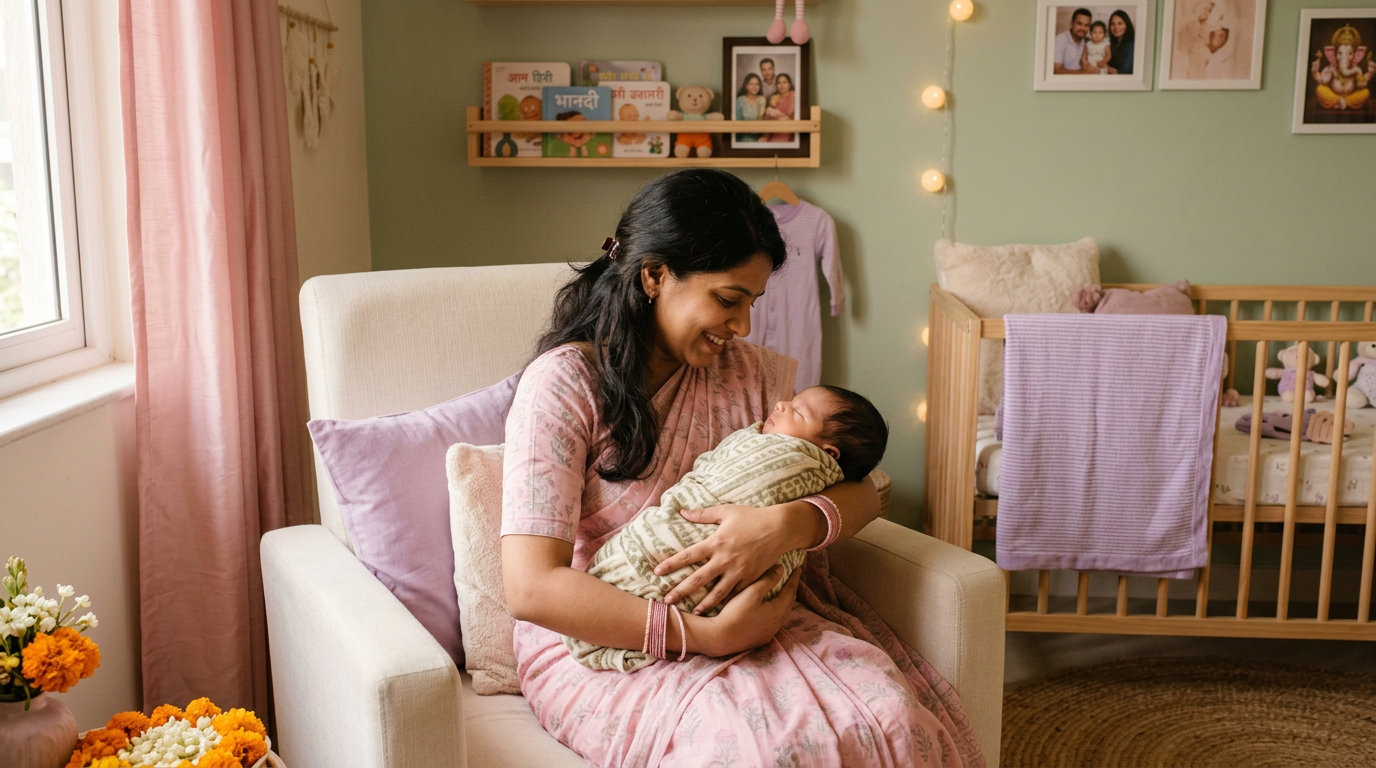
The moment that tiny, slippery human is placed on your chest, your world shifts. But as the initial rush of oxytocin fades, you might find yourself staring at your changing body, wondering exactly what is happening. If you are searching for the postpartum meaning in hindi, it translates simply to 'Prasavoparant' (प्रसवोपरांत)—the period immediately following childbirth. In our Indian homes, we often just call it the 'Sutika' period or the '40 days' (Chilla/Sawa Mahina).
This phase isn't just a recovery period; it is a total metabolic and emotional overhaul. While the medical community focuses on the first six weeks, as an OB-GYN, I tell my patients that the real 'postpartum' lasts much longer as your hormones and iron levels stabilize.
What is the Postpartum Meaning in Hindi and Indian Culture?
In the Indian medical context, the postpartum meaning in hindi refers to the Sutika Kaal. Historically, Ayurveda and traditional Indian medicine place immense value on this time, typically lasting 40 to 60 days. This isn't just about the mother resting; it’s about preventing long-term 'Vata' imbalances (dryness or air issues) that we often associate with back pain or weakness later in life.
When we talk about postpartum meaning in english, it covers the physiological return of the uterus to its pre-pregnancy size (involution) and the shift from pregnancy hormones to lactation hormones. In India, this transition is supported by the Jaappa system, involving a designated Maalishwali (massage therapist) and specific dietary restrictions.
The Three Stages of Postpartum Recovery
You don’t just "snap back" after the placenta is delivered. The body goes through distinct phases:
The Indian Postpartum Diet: More Than Just 'Ghee'
In India, food is our first medicine. The Federation of Obstetric Surgeons of India (FOGSI) and the ICMR emphasize the need for an additional 600 calories per day for lactating mothers.
* Panjiri and Gond Ke Ladoo: These are calorie-dense and help in strengthening the bones.
* Ajwain Water: Excellent for digestion and reducing gas in both mom and baby.
Dalia and Khichdi: Light on the stomach, ensuring the Agni* (digestive fire) isn't overwhelmed.
* Cost Check: A month’s supply of specialized postpartum herbs and homemade ladoos can range from ₹3,000 to ₹7,000 depending on the ingredients like dry fruits and edible gum (Gond).
Why 'Postpartum' is different from 'Baby Blues'
It is vital to understand the postpartum meaning in telugu (Prasavananthara) and other languages because emotional health is often lost in translation.
* Postpartum Blues: Affects up to 80% of Indian moms. You feel weepy, irritable, and tired. It usually resolves by day 10.
Postpartum Depression (PPD): This is deeper. If you feel unable to bond with the baby or have thoughts of self-harm, this is a medical emergency. Do not let Sasu Maa* tell you it is just 'weakness.' It is a chemical imbalance.
Real talk from Indian moms
> "I thought the postpartum meaning in Hindi just meant staying in one room for 40 days. I hated the isolation at first, but the daily maalish with mustard oil was the only thing that kept my sanity intact." — Preeti, Delhi, Mom to a 4-month-old
> "No one told me about the night sweats. I would wake up drenched while my baby was sleeping peacefully. My mother gave me saunf water, and it really helped regulate my body heat." — Anjali, Pune, Mom to an 8-month-old
> "In Bengaluru, my doctor was very strict about pelvic floor exercises (Kegels). Combining the traditional Sutika food with modern physiotherapy made my recovery much faster than my first pregnancy." — Lekha, Bengaluru, Mom to a 2-year-old
When to call your paediatrician (and your OB-GYN)
While you are focusing on the postpartum meaning in hindi for your own body, keep a sharp eye on these red flags:
* For Mom:
* Fever over 100.4°F (Signs of infection or mastitis).
* Soaking more than one sanitary pad in an hour.
* Severe headache that doesn't go away with paracetamol.
* Swelling in only one leg (Potential DVT).
* For Baby:
* Yellowing of the eyes or skin (Jaundice is common but needs monitoring).
* Fewer than 6 wet nappies in 24 hours.
* The umbilical cord stump looks red, swollen, or smells bad.
* High-pitched, inconsolable crying.
Frequently Asked Questions
What is the postpartum meaning in hindi (प्रसवोपरांत का अर्थ)?
In Hindi, it refers to the period after childbirth (Prasav ke baad ka samay). It encompasses the physical, emotional, and social adjustments a woman makes after having a baby.
What is the postpartum meaning in tamil?
In Tamil, it is often referred to as 'Prasava kaalam' (பிரசவ காலம்). It specifically highlights the recovery weeks where the mother is often given 'Pathiya Samayal' (prescribed diet) to regain strength.
What is the postpartum meaning in telugu?
In Telugu, 'Prasavananthara' (ప్రసవానంతర) refers to the timeframe after delivery. Telugu traditions often emphasize 'Vedi Neellu' (hot water) baths and specific herbal infusions for the mother.
How long does the postpartum period last?
While the 'Global Standard' is 6 weeks, many Indian traditions observe 40 days. However, biologically, your body may take 6 to 12 months to fully recover its nutrient stores (especially Iron and Calcium).
Is postpartum depression common in India?
Yes, roughly 1 in 5 Indian women experience PPD. Due to the 'Super-mom' pressure in our culture, it is often under-reported.
Can I skip the traditional 40-day confinement?
You don't need to stay in a dark room, but 'active rest' is essential. The IAP suggests gradual return to activity. Avoid heavy lifting (like buckets of water) for at least 6-8 weeks.
Postpartum is a temporary bridge between who you were and who you are becoming. It is okay if the bridge feels a little shaky today.
Repeat this to yourself: "Mera sharir saksham hai, aur meri bhasha meri shakti hai." (My body is capable, and my language is my strength.)
Sources & further reading
- Indian Academy of Pediatrics (IAP) - Postnatal Care
- National Health Portal (NHP) India - Postpartum Care
- FOGSI - Postpartum Hemorrhage and Recovery Guidelines
Written by Dr. Ritu Sharma, MD (Obstetrics & Gynaecology)
Reviewed by TheMamaCircle Editorial Team
Last updated: 18 July 2026
This article is for general information only and is not a substitute for personalised medical advice. Always consult your paediatrician or obstetrician for your specific situation.