Postpartum Recovery Week by Week India: A Healing Guide
Track your postpartum recovery week by week with our Indian guide. From C-sections to 40-day traditions, learn what to expect as your body heals. Read more.
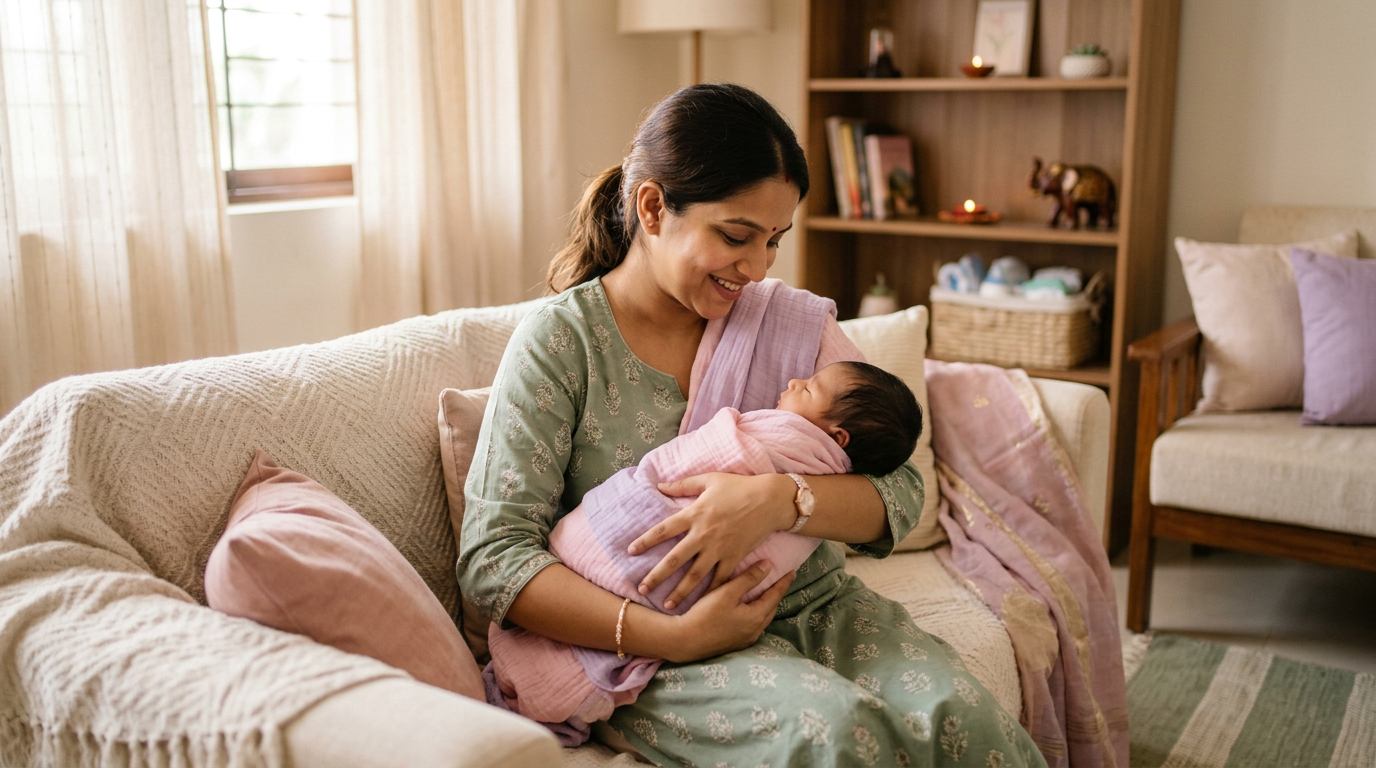
The postpartum recovery week by week process in India is a unique blend of clinical milestones and centuries-old Sutika Paricharya (postnatal care) traditions. While your body takes about six to eight weeks to return to a non-pregnant state, the 'Jaapa' or 40-day confinement period often dictates the rhythm of healing for Indian mothers. Whether you had an unmedicated birth or a C-section, recovery isn't a race; it is a physiological overhaul of your hormonal, musculoskeletal, and emotional systems.
The Reality of Postpartum Recovery Time in India
Many Indian families expect a "bounce back" after the 40-day Sava Mahina, but clinical postpartum recovery time can vary. While the uterus shrinks back (involution) by six weeks, pelvic floor strength and abdominal wall integrity (especially if you have a free diastasis recti self-check concern) may take six months to a year to fully stabilize.
Week 1: The "Gondh Ke Ladoo" and Healing Phase
The first seven days are focused on immediate physiological changes. You will experience Lochia (postpartum bleeding), which starts as bright red (Lochia Rubra). Use our lochia analyzer to track if your flow is within the normal range.
* Physical Changes: Your uterus is roughly the size of a grapefruit and sits at the level of your navel. If you had a vaginal birth, your perineum will be sore.
Indian Rituals: This is when the Maalish-wali* (massage lady) usually starts her visits. Warm sesame or mustard oil massages help improve circulation, but ensure she avoids your abdomen if you have stitches.
Dietary Focus: Traditional foods like Dashmoolarishta (Ayurvedic tonic), Gondh ke Ladoo, and Ajwain water* are common to aid digestion and prevent gas, which can be agonizing post-delivery.
* The C-Section Difference: If you are navigating postpartum recovery after c section, your focus this week is simply on movement. Walking to the bathroom is a victory. Avoid lifting anything heavier than your baby. Check your incision daily using our scar analyzer to ensure no signs of infection.
Week 2: Finding Your Rhythm Amidst the Chaos
By week two, the initial adrenaline has worn off, and the sleep deprivation starts to peak.
* The "Baby Blues" vs. PPD: It is normal to feel weepiness around day 4-10. However, if the "heavy" feeling persists, use our postpartum wellness assessment to screen for postpartum depression (PPD).
* Lactation: Your milk supply is likely established. If you notice breast engorgement, warm compresses and frequent nursing (stanpaan) are key.
* Healing: Perineal stitches (if any) should begin to feel less "sharp." Continue your sitz baths with warm water and a dash of Betadine or Himalayan salt.
How can I speed up my postpartum recovery week by week?
While you cannot rush nature, you can optimize the environment for healing. In India, the concept of Bandhan (tummy wrapping) is popular. While a soft cotton saree or a postpartum belt can provide back support, do not wrap it so tight that it pushes your pelvic floor down.
Week 3 & 4: The Halfway Mark of Confinement
You are now deep into the "fourth trimester." By now, your bleeding should have transitioned from red to pinkish-brown (Lochia Serosa).
* Gentle Movement: You can begin very light postpartum recovery exercises such as pelvic tilts and deep diaphragmatic breathing. Avoid traditional crunches or heavy lifting.
Nutrition: Continue with iron-rich foods. In many Indian households, Murmura (puffed rice) or Makhana* (fox nuts) roasted in ghee are excellent snacks that provide energy without being too "heavy" on the gut.
The Social Fatigue: This is often when relatives start visiting. It is okay to say "no" or stay in your room. Your priority is rest, not hosting chai* sessions.
Week 5 & 6: The Clinical "All-Clear"
Week six is the gold standard for your postpartum check-up with your OB-GYN.
* Internal Healing: Your uterus has now returned to its pre-pregnancy size and is tucked behind the pubic bone.
* Exercise Clearance: This is usually when doctors give the green light for more vigorous postpartum recovery exercises.
* Intimacy: Discussion around contraception is vital. Even if you are exclusively breastfeeding, ovulation can occur, making another pregnancy possible before your body has healed.
Real Talk from Indian Moms
> "In my first week, my Sasu Maa insisted on no fan or AC in the Peak Mumbai heat. I had to explain that while 'keeping warm' is traditional, heatstroke for the baby is a real risk. We compromised on a light cotton shawl and a moderate AC setting." — Megha, Mumbai, Mom to 3-month-old.
> "The hardest part of postpartum recovery was the maalish. My message lady wanted to 'rub out' my C-section scar. I had to be very firm and tell her 'Nahi' (No). Always trust your doctor over the Maalish-wali." — Ananya, Bengaluru, Mom to 5-month-old.
When to Call Your Gynecologist (The Red Flags)
The Federation of Obstetric and Gynaecological Societies of India (FOGSI) highlights several red flags that require immediate medical attention:
When to call your Paediatrician
While you heal, keep a close eye on your little one. The Indian Academy of Paediatrics (IAP) recommends calling the doctor if:
* The baby's skin or eyes look yellow (Jaundice).
* The umbilical cord stump looks red, swollen, or smells bad.
* The baby is feeding less than 8 times in 24 hours.
* The baby has fewer than 6 wet diapers a day by day five.
* The baby is excessively lethargic or has a high-pitched, unusual cry. If you're unsure about the sound, our AI cry analyzer can help distinguish between hunger and pain.
Summary of the 6-Week Recovery Chart
| Phase | Focus | Key Traditional Food | Warning Signs |
| :--- | :--- | :--- | :--- |
| Week 1 | Rest & Healing | Harira / Gondh Ladoo | Heavy clots, Fever |
| Week 2 | Lactation Setup | Methi (Fenugreek) | Severe "Baby Blues" |
| Week 3-4 | Light Mobility | Panjiri / Dry Fruits | Calf pain, incision redness |
| Week 5-6 | Pelvic Floor | Balanced Dal-Rice | Shortness of breath |
Recovery is not just about the physical body; it is about the transition into motherhood. If you need structured support, consider our Postpartum Wellness Package for guided recovery paths. You've grown a human being; give yourself the grace to grow into this new version of yourself.
Repeat this today: "My body took nine months to grow a life; I will give it at least that long to find its new normal."
Sources & further reading
- FOGSI - Postpartum Care Guidelines
- Indian Academy of Pediatrics - Newborn Care
- WHO Postnatal Care for Mothers and Newborns
- ICMR Nutrition Guidelines for Lactating Mothers
Written by Dr. Ritu Sharma, MD (Obstetrics & Gynaecology)
Reviewed by TheMamaCircle Editorial Team
Last updated: 26 July 2026
This article is for general information only and is not a substitute for personalised medical advice. Always consult your paediatrician or obstetrician for your specific situation.