Postpartum Weight Loss Timeline: A Safe Guide for Indian
Understand the safe postpartum weight loss timeline for Indian moms. Learn how to lose baby weight and belly fat without affecting milk supply or recovery.
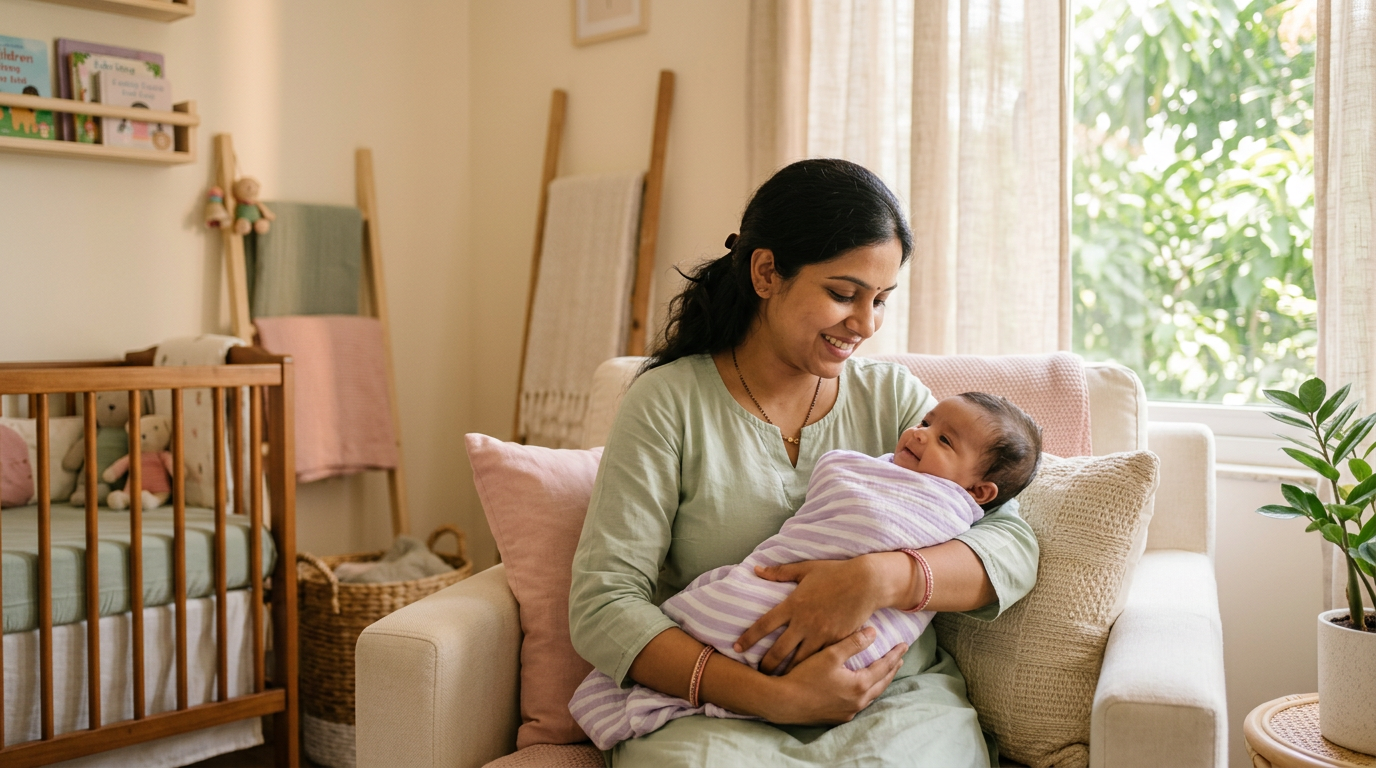
The real postpartum weight loss timeline in India isn't a six-week sprint to a "bikini body." It is a delicate, 12-month biological recalibration. Most Indian mothers naturally lose about 5–6 kg during childbirth (baby, placenta, and amniotic fluid), with another 2–3 kg of water weight shedding in the first fortnight. However, returning to your pre-pregnancy weight typically takes 6 to 12 months, depending on your breastfeeding status, activity levels, and metabolic health.
The Realistic Postpartum Weight Loss Timeline: Month by Month
In my clinical practice, I see too many moms pressured by social media to "bounce back" before their stitches have even healed. According to FOGSI (Federation of Obstetric and Gynaecological Societies of India) guidelines, the focus for the first six weeks should be strictly on recovery, not calorie deficits.
Phase 1: The Golden Forty Days (Sawa Mahina)
During the first six weeks, your body is in the puerperium phase. Your uterus is shrinking (involution), and your blood volume is returning to normal.
* Weight Loss Expectation: 5–9 kg.
The Indian Reality: This is the time of Gond Laddus, Ajwain Halwa, and Panjiri*. While these are calorie-dense, they are designed for healing.
* Focus: Healing. If you had a C-section, your fascia needs time. Do not even look at a weighing scale. Focus on postpartum weight loss as a long-term goal, not a sprint.
Phase 2: Months 2 to 4 (The Nursing Phase)
Once you get the "all clear" at your 6-week checkup, you can begin the journey of postpartum weight loss india style—integrating traditional wisdom with movement.
* Weight Loss Expectation: 0.5–1 kg per month.
The Nursing Factor: Breastfeeding (Stanpaan*) burns approximately 400–500 calories a day. However, it also increases hunger.
* Movement: Start with 15-minute brisk walks and pelvic floor (Kegel) activations.
Phase 3: Months 6 to 12 (The Sustainability Phase)
Once the baby starts solids (Annaprashan), your hormonal profile stabilises. This is when most women see significant changes in postpartum belly fat.
* Weight Loss Expectation: Reaching near-pre-pregnancy weight by the one-year mark.
* Strategy: High-protein Indian meals and consistent postpartum weight loss exercise.
How Can I Speed Up My Postpartum Weight Loss Safely?
The most common question in my OPD is how to lose the "mummy tummy" without affecting milk supply. The answer lies in nutrient density, not calorie deprivation.
1. The "Plate Method" for Indian Meals
Stop eating just dal-chawal or roti-sabzi. Your plate should be:
50% Fiber: Sauteed Palak, Lauki*, or a fresh cucumber salad.
25% Protein: Moong Dal, Paneer*, eggs, or lean chicken.
25% Complex Carbs: Jowar, Bajra*, or red rice.
2. Hydration Over Snacking
Often, the "hunger" moms feel while nursing is actually thirst. Drink at least 3 litres of water. You can include Jeera water or Ajwain water, which are traditional Indian remedies for digestion and bloating.
3. Management of Diastasis Recti
If you have a visible "pooch" or a gap in your abdominal muscles, standard crunhes will make it worse. Check for Diastasis Recti (abdominal separation) before starting any postpartum weight loss exercise. A domestic consultation with a pelvic floor physiotherapist in Tier-1 cities usually costs between ₹1,500 – ₹3,500 per session and is worth every paisa.
Why the "Weight Loss" Mindset Fails Indian Moms
In our culture, the Sasu Maa and Nani often insist on heavy, ghee-laden diets. While the intent is "strength," the excess sugar in traditional sweets can lead to postpartum insulin resistance.
Instead of a "diet," think of functional recovery. Your body has undergone a major surgical or physiological event. The ICMR (Indian Council of Medical Research) suggests that lactating mothers need an additional 500–600 calories, but these should come from makhana, nuts, and sprouts rather than refined sugar.
Real Talk from Indian Moms
> "I spent three months crying about my belly fat. Then I realized my body grew a whole human. I stopped the crash diets and switched to simple Ghar ka khana with portion control. It took me 14 months, but I feel stronger than ever." — Ananya S., Mumbai (Baby age: 18 months)
> "After my C-section, I was terrified of exercise. My physio taught me how to breathe properly. The weight loss was slow, but the back pain stopped. That was my real win." — Megha R., Bengaluru (Baby age: 9 months)
> "I thought breastfeeding would melt the fat off. For me, it didn't! I only started losing weight after I stopped the heavy laddus and started walking in the park with my pram every evening." — Preeti K., Delhi (Baby age: 11 months)
When to Call Your Paediatrician (or Doctor)
While your postpartum weight loss timeline is your journey, sudden changes can affect your baby. Watch for these red flags:
* Low Milk Supply: If you are cutting calories and notice the baby is not passing enough urine (fewer than 6 heavy nappies in 24 hours).
* Extreme Fatigue: If weight loss is accompanied by hair loss, cold intolerance, or extreme lethargy (this could be postpartum thyroiditis).
* Baby's Weight Stagnation: If the baby is not meeting their growth milestones as per the IAP (Indian Academy of Paediatrics) growth chart.
* Postpartum Depression: If the obsession with weight is causing anxiety, "baby blues" that don't go away, or a lack of bonding.
Frequently Asked Questions
When should I start postpartum weight loss?
You should wait at least 6 to 8 weeks after delivery before actively trying to lose weight. For the first two months, focus on healing and establishing breastfeeding. Early calorie restriction can lead to fatigue and reduced milk supply.
How to lose postpartum weight loss exercise?
Start with low-impact movements like walking and pelvic floor exercises (Kegels). Avoid high-impact jumping or heavy lifting until your core is stable. Focus on strengthening the transverse abdominis rather than doing traditional sit-ups, which can worsen abdominal separation. postpartum weight loss exercise should always be gradual.
What is the average postpartum weight loss india timeline?
Most Indian women take about 6 to 12 months to return to their pre-pregnancy weight. Factors like genetics, whether it was a C-section or normal delivery, and your activity levels play a huge role.
Why am I not losing postpartum belly fat?
postpartum belly fat can be stubborn due to hormonal changes, lack of sleep (which raises cortisol), and Diastasis Recti. It is often not just "fat" but weakened muscle and stretched skin that needs specific therapeutic exercises rather than just cardio.
Can I follow a Keto or Intermittent Fasting diet?
Generally, no. For breastfeeding mothers, extreme diets like Keto can be dangerous as they may lead to ketoacidosis and nutrient deficiencies. Intermittent fasting can also stress your system and reduce milk supply. Stick to balanced, frequent Indian meals.
Does Maalish help with weight loss?
A traditional Indian Malish (massage) helps with lymphatic drainage, reduces water retention, and improves blood circulation. While it doesn't "burn fat" directly, it aids in the overall recovery process, making it easier for you to stay active.
Your body is not a project to be finished; it is a home that just built a life. Treat yourself with the same kindness you show your baby—slow, steady, and full of grace. Every roti you eat and every walk you take is a step toward a healthier you.
You are doing a great job, Mama.
Sources & further reading
- FOGSI Postpartum Care Guidelines
- ICMR Nutrient Requirements for Pregnancy and Lactation
- IAP Parent Website - Growth and Nutrition
Written by Dr. Ritu Sharma, MD (Obstetrics & Gynaecology)
Reviewed by TheMamaCircle Editorial Team
Last updated: 8 July 2026
This article is for general information only and is not a substitute for personalised medical advice. Always consult your paediatrician or obstetrician for your specific situation.