Ragi for Babies: An Indian Mom's Guide to the Ultimate
Ragi for babies is an Indian superfood powerhouse. Learn how to introduce this calcium-rich grain into your 6 month baby food chart for a healthy start!
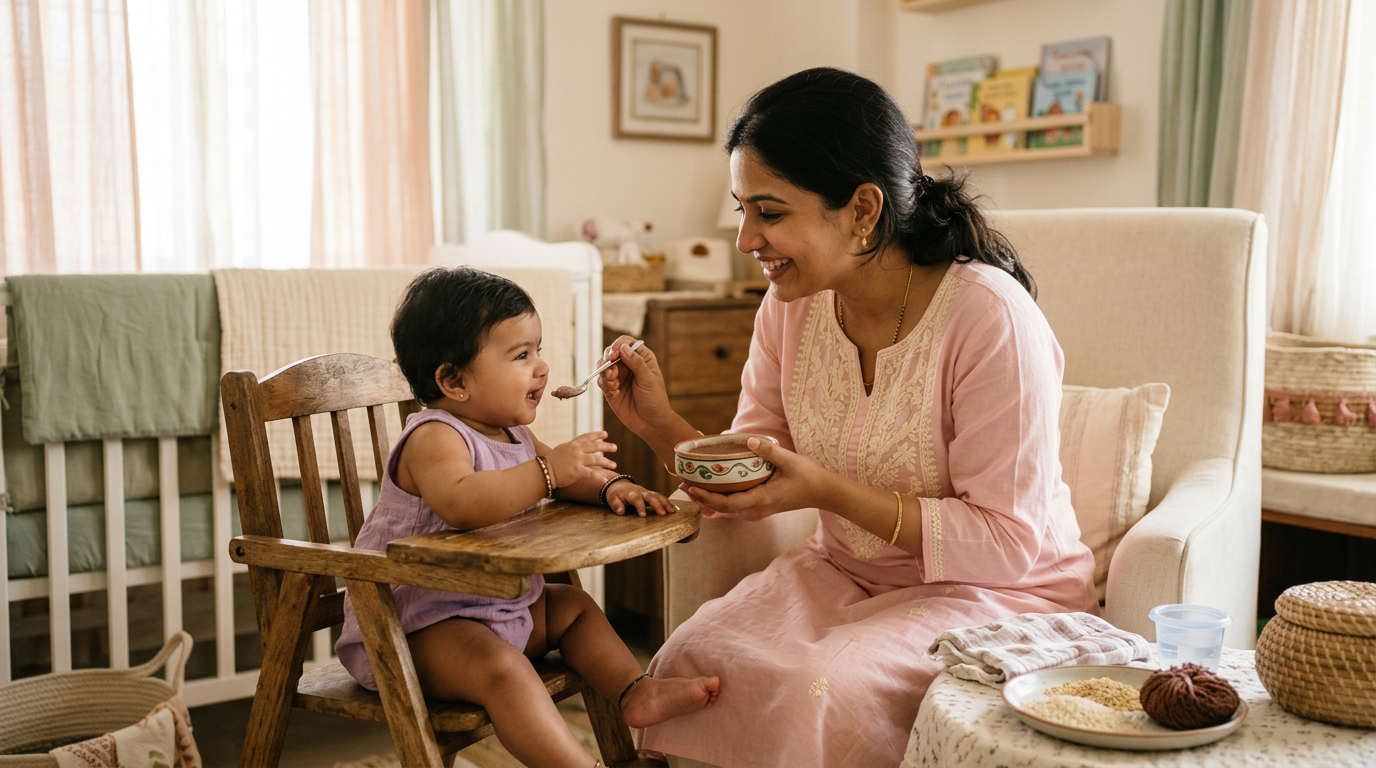
Ragi for babies is the undisputed gold standard of Indian weaning. Often called 'the superfood of the South,' this tiny red grain (finger millet) is packed with more calcium than almost any other cereal. If you are starting your little one on solids, ragi is the perfect first food because it is gluten-free, easy to digest, and helps in building strong bones during that critical first year of growth.
Why Ragi for Babies is the Ultimate Indian Superfood
In India, we’ve been using ragi (known as Kezhvaragu in Tamil or Nachni in Marathi) for generations. While Western charts might push oats or rice cereal, the Indian Academy of Pediatrics (IAP) often highlights the importance of traditional grains. Ragi is particularly famous for its iron content, which is crucial because a baby's natural iron stores start to deplete around the 6-month mark.
The Nutritional Powerhouse
* Calcium for Bone Health: Ragi has 3 times more calcium than milk, helping your baby reach those physical milestones like crawling and standing. You can track these exciting shifts using our baby milestones tracker.
* Easy Digestion: Since it is gluten-free, it doesn't cause the bloating or tummy troubles often associated with wheat.
* Natural Iron: Helps prevent anaemia, which is quite common in Indian infants transitioning from exclusive breastfeeding.
* Complex Carbs: It provides sustained energy, keeping your baby fuller for longer (which might just help you get a better night's sleep!).
How to Introduce Ragi in Your 6 Month Baby Food Chart Indian
When you are looking at a 6 month baby food chart indian, ragi usually makes its debut in the form of a thin porridge or 'kanji.' The traditional way involves soaking the whole grains, sprouting them, sun-drying, and then grinding them into a fine powder. However, if you are a busy mama, high-quality organic sprouted ragi flour (costing roughly ₹150–₹250 per 500g) is a lifesaver.
Making the Perfect Ragi Porridge
Sprouted vs. Plain Ragi: Which is Better?
Always go for sprouted ragi for babies. Sprouting (ankurit) increases the bioavailability of nutrients. It reduces phytic acid, which means your baby’s body can actually absorb the calcium and iron more effectively. Think of it as 'pre-digesting' the grain for your baby's delicate gut. This is especially helpful if you are also managing your own postnatal recovery; sprouted grains are easier on your digestion too during the prasava kaalam (postnatal period).
If you are feeling overwhelmed with the transition to solids while still dealing with your own body's changes, remember to check your physical recovery. Many moms experience core weakness after birth; you can do a free diastasis recti self-check to see if your 'mummy tummy' needs specific care.
Regional Ragi Recipes for Older Babies
Once your baby clears the 7-month mark, you can get creative. The goal is to move from plain purees to textured family foods.
Ragi Sheera/Halwa (7+ Months)
In Maharashtra, Nachni Satva is a popular choice. Cook ragi with a little bit of homemade ghee and add apple puree for sweetness. This provides the healthy fats necessary for brain development.
Ragi Idli and Dosa (9+ Months)
By the time you are looking at a 9 month baby food chart indian, your baby should be exploring finger foods. Mix ragi flour into your regular idli/dosa batter. These fermented foods are excellent probiotics for the baby's gut.
Real Talk from Indian Moms
"I was so worried about my daughter's weight, but my Sasu Maa insisted on ragi kanji every morning. Within two months, she looked so much sturdier. It's the only thing she eats without a fuss!" — Ananya S., Bengaluru (Mom to 8-month-old Kabir)
"We call it 'Nachni' in my house. I started with the sprouted powder at 6 months. It’s affordable, traditional, and honestly, way better than the boxed cereals filled with preservatives." — Pooja V., Mumbai (Mom to 10-month-old Shanaya)
"Pro tip: add a pinch of cardamom (elaichi) to the ragi porridge. The aroma is lovely and it helps with digestion. My baby loves the 'chocolatey' look of it!" — Meera K., Chennai (Mom to 7-month-old Aditi)
When to Call Your Paediatrician
While ragi is generally very safe (it's not a common allergen), you should always follow the '3-day rule' when introducing any new food. Contact your doctor if you notice:
* Skin Rashes: Any sudden hives or red patches around the mouth or body.
* Vomiting: Projectile vomiting immediately after feeding.
* Extreme Constipation: If the baby hasn't passed stool for 3+ days after starting ragi or is crying in pain while passing hard stools.
* Swelling: Any swelling of the lips, tongue, or face.
* Breathing Issues: Any wheezing or difficulty breathing (seek emergency care immediately).
Frequently Asked Questions
Is ragi for babies better than rice?
Yes, in terms of nutrition, ragi wins. While rice is gentle, it is mostly carbohydrates. Ragi provides calcium, iron, and fibre, making it a more complete meal for a growing infant.
Can I include ragi in a 7 month baby food chart indian?
Absolutely. At 7 months, you can start making the ragi porridge slightly thicker and begin adding fruit purees like pear or papaya to it.
How often should I give ragi in an 8 month baby food chart indian?
At 8 months, you can serve ragi 3-4 times a week. You can also start introducing other grains like bajra or jowar to provide a variety of nutrients.
Can I use ragi for a 10 month baby food chart indian as finger food?
Yes! At 10 months, babies love textures. You can make mini ragi pancakes (using ragi, curd, and grated carrots) or ragi laddoos (bound with dates) for them to pick up and eat.
Does ragi cause constipation in babies?
Sometimes, if the baby isn't getting enough water or if the ragi is not cooked thoroughly, it can cause mild constipation. Always ensure the porridge is well-cooked (shiny appearance) and keep your baby hydrated.
Can I give ragi during a cold?
Yes, ragi is a 'warming' grain according to Ayurveda, making it a comforting food during winters or when the baby has a mild sniffle. Just keep it light and easy to swallow.
Feeding your baby is about more than just calories; it's about building a foundation for a lifetime of healthy eating. Ragi is a beautiful way to connect your baby to their Indian roots while ensuring they get the best possible nutrition. Don't stress if they spit out the first few spoons—it's a new texture! Be patient, keep the ghee handy, and watch your little one grow strong.
I am a strong, capable mother providing exactly what my baby needs to thrive.
Sources & further reading
- Indian Academy of Pediatrics (IAP) Guidelines on Complementary Feeding
- Nutritive Value of Indian Foods, National Institute of Nutrition (NIN)
- WHO Guidelines on Infant and Young Child Feeding
Written by Neha Kapoor, RD (Registered Dietitian, Maternal & Child Nutrition)
Reviewed by TheMamaCircle Editorial Team
Last updated: 10 August 2026
This article is for general information only and is not a substitute for personalised medical advice. Always consult your paediatrician or obstetrician for your specific situation.