Tummy Time Activities: The Ultimate India Guide to Baby Play
Master tummy time activities at home! Discover sensory play for babies using desi kitchen items to boost brain development. Start your baby's gym today!
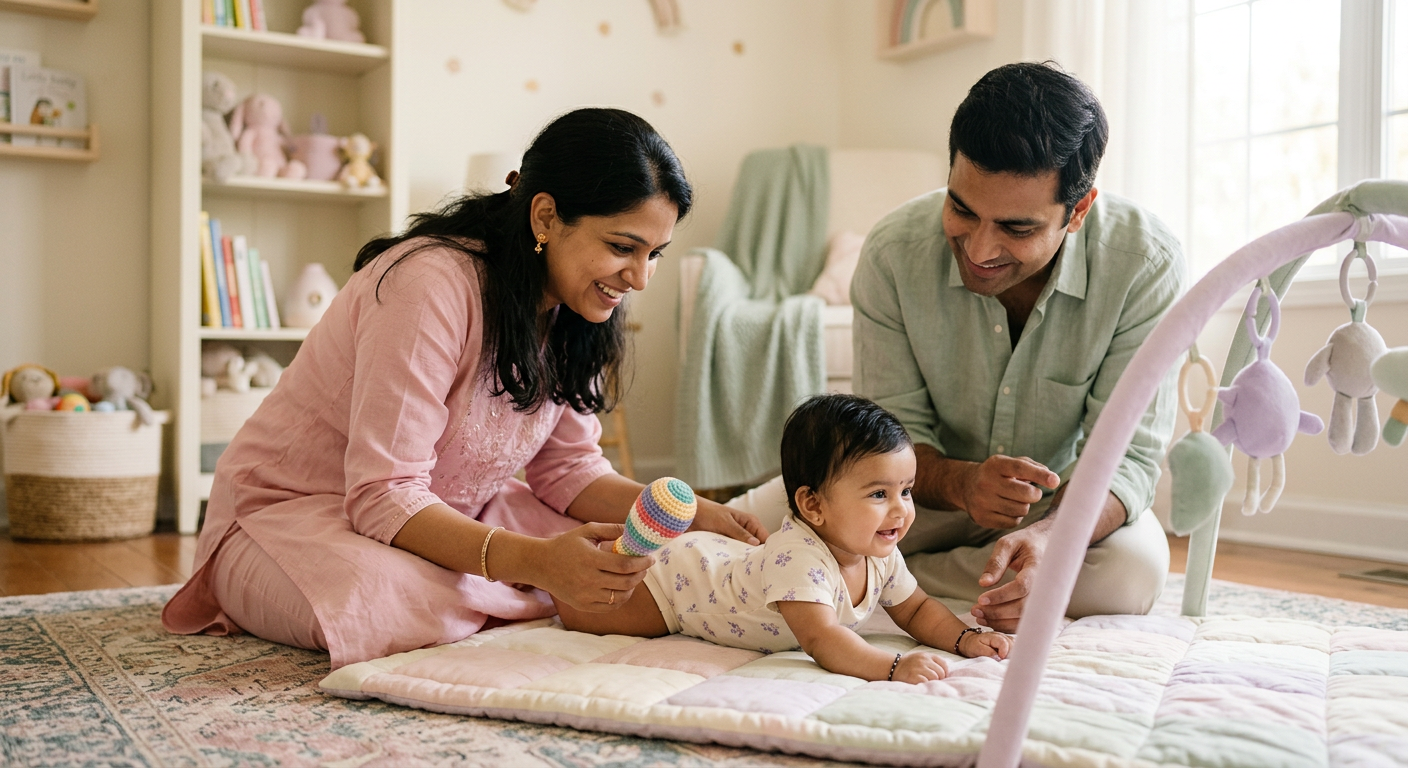
Tummy time activities are not just a check-mark on your daily checklist; they are the foundational gym sessions for your little one. While the concept might feel like a new-age western import, Indian grandmothers have been placing babies on their bellies for centuries during maalish (massage) sessions to strengthen their necks. By placing your baby on their stomach while awake and supervised, you are helping them build the muscle strength in their neck, shoulders, and core required to eventually roll, sit, and crawl.
Why Tummy Time Activities are Crucial for Development
Most Indian babies spend a significant amount of time on their backs or in someone's arms (the beloved godi). While "Back to Sleep" is the gold standard for preventing SIDS, "Tummy to Play" is essential for motor milestones. When a baby is on their belly, they have to work against gravity to lift their head. This strengthens the neck muscles and prevents plagiocephaly (flat head syndrome).
Beyond physical strength, these sessions are the earliest form of activities for babies that promote visual development. When prone, a baby learns to shift their weight and look around, which is a massive workout for their vestibular system. According to the Indian Academy of Paediatrics (IAP), supervised floor play should start as soon as you come home from the hospital, provided the umbilical stump has healed and the mother is recovering well.
5 Fun Tummy Time Activities Using Things in Your 2BHK
You don't need expensive Montessori gear from Amazon to keep your baby engaged. Most Indian households are a goldmine for sensory play for babies. Here is how to turn everyday objects into developmental tools:
1. The Steel Bartan Mirror
Babies are obsessed with faces. Instead of buying a "baby-safe mirror," head to your kitchen and grab a high-polish steel thali or a large serving spoon.
How to do it: Prop the thali* against a cushion or the sofa at the baby's eye level while they are on their tummy.
* The Skill: They will spend minutes trying to figure out the "other baby" in the reflection, encouraging them to keep their head up longer.
2. The Dupatta Tunnel
Texture is a huge part of brain development activities for babies.
How to do it: Take a soft cotton dupatta or a silk saree* and gently drag it over their back or place it in front of them to scrunch up.
* The Skill: Reaching for the fabric helps them practice one-handed weight-bearing, which is the precursor to crawling.
3. The Water Bag "Aquarium"
This is a sensory hit and costs almost ₹0.
How to do it: Take a sturdy Ziploc bag (often found in clothing packaging or grocery deliveries), fill it with water and a few drops of food colour or some colourful bindis* or glitter. Tape all four sides securely to the floor using duct tape.
* The Skill: The squishy movement under their palms keeps them curious and strengthens their wrist stability.
4. The Rolled-Up Towel Trick
If your baby hates being flat on the floor (the "tummy time protest"), give them a little boost.
How to do it: Roll up a small cotton towel or a godadi* (quilt) and place it under their chest, with their arms draped over the front.
* The Skill: This slight incline makes it easier for them to lift their head and see the world, reducing frustration.
5. The "Nani-Dadi" Entertainment
Nothing beats a human face.
* How to do it: Get down on the floor! Lie face-to-face with your baby. Sing traditional rhymes like "Machli Jal Ki Rani Hai" or make funny popping sounds with your mouth.
* The Skill: Social-emotional bonding and auditory tracking.
Managing Your Postnatal Recovery During Play
As a mom, your body is also healing. If you are in your early weeks of postnatal recovery, do not feel pressured to sit on a hard floor. You can do "tummy time" on your chest while you are reclined on the bed. This chest-to-chest contact is excellent for bonding and keeps you comfortable. If you’ve had a C-section, wait until your scar analyzer results or your doctor gives you the go-ahead before doing heavy floor work, as getting up and down can strain your incision.
For those dealing with core weakness, remember that lifting the baby is a workout in itself. You might want to try a free diastasis recti self-check to ensure your abdominal muscles are healing correctly before you spend long periods hunched over a play mat.
Real Talk from Indian Moms
> "My Kabir hated tummy time until I started placing his favorite squeaky Hanuman toy just out of reach. Suddenly, he had a reason to push up!" — Megha S., Bengaluru, Mom to 5-month-old.
> "In our house, tummy time happens during the morning maalish. The oil makes his skin slippery, and he loves 'swimming' on the bed while my mother-in-law sings bhajans." — Pooja R., Nagpur, Mom to 3-month-old.
When to Call Your Paediatrician
While every baby develops at their own pace, keep an eye out for these red flags during floor play:
* The baby is unable to support their head even momentarily by 3-4 months.
They consistently lean or tilt their head to only one side (possible torticollis*).
* They seem excessively floppy or stiff in their limbs.
* They show no interest in visual stimuli or faces.
* They haven't reached certain baby milestones tracker goals like rolling by 6-7 months.
Frequently Asked Questions
When should I start activities for babies to help them crawl?
Tummy time is the very first activity. Once your baby can hold their head up steadily and starts "pivoting" (turning in a circle on their belly), you can encourage crawling by placing toys slightly out of reach. Most babies start crawling between 7 and 10 months.
How does sensory play for babies help with tummy time?
Sensory play—like using different textures or water bags—distracts the baby from the physical effort of lifting their head. It turns a "workout" into a "game," allowing them to stay in the position longer without crying.
What are the best brain development activities for babies under 6 months?
Reading board books during tummy time, narrating your day in your mother tongue, and high-contrast (black and white) card play are excellent. You can use a baby vision simulator to see exactly how much detail your baby can actually perceive at their current age.
Is it safe to do indoor activities for toddlers if my baby is on the floor?
If you have an older child doing indoor activities for toddlers nearby, ensure they have a designated "safe zone" for their blocks or crayons so they don't accidentally step on the baby. Supervision is non-negotiable.
What if my baby cries every time I put them on their belly?
It is normal! It is hard work for them. Start with just 1-2 minutes after a diaper change when they are well-rested and not hungry. Gradually increase the time as they get stronger. Use the "towel roll" method mentioned above to make it easier.
Tummy time isn't about perfection; it’s about persistence. Some days your baby will give you ten minutes of glorious head-lifting, and other days they will face-plant and fuss after thirty seconds. Both are okay. You are doing a great job helping your little one grow strong, one little push-up at a time.
I am a strong, capable mother, and my baby is growing stronger every day.
Sources & further reading
- Indian Academy of Pediatrics (IAP) - Growth and Development
- World Health Organization (WHO) - Physical Activity Guidelines for Infants
- AIIMS Delhi - Department of Pediatrics Developmental Milestones
Written by Dr. Anjali Mehta, MBBS, DCH (Paediatrics)
Reviewed by TheMamaCircle Editorial Team
Last updated: 8 September 2026
This article is for general information only and is not a substitute for personalised medical advice. Always consult your paediatrician or obstetrician for your specific situation.