What is Garbh Sanskar? A Modern Indian Mom's Guide
What is garbh sanskar? Discover how ancient Indian wisdom and modern fetal science combine to boost your baby's IQ and EQ from the womb. Learn more today!
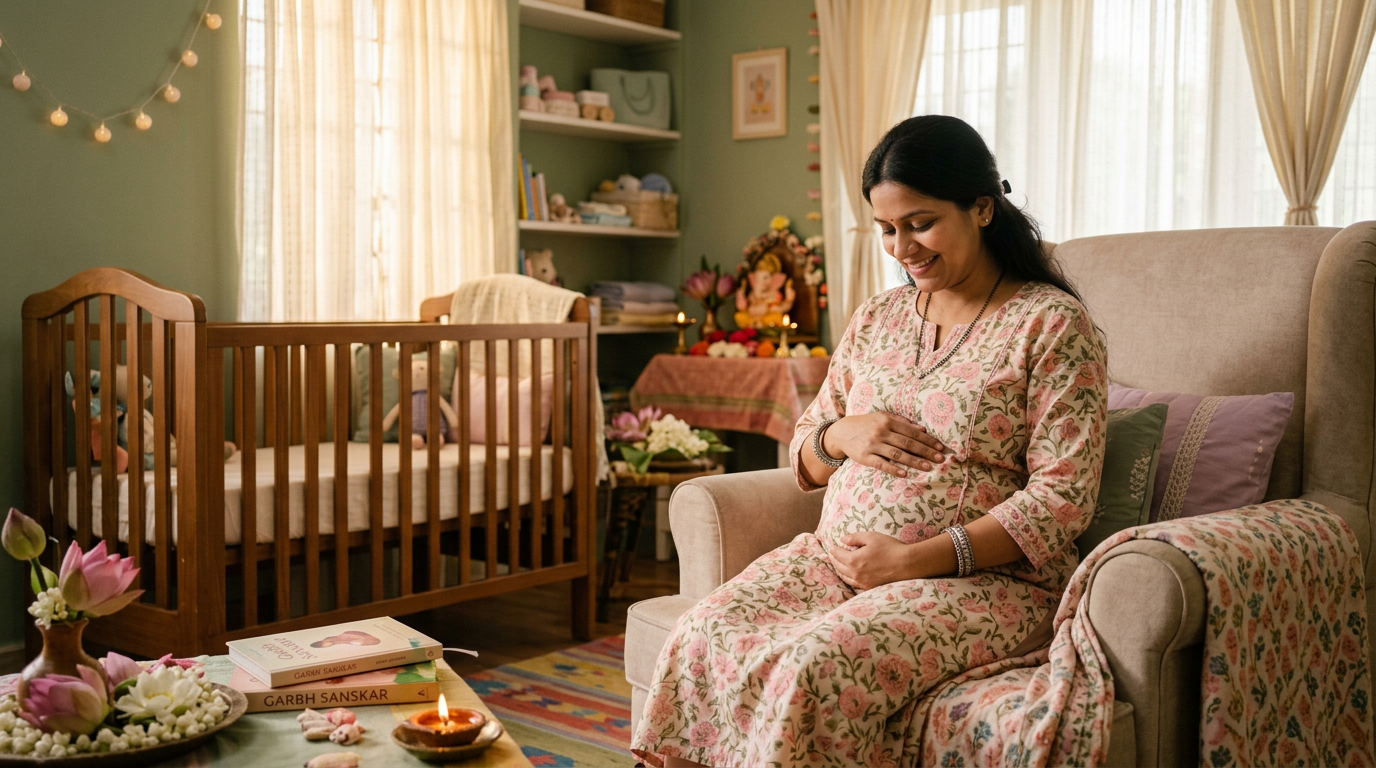
If you are an Indian woman who has just seen those two pink lines, your mother or mother-in-law has likely already mentioned it. But what is garbh sanskar exactly? In simple terms, it is the Vedic science of educating your baby in the womb. It is the belief that your thoughts, food, and environment directly shape your baby’s IQ, EQ, and physical temperament. It is not just old wives' tales; it is a holistic prenatal practice that combines ancient wisdom with what modern neurobiology calls 'fetal programming.'
What is Garbh Sanskar and why does every Indian grandmother swear by it?
The term comes from the Sanskrit words Garbh (fetus/womb) and Sanskar (education/values). Ancient Ayurvedic texts like the Sushruta Samhita suggest that a child's mental and behavioral development begins the moment of conception. While modern medicine focus on folic acid and ultrasounds, what is garbh sanskar focuses on the 'vibe' and the biological signals your baby receives through your hormones.
Current research in epigenetics suggests that maternal stress (cortisol) can cross the placenta, while 'happy hormones' like dopamine and serotonin promote better brain development. When you practice garbh sanskar, you aren't just reciting mantras; you are actively lowering your cortisol levels to give your baby a calm biological foundation.
The Five Pillars of Garbh Sanskar: From Shlokas to Sabzi
To truly understand what is garbh sanskar, we have to look past the incense sticks and see the actionable habits. It is a four-trimester lifestyle (including the preconception phase) rooted in these five areas:
1. Garbh Samvad (Communicating with your baby)
Around the 14th to 16th week, your baby’s ears are developed enough to hear your heartbeat and digestive sounds. By the 24th week, they can hear external sounds.
Talk to the bump: Tell your baby about your day or what Sasu Maa* made for lunch.
* Touch therapy: Massaging your belly with warm sesame oil (Til tel) while talking builds a sensory connection.
2. Music and Mantra (The auditory influence)
Sound vibration is a key component. Scientific studies indicate that rhythmic sounds like a garbh sanskar mantra can stabilize the fetal heart rate.
Raga music: Playing Raga Malkauns or Raga Yaman* is traditionally believed to soothe the nervous system.
* Bija Mantras: Chanting 'Om' creates a vibration that helps in the development of the baby's cognitive functions.
3. Satvik Ahaar (The Ayurvedic Pregnancy Diet)
In India, we say "Jaisa Anna, Vaisa Mann" (As the food, so the mind). A Garbh Sanskar diet isn't just about calories; it’s about 'Prana' or life force.
* The Power of Ghee: Adding a spoon of A2 cow ghee to your daal supports the baby’s brain development (rich in DHA).
* Avoid 'Tamasic' foods: Limit heavy, stale, or overly spicy foods that cause acidity and irritability.
Seasonal Fruits: Focus on Chikoo, Pomegranate, and Custard Apple* (Sitaphal) depending on the season in your city.
4. Intellectual Stimulation (Pustak Vachan)
What you read, your baby 'processes' through your emotional reaction to the story. Instead of binging stressful crime thrillers on Netflix, traditional wisdom suggests reading:
Moral Stories: Panchatantra or Jataka Tales*.
* Biographies: Stories of great leaders like Shivaji Maharaj or Mahatma Gandhi.
Spiritual Texts: Reading the Bhagavad Gita or Ramayana* is common in many households to instill a sense of 'Dharma'.
5. Yoga and Pranayama
Physical poses like Marjariasana (Cat-Cow pose) and breathing techniques like Anulom Vilom ensure a rich oxygen supply to the placenta. This is often taught in structured garbh sanskar classes across major Indian cities like Mumbai, Delhi, and Bangalore.
The Modern Science: What FOGSI and ICMR say about Maternal Wellbeing
While "Garbh Sanskar" is a traditional term, the Federation of Obstetric and Gynaecological Societies of India (FOGSI) emphasizes "Maternal Mental Health" as a critical factor in birth weight and preterm labor prevention. The Indian Council of Medical Research (ICMR) guidelines also highlight that nutritional interventions and stress reduction are non-negotiable for a healthy Indian pregnancy.
When you practice these rituals, you are effectively performing "Stress Management," which prevents pregnancy-induced hypertension (PIH) and gestational diabetes—two major concerns for the Indian phenotype.
Real talk from Indian moms
> "I thought garbh sanskar was just sitting in front of an idol. But my doctor explained it's about my happiness. I started listening to MS Subbulakshmi every morning while having my soaked almonds. It made me so much calmer during the Delhi traffic commute!"
> — Ananya S., New Delhi (Mom to 6-month-old Kabir)
> "I followed a garbh sanskar pdf guide for my second pregnancy. Compared to my first, I felt more connected to the baby. Whether it was the mantras or just the 'me-time,' my daughter is a much better sleeper than my son was!"
> — Megha R., Pune (Mom to 3-year-old and 4-month-old)
When to call your paediatrician (Red Flags for Newborns)
While Garbh Sanskar helps in building a calm baby, medical vigilance is paramount once the baby arrives. If your baby shows these signs, skip the home remedies and call your doctor:
* Jaundice: Yellowness of the skin or eyes extending to the palms and soles.
Feeding issues: If the baby is too drowsy to wake up for stanpaan* (breastfeeding) or has fewer than 6 wet nappies in 24 hours.
* Fever: Any temperature above 100.4°F (38°C) in a newborn.
* Umbilical cord redness: Any pus or foul smell from the belly button area.
* Continuous crying: High-pitched crying that doesn't stop with rocking or feeding.
Frequently Asked Questions
What is garbh sanskar and when should I start?
Ideally, it starts before conception (Beej Shuddhi). However, most moms start in the first trimester. It is never too late—even starting in the 7th month provides significant benefits for both mom and baby.
Are there any garbh sanskar classes available in India?
Yes, many cities have dedicated centers. Costs typically range from ₹5,000 to ₹25,000 for a full course, often including prenatal yoga, diet charts, and meditation sessions.
Can I find a garbh sanskar pdf for daily practice?
Most Ayurvedic centers offer digital guides. You can find a garbh sanskar pdf that lists daily shlokas and diet plans tailored to each month of pregnancy.
Does garbh sanskar help in normal delivery?
While no practice guarantees a normal delivery, the yoga and pranayama components of Garbh Sanskar strengthen the pelvic floor and help you manage labor pain better, increasing your chances of a vaginal birth.
Is garbh sanskar in Hindi or Sanskrit only?
Not at all. While the traditional mantras are in Sanskrit, the concept of "talking to your baby" can be done in your mother tongue—be it Hindi, Tamil, Marathi, or English. The baby responds to the emotion and the tone of your voice, not the dictionary definition of your words.
Is it scientific to listen to a garbh sanskar mantra?
Yes. Sound therapy is a recognized field. Rhythmic chanting induces 'Alpha waves' in the brain, leading to deep relaxation. This reduces the mother's heart rate, which in turn creates a stable environment for the fetus.
Practice Garbh Sanskar not as an added chore on your pregnancy to-do list, but as a way to bond with the little life growing inside you. You aren't just growing a baby; you are nurturing a soul.
Main khush hoon, mera baccha swasth hai. (I am happy, my baby is healthy.)
Sources & further reading
- FOGSI - Maternal Health Guidelines
- ICMR - Nutrient Requirements and Dietary Guidelines for Indians
- National Health Portal India - Ayurveda in Pregnancy
Written by Dr. Ritu Sharma, MD (Obstetrics & Gynaecology)
Reviewed by TheMamaCircle Editorial Team
Last updated: 13 June 2026
This article is for general information only and is not a substitute for personalised medical advice. Always consult your paediatrician or obstetrician for your specific situation.