When do babies start teething? India Guide & Growth Chart
When do babies start teething? Most Indian babies sprout their first tooth at 6 months, but the range varies. Learn symptoms, remedies, and a growth chart.
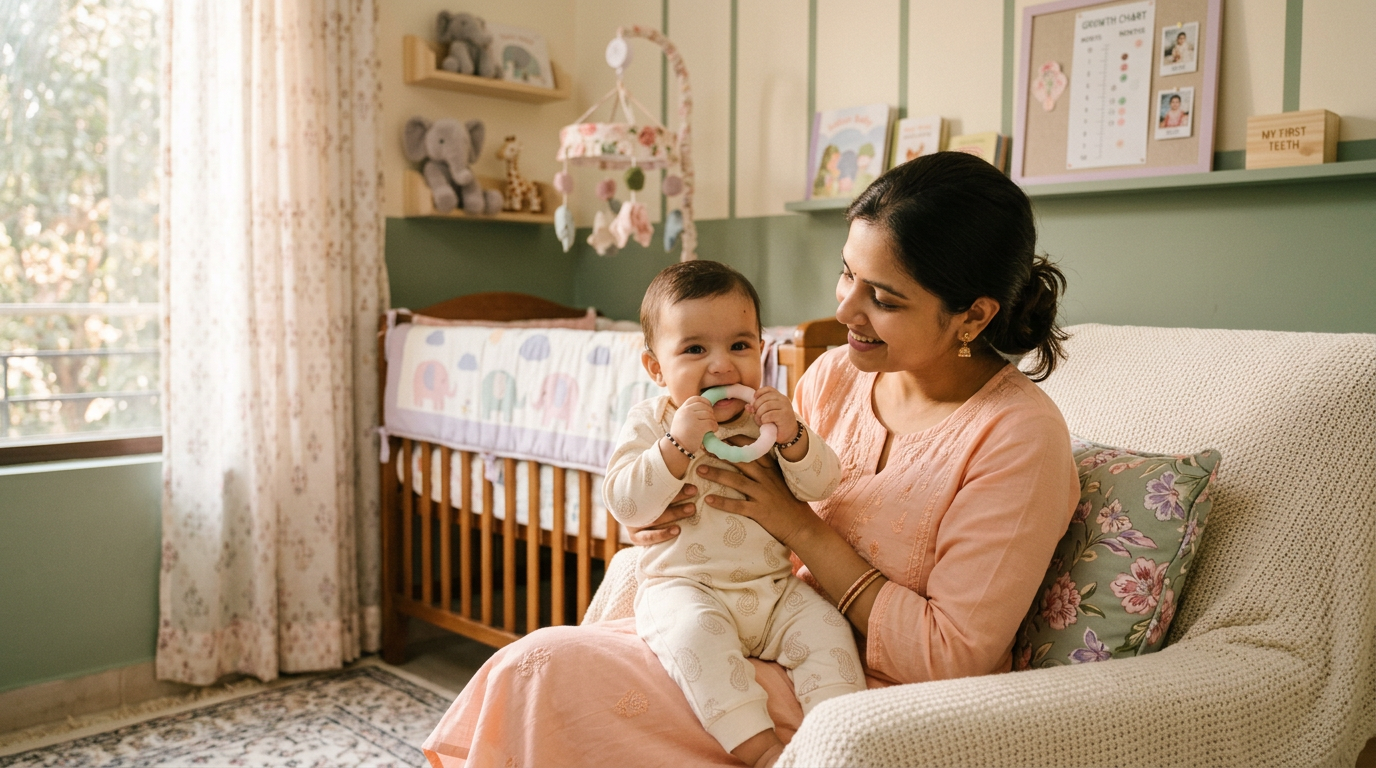
Most babies get their first tiny white bud between 6 and 10 months of age. While the average Indian baby sees a tooth around the 6-month mark—often perfectly timed with the Annaprashan or Mukhe Bhaat ceremony—the window is wide. Some early birds start at 4 months, while others stay "gummy" until their first birthday. Knowing when do babies start teething helps you distinguish between normal developmental milestones and actual discomfort.
When Do Babies Start Teething? The REAL Timeline
While the textbooks say six months, every Indian household has a story of a cousin’s baby who was born with a tooth (natal teeth) or a nephew who didn't sprout a single pearly white until 14 months. Both are usually normal. According to the Indian Academy of Pediatrics (IAP), the timing is largely hereditary. If you or your spouse were late teethers, your "chota baby" likely will be too.
Typically, the lower central incisors (bottom front teeth) are the first to arrive. Following this, the teething order usually sees the upper front teeth appearing next. By the time your child is three years old, they will have a full set of 20 primary teeth.
General Teething Milestones:
* 4 to 7 months: The first signs of drooling and "mouthing" objects begin.
* 6 to 10 months: The first tooth usually erupts through the gum line.
* 10 to 14 months: Primary molars start pushing through (this is often the crankiest phase).
* 2 to 3 years: The second molars arrive, completing the set.
Spotting the Signs: Is it Teething or Just "Being a Baby"?
Before that first tooth breaks the skin, you will notice a change in your baby's teething symptoms baby. In India, we often attribute every bout of loose motions or crankiness to "daant nikalna" (teething), but it’s important to separate myth from medical fact.
Common Signs to Watch For:
* The "Nile River" of Drool: Excessive saliva that can cause a mild rash on the chin. Keep a soft muslin cloth handy to pat (don’t rub) the area dry.
* Chewing on Everything: From your dupatta to the edge of the wooden crib, everything goes into the mouth. This pressure provides relief to the aching gums.
* Irritability and Sleep Disruptions: Your gold-medal sleeper might suddenly wake up crying at 2 AM because the gum tissue is stretching.
* Ear Pulling: The nerves in the jaw and ears are connected, so babies often tug at their ears when a back molar is moving.
Dadi’s Remedies vs. Modern Paediatrics: What Works?
In Indian homes, as soon as the drooling starts, sasu maa or dadi will suggest a list of traditional remedies. Let’s audit them based on safety and the Bureau of Indian Standards (BIS/IS 9873) safety norms for toys and teethers.
1. The Silver Teether (Chandi ka Khilona)
Verdict: Keep (with caution). Silver is naturally antimicrobial. However, ensure the silver teether is solid and not hollow (where bacteria can hide) and has no sharp edges. Always supervise its use.
2. Jaiphal (Nutmeg) Paste
Verdict: Skip for Teething. While Jaiphal is used in traditional Balguti, it is a potent spice. Rubbing it directly on inflamed gums can cause irritation or even accidental ingestion of high doses which are sedative. Stick to cold pressure instead.
3. Root Vegetables (The "Gajar" Trick)
Verdict: Modify. Giving a cold, thick slice of carrot (Gajar) or cucumber is a classic Indian teething remedies for babies tactic. Warning: This is a major choking hazard once the baby has even one tooth to bite off a piece. Use a silicone fruit feeder (costing roughly ₹250–₹500) instead.
4. Honey on Gums
Verdict: Hard No. Never give honey to a baby under 12 months due to the risk of infant botulism, a serious type of food poisoning.
Managing the "Teething Fever"
Many parents call me saying their baby has a 102°C fever because of a new tooth. Let’s be clear: teething causes a slight rise in body temperature (a "warmth" to the touch), but it does not cause a high-grade fever. If your baby has a temperature over 100.4°F (38°C), it is likely an infection, not baby teething fever. During this time, babies put everything in their mouths, making them more susceptible to stomach bugs, which is why we often see "teething diarrhea" in India.
Real Talk From Indian Moms
> "My daughter didn't get her first tooth until 11 months. I was so worried she had a calcium deficiency! My paediatrician just laughed and told me to enjoy the gummy smiles while they lasted. Two weeks later, four teeth came out at once!"
> — Ridhima S., Bengaluru (Mom to 14-month-old Aavya)
> "We used sterilized cotton washcloths dipped in cold coconut water and kept in the fridge. My son loved the cold texture, and it was better than any expensive plastic teether I bought from Amazon."
> — Meenakshi V., Chennai (Mom to 9-month-old Arjun)
When to Call Your Paediatrician
While teething is a natural process, some symptoms require medical attention. Please do not ignore the following "Red Flags":
Frequently Asked Questions
When do babies start teething on average?
Most babies start teething around 6 months. However, the normal range is anywhere from 4 to 12 months. If your baby reaches 15 months without a tooth, consult a paediatric dentist just to check the "jaw seeds."
What are the best teething remedies for babies in India?
Safe remedies include using a clean, cold finger to massage the gums, offering chilled (not frozen) silicone teethers, or a cold damp muslin cloth. Avoid "teething necklaces" or amber beads which are choking and strangulation hazards.
What is the typical teething order?
The teething order usually begins with the two lower middle teeth, followed by the four upper front teeth. Next come the lower lateral incisors, then first molars, canines, and finally second molars.
Can baby teething fever cause a high temperature?
A true baby teething fever is usually just a mild elevation in temperature (below 100.4°F). If the baby has a high fever, vomiting, or a cough, it is likely a separate illness and needs a doctor's visit.
Is there a standard teething chart I can follow?
A teething chart is a helpful guide to know which teeth to expect at what age. Most charts will show that by 12 months, a baby usually has 4 to 8 teeth, but remember that these are averages and not strict deadlines.
Should I stop breastfeeding if my baby starts biting?
Absolutely not! Breastfeeding (stanpaan) can actually be very soothing for a teething baby. If the baby bites, gently break the suction with your pinky finger and say "No" firmly but calmly. They quickly learn that biting means the milk stops.
Teething is a messy, droolly, and sometimes tearful milestone, but it is also a sign that your baby is growing exactly as they should. Focus on providing comfort, keeping their chin dry to prevent rashes, and offering lots of extra cuddles. This phase will pass, and soon you'll be dealing with the "Terrible Twos" instead!
You are doing a great job, and this fussy phase is just a tiny bump on the road to those beautiful toothy smiles.
Sources & further reading
- Indian Academy of Pediatrics (IAP) - Teething Guide
- World Health Organization (WHO) Child Development Milestones
- Ministry of Health and Family Welfare - NHp India Baby Care
Written by Dr. Anjali Mehta, MBBS, DCH (Paediatrics)
Reviewed by TheMamaCircle Editorial Team
Last updated: 14 June 2026
This article is for general information only and is not a substitute for personalised medical advice. Always consult your paediatrician or obstetrician for your specific situation.