Why Babies Cry at Night: The Indian Mom's Decoder Guide
Why babies cry at night? Decode hunger, gas, and colic cues. Learn the Dunstan sounds and Indian soothing tips to calm your fussy infant tonight.
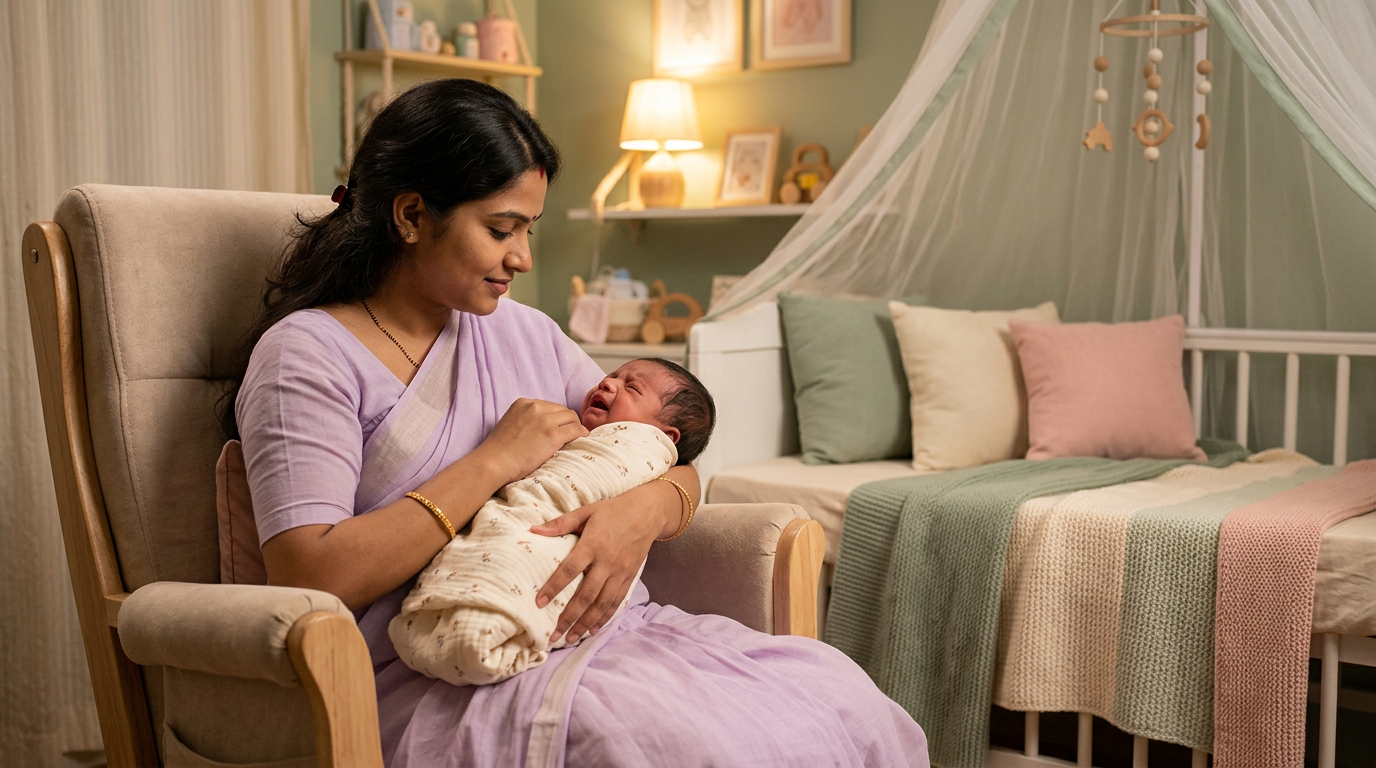
It is 3:00 AM. You have tried the rocking, the shushing, and the thapki, but the crying continues. If you are wondering why babies cry at night, the answer usually lies in a mix of biological needs, developmental leaps, and environmental discomforts. In the postnatal (also called postnatal) period, your baby is transitioning from a dark, warm womb to a loud, bright world. Their only way to communicate that they are hungry, gassy, or simply lonely is through their vocal cords. Decoding these cries is not about being a "perfect" mom; it is about learning a new language while you are sleep-deprived.
Why babies cry at night: The Biological Blueprint
Newborns do not have a circadian rhythm. In the garbh (womb), they slept when they wanted and were active when you were resting. Once they are born, it takes about 12 to 16 weeks for their internal clock to align with the sun. When you ask why babies cry at night, the most common reason is a simple lack of distinction between AM and PM.
The Dunstan Sound Cues
Before the full-blown screaming starts, babies often give "pre-cry" signals. Priscilla Dunstan identified five universal sounds that can help you understand the baby crying at night:
* "Neh" (Hunger): The tongue hits the roof of the mouth, triggered by the sucking reflex.
* "Owh" (Sleepy): A yawn-like sound shaped by an oval mouth.
* "Heh" (Discomfort): Often means a wet diaper or itchy fabric.
* "Eairh" (Lower Gas): A deeper, grumbly sound indicating wind in the intestines.
* "Eh" (Burp): A short sound indicating air trapped in the chest.
If you are struggling to identify these sounds in the middle of a meltdown, using an AI cry analyzer can help bridge the gap while you build your intuition.
Decoding the "Fussy Infant" and the Witching Hour
In India, we often talk about nazar or "evil eye" when a baby cries inconsolably in the evening. While cultural rituals bring comfort, medically, this is often the "Witching Hour." A fussy infant at 7:00 PM is usually dealing with sensory overload. After a day of relatives visiting, bright lights, and loud pressure-cooker whistles, the baby’s nervous system simply "breaks."
Hunger vs. Habit
Is it a hunger cry or a comfort cry? If your baby is under 3 months, it is almost always hunger or a need for proximity. In the Indian context, many moms worry their milk supply is low at night. However, "cluster feeding"—where the baby wants to nurse every 30 minutes—is a natural way to boost your supply and does not mean your milk is insufficient.
Common Culprits for Baby Crying at Night for No Reason
Sometimes it feels like your baby crying at night for no reason is a personal fail, but it is often physiological.
* Infantile Colic: Defined by the "Rule of Three"—crying for more than 3 hours a day, 3 days a week, for at least 3 weeks. According to the Indian Academy of Paediatrics (IAP), colic usually peaks at 6 weeks and resolves by 3-4 months.
Gas and Bloating: The pet dard* (stomach ache) is real. If your baby pulls their legs to their chest, they likely have trapped wind.
Temperature Sensitivity: Indian homes can be tricky. We often over-swaddle babies in heavy godris* or woollens, leading to overheating. A sweaty neck is a sign they are too hot. Conversely, a direct blast from an AC vent can make them shiver.
* The Startle Reflex: Also known as the Moro reflex. If the baby isn't snug, their own sudden arm movements can wake them up and trigger a cry.
The Indian Mom’s Guide to Night-time Soothing
We have a rich tradition of postnatal care, but some myths need a modern audit. While a gentle maalish (massage) with coconut or mustard oil during the day helps sleep, avoid heavy massages right before bed as it can be too stimulating.
The Grip on Gripe Water
Many households keep bottles of Woodwards or local brands of "Gripe Water" or Ghutti. While the Indian market is flooded with these, the IAP generally advises against giving anything other than breastmilk or formula to babies under 6 months. Many older formulations contained alcohol or high sugar. If your baby is gassy, try "bicycle legs" or the "football hold" instead of pharmacological interventions.
Creating a Sleep-Inducing Environment
* Dim the Lights: Use a zero-watt bulb (common in Indian households) or a dim warm-yellow nightlight.
* White Noise: You don't need a fancy machine; the sound of a ceiling fan or a dedicated white-noise app works wonders to drown out street dogs or traffic.
Swaddling: Use a breathable cotton mulmul* cloth. Ensure it is hip-healthy—tight at the arms but loose at the legs to prevent hip dysplasia.
As you navigate these long nights, remember that your recovery matters too. If you are feeling overwhelmed, checking your postnatal wellness assessment can help identify if your stress levels are within the normal range or if you need extra support.
Real talk from Indian moms
"My son used to cry every night from 8 PM to 10 PM. My sasu maa insisted it was 'bad air', but our doctor said it was just overstimulation. We started a 'no-visitor' rule after 6 PM, and the crying reduced significantly."
— Megha R., Bengaluru (Baby Arjun, 4 months)
"I used to think he was hungry every time he cried. I ended up overfeeding him, which led to more spitting up and more crying! Learning the 'Eh' vs 'Neh' sounds changed my life."
— Priya S., Lucknow (Baby Kabir, 2 months)
"The heat in Chennai was the secret culprit. I was so worried about him catching a cold that I didn't realize he was crying because he was sweating under three layers of cloth."
— Anitha V., Chennai (Baby Lakshmi, 5 months)
When to call your paediatrician
While why do babies cry at night is usually a question of comfort, some cries are red flags. Seek medical help if:
Monitoring your baby's growth can also provide peace of mind. You can use a baby growth chart to ensure they are gaining weight appropriately despite the nighttime fussiness.
Frequently Asked Questions
Why do babies cry at night even after being fed and changed?
This is often due to overstimulation or developmental leaps. As babies learn new skills like rolling or grasping, their brains become hyperactive at night. It could also be the Moro reflex startling them awake. Ensure the room is dark and cool to minimize external triggers.
What should I do if my baby is crying at night for no reason?
First, check for "hidden" discomforts like a hair tourniquet (a hair wrapped around a toe) or a scratchy clothing tag. If the physical needs are met, the reason is likely emotional regulation. Hold the baby skin-to-skin; your heartbeat and warmth are the most powerful regulators for a newborn's nervous system.
Is it normal for a fussy infant to cry for hours?
While "normal," it is often diagnosed as colic. If the crying follows the "rule of three" (3 hours, 3 days, 3 weeks), it is likely colic. However, always consult your doctor to rule out cow's milk protein allergy or reflux (GERD), which are common in India and often misdiagnosed as simple fussiness.
How can I stop my baby crying at night?
Establish a consistent shanti (calm) routine. A warm bath, a gentle oil rub, and dimming the lights at the same time every day helps set their internal clock. If the crying is intense, try the "5 S’s": Swaddle, Side/Stomach position (while holding), Shush, Swing, and Suck.
Why do babies cry at night more in the summer?
In many parts of India, temperatures can stay very high even at night. Dehydration and heat rashes are common causes of nighttime irritability. Ensure the baby is wearing a single layer of cotton and the room is well-ventilated.
Can I give my baby Janam Ghutti for nighttime crying?
Medical bodies like the IAP and WHO recommend exclusive breastfeeding for the first 6 months. Most Ghutti preparations are not regulated for safety or ingredients. It is safer to address the root cause—like gas or hunger—rather than using herbal sedatives.
Managing a crying baby at night is one of the hardest parts of the postnatal journey. It tests your patience and your physical limits. But remember, this is a season, not a forever state. Your baby is not crying "at" you; they are crying "for" you. You are their safe space, and even if you can't stop the cry immediately, your presence is enough.
Repeat after me: This cry is a communication, not a failure, and this night will eventually end.
Sources & further reading
- Indian Academy of Pediatrics (IAP) - Colic Guidelines
- World Health Organization (WHO) - Infant Crying and Sleeping
- National Health Portal (NHP) India - Postnatal Care
Written by Dr. Anjali Mehta, MBBS, DCH (Paediatrics)
Reviewed by TheMamaCircle Editorial Team
Last updated: 10 September 2026
This article is for general information only and is not a substitute for personalised medical advice. Always consult your paediatrician or obstetrician for your specific situation.