8 Month Baby Food Chart Indian: Recipes, Tips & Schedule
Start your 8 month baby food chart indian with ragi, dal khichdi, and soft finger foods. Transition from purees to mashes with our expert guide and meal plan.
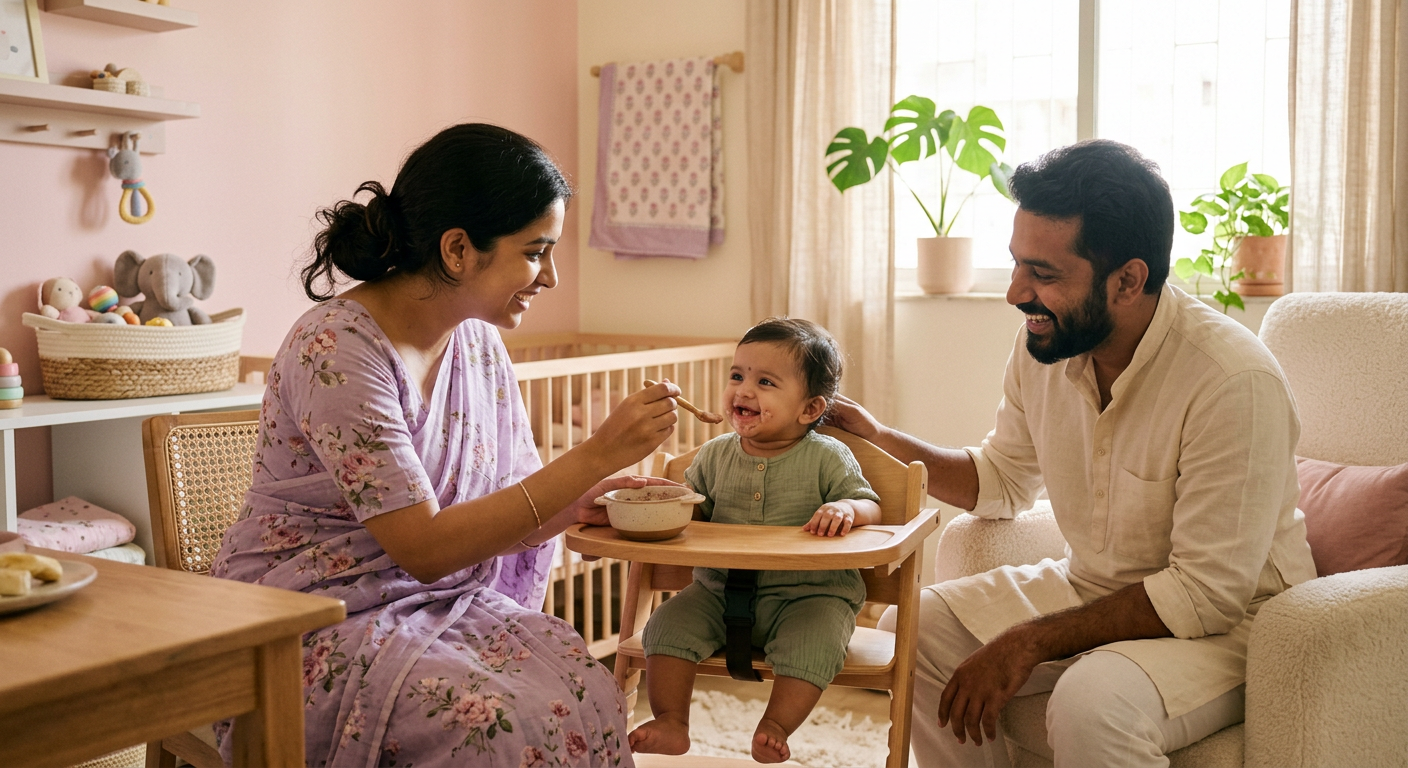
By 8 months, your little one is likely transitioning from "trying" food to actually eating it. My primary 8 month baby food chart indian recommendation focuses on moving away from watery purees toward thicker, mashed textures and soft finger foods. At this stage, your baby’s iron stores from birth are depleting, making iron-rich Indian staples like ragi and dal non-negotiable. Whether you started weaning with a 6 month baby food chart indian or are just now expanding the menu, this is the golden window to introduce spices and variety.
What Should an 8-Month-Old Indian Baby Eat?
Your baby is now ready for three solid meals a day, plus breast milk or formula. The Indian Academy of Paediatrics (IAP) suggests that at 8 months, energy density is key. You aren't just filling their tummy; you are fueling a brain that is busy mastering the "pincer grasp."
The Texture Shift: Mesh to Mash
Stop blending everything into a smoothie. Your 8-month-old needs to learn how to move food around their mouth.
* Mashed Khichdi: Instead of running it through a mixer, mash rice and dal with a spoon (karchi).
* Soft Finger Foods: Think steamed carrot sticks or small pieces of paneer that crumble easily.
Thicker Porridges: Transition from watery sooji ki kheer* to a thicker version.
Essential Nutrients in the Indian Kitchen
Sample 8 Month Baby Food Chart Indian Style
This chart is a template. Every baby is different, so don't force-feed if your little one is teetering on a milestone or feeling cranky. If you are tracking their progress, you might also find our baby growth chart useful to ensure they are on the right track for their age.
| Time | Food Item | Indian Ingredient Focus |
| :--- | :--- | :--- |
| 8:00 AM | Breakfast | Ragi Porridge (Nachni Satva) with mashed banana |
| 10:30 AM | Mid-Morning Snack | Stewed Pear or steamed Apple slices |
| 1:00 PM | Lunch | Vegetable Dalia or Moong Dal Khichdi with Ghee |
| 4:30 PM | Evening Snack | Mashed Curd Rice or Steamed Sabudana (well-mashed) |
| 7:30 PM | Dinner | Sooji Halwa (sugar-free) or Mashed Idli with Sambar (no chilli) |
Note: Breast milk or formula should still be offered on demand, usually 3-4 times a day.
How Do I Transition From a 7 Month Baby Food Chart Indian?
If you were following a 7 month baby food chart indian, the biggest difference now is the frequency and variety. While a 7-month-old might have survived on one or two meals, an 8-month-old is actively hungry for solids.
Introducing Spices (The Masala Box)
Indian babies are lucky because our traditional food is flavorful. Do not give plain, bland food. You can safely add:
* Jeera (Cummin) Powder: Helps with digestion (gas).
* Haldi (Turmeric): Great for immunity.
* Cinnamon/Elaichi: For natural sweetness in porridges.
* Ajwain: Excellent for preventing colic after eating heavy grains like bajra.
Avoid salt and sugar until 12 months. Let them taste the natural sweetness of carrots and the earthiness of lentils.
Best Indian Superfoods for 8 Month Olds
As your baby gets more active, keeping an eye on their development becomes vital. Use our baby milestones tracker to see how they are progressing alongside their new diet.
Meal Prep Tips for the Busy Indian Mother
We know you’re juggling kaam, saas-bahu dynamics, and a baby who probably loves to throw food on the floor.
* Make "Homemade Cerelac": Roast ragi, moong dal, and almonds. Grind into a fine powder. This is a 10-minute breakfast—just add hot water or milk.
* Batch Freeze Purees: You can steam and puree vegetables like pumpkin or peas and freeze them in ice trays for up to 3 days.
The "Family Pot" Method: When making dal for the family, take out the baby’s portion before adding salt and the spicy tadka*.
Real Talk from Indian Moms
"I was so scared of choking that I kept giving thin soup until 9 months. My paediatrician scolded me! Switching to thick, mashed khichdi from the 8 month baby food chart indian actually helped my son sleep longer at night." — Pooja, Bengaluru (Mom to 9-month-old Kabir)
"My Sasu Maa insisted on giving cow's milk at 8 months, but I stuck to my guns and continued breastfeeding. We compromise by letting her make the fresh ghee for his ragi." — Meenakshi, Delhi (Mom to 8-month-old Advik)
"He hated plain mashed potato, but the moment I added a pinch of jeera powder and ghee, he finished the whole bowl. Indian babies love flavour!" — Sheetal, Pune (Mom to 10-month-old Myra)
When to Call Your Paediatrician
While weaning is an exciting phase, keep an eye out for these red flags:
* Persistent Constipation: If the baby hasn't passed stool for 3+ days after starting a new food.
* Allergic Reactions: Hives, swelling around the lips, or vomiting immediately after a specific food (common allergens: eggs, nuts, dairy).
* Refusal to Eat Everything: A sudden strike on all solids and liquids.
* Dehydration: Fewer than 6 wet nappies a day.
* Blood in Stool: Can indicate a food protein intolerance.
If you are worried about your baby's comfort or digestion, you can use our AI cry analyzer to see if their fussiness is related to hunger or gas.
Frequently Asked Questions
Can I give eggs in an 8 month baby food chart indian?
Yes. Modern guidelines from the IAP suggest introducing well-cooked egg yolk at 8 months. Start with a tiny mash and watch for reactions. Clear the egg white with your doctor first, as it's a more common allergen.
Is sugar and salt allowed at this stage?
No. Your baby’s kidneys are too immature to handle added salt, and sugar can lead to early tooth decay and a preference for "junk" flavours. Use mashed dates or bananas for sweetness instead.
How do I transition to a 9 month baby food chart indian?
As you prepare for a 9 month baby food chart indian, start introducing more "clumpy" textures and increase to four small meals. You can also begin introducing more complex proteins like finely shredded chicken or softened chickpeas.
My baby isn't eating much, should I be worried?
It's normal for intake to fluctuate. Remember "Social Eating"—sit with them, eat your own meal, and let them mimic you. If they are gaining weight and meeting milestones, they are likely getting enough.
What are the best finger foods for an 8-month-old?
Soft-boiled carrot sticks, steamed broccoli florets, pieces of soft banana, or tiny cubes of paneer. Ensure they are soft enough to mash between your own fingers.
Is it time to check a 10 month baby food chart indian?
Not yet! Master the 8-month textures first. Once your baby is comfortably chewing and has managed many different flavours, you can look ahead to a 10 month baby food chart indian which introduces more "adult-like" dinner table foods.
Weaning is not a race; it is a sensory journey for your baby. Some days they will eat like a king, and other days they will only want stanpaan (breast milk). Both are okay. Trust your motherly instinct and keep the ghee handy.
Mantra for the week: My baby’s appetite is perfect for their body’s needs today.
Sources & further reading
- Advisory on Complementary Feeding - Indian Academy of Paediatrics
- Infant and Young Child Feeding - WHO
- Nutritive Value of Indian Foods - National Institute of Nutrition (NIN)
Written by Neha Kapoor, RD (Registered Dietitian, Maternal & Child Nutrition)
Reviewed by TheMamaCircle Editorial Team
Last updated: 23 July 2026
This article is for general information only and is not a substitute for personalised medical advice. Always consult your paediatrician or obstetrician for your specific situation.