Age Appropriate Chores for Kids: An Indian Parent's Guide
Discover age appropriate chores for kids from 2 to 7. Teach life skills through fun games and daily Indian household tasks. Start building independence today!
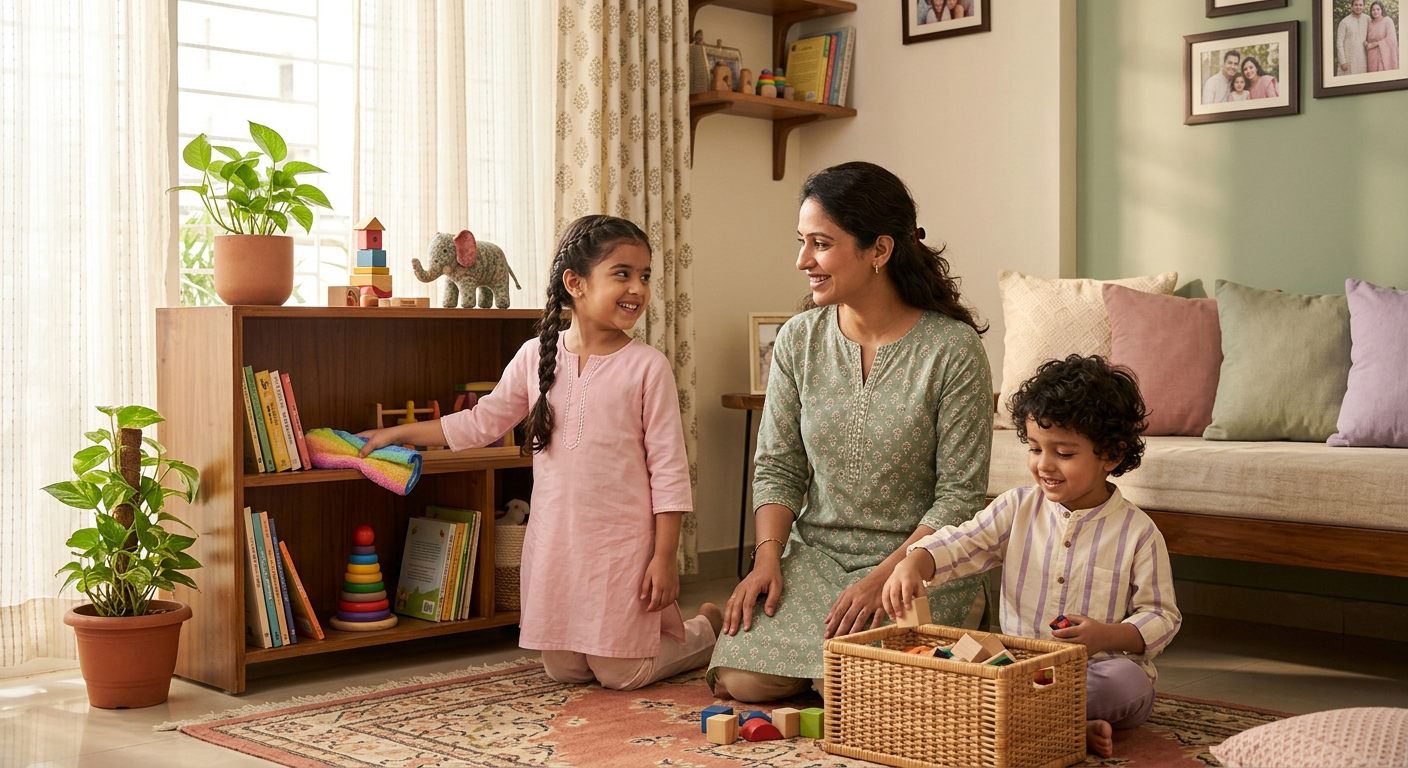
Stop feeling guilty about asking your 4-year-old to put their steel katori in the sink. Assigning age appropriate chores for kids isn't about getting free labor; it is about building confidence and teaching essential life skills for kids. In Indian households, we often over-function for our children out of love, but letting them help with ghar ka kaam from age two onwards fosters independence, improves motor skills, and makes them feel like a valued part of the family unit.
Why Indian Mums Struggle with Chores
We live in a culture where 'beta, main kar doongi' (son, I’ll do it) is our love language. Between the doting Dadi and the helpful Didis (domestic help), our children often reach age ten without knowing how to peel a banana or fold a dupatta. However, international guidelines and the Indian Academy of Pediatrics (IAP) emphasize that participation in household tasks is linked to better academic performance and social responsibility.
When we introduce age appropriate chores for kids, we aren't just cleaning a room; we are conducting montessori practical life activities in a real-world setting. It’s time to move past the idea that chores are a burden and see them as the ultimate playground for development.
2 to 3 Years: The "Little Helper" Phase
At this age, toddlers want to do everything you do. They don't see work as work; they see it as a game. This is the best time to start life skills activities that focus on gross motor coordination.
Sorting the Laundry: Have them separate the rang-birange* (colorful) clothes from the whites.
* Cleaning Spills: Give them a small cotton cloth to wipe their milk spills.
* Toy Cleanup: Use the "Everything has a home" rule. Legos go in the blue bucket; cars go in the red one.
Watering Plants: Give them a small plastic lota* or watering can. It’s okay if the balcony gets a bit wet!
The "Dal" Sort: Let them sit with you and pick out large stones from raw handi* lentils (ensure supervision to prevent choking).
4 to 5 Years: The "I Can Do It" Phase
By now, their fine motor skills are sharpening. They can handle slightly more complex instructions and multi-step tasks. This is where life skills for children begin to look like actual help.
* Setting the Table: Placing the mats, steel plates, and spoons.
* Folding Small Items: Teach them to fold hand towels or their own cotton vests.
Unpacking Groceries: Let them hand you the bhindi (ladyfingers) or packets of biscuit* to put away on lower shelves.
* Dressing Themselves: While you might need to help with buttons, they should be able to pull on leggings and find matching socks.
* Feeding Pets: If you have a furry friend, letting the child scoop the kibble builds empathy.
6 to 7 Years: The "Big Kid" Responsibilities
At this stage, chores can be linked to a sense of "big kid" pride. They are now capable of tasks that require more focus and physical strength.
* Making the Bed: Straightening the bedsheets and fluffing the pillows.
Simple Food Prep: Tearing lettuce for salad, peeling boiled potatoes for aloo paratha, or shelling peas (matar chheelna*).
* Managing School Gear: Packing their own water bottle and ensuring their diary is in their bag. Check their progress against our baby milestones tracker if you feel they are lagging in coordination.
Sweeping Small Areas: Give them a small jhadu* (broom) to sweep the dry leaves off the veranda.
Basic Money Sense: At the local kirana* shop, let them hand the ₹50 note to the uncle and wait for the change.
How to Make Chores "Stick" Without the Drama
Real talk from Indian moms
> "My 3-year-old is obsessed with the washing machine. I let him press the 'Start' button and help me move the wet clothes to the bucket. It takes double the time, but he feels like a hero." — Ananya S., Bengaluru (Mom to 3yo Kabir)
> "We started the 'Sunday Matar Party.' My 6-year-old shells the peas while we listen to music. It’s become our favorite bonding time, and he’s actually getting quite fast at it!" — Meher V., Pune (Mom to 6yo Zoya)
When to call your paediatrician
While learning chores is a process, sometimes a struggle with basic tasks can indicate underlying developmental or motor delays. Contact your doctor if:
* Your child is over 4 and consistently unable to hold small objects or grasp a spoon (fine motor delay).
* They show extreme distress or sensory meltdowns when their hands get "dirty" (flour, water, or dust).
* They cannot follow a simple two-step instruction (e.g., "Pick up the toy and put it in the box") by age 3.
* You notice significant asymmetry in how they use their hands or legs while performing physical tasks.
Frequently Asked Questions
What are some age appropriate chores for kids aged 2 to 4?
At this age, chores should be "shadowing" tasks. They can help put laundry in the basket, wipe low surfaces with a damp cloth, and help put their toys back in the bin. Focus on movement and fun rather than the quality of the work.
How do I teach life skills for kids through daily routine?
Incorporate life skills by narrating what you are doing. If you are cooking, explain why we wash vegetables. If you are paying the milkman, show them the currency. Integration is the most effective way to teach without making it feel like a "lesson."
What are the best life skills activities for a 5-year-old?
Five-year-olds excel at sorting and basic assembly. Activities like matching socks, setting the dinner table, helping to dry plastic dishes, and organizing their bookshelf are excellent for building cognitive and motor skills.
Can you suggest life skills for children that build independence?
Teaching a child to manage their own hygiene—brushing teeth, combing hair, and washing hands—is the foundation of independence. Additionally, letting them choose between two outfits or helping pack their snack box gives them a sense of agency.
Why are montessori practical life activities recommended?
These activities are designed to mirror real-life tasks that help a child develop order, coordination, concentration, and independence. In an Indian context, this includes tasks like pouring water without spilling, spooning grains, and learning to button their own kurta.
Is it okay to pay children for chores?
Most experts suggest not paying for basic "citizenship" chores (like making their bed). However, for "extra" jobs like washing the car or helping clean the storeroom, a small commission can teach the value of money.
Teaching your child to contribute to the home is one of the greatest gifts you can give them. It tells them, "You are capable, you are needed, and you belong." Start small, stay patient, and remember that today's messy kitchen is tomorrow's self-reliant adult.
You are raising a human, not a helper—and you're doing a great job, Mumma.
Sources & further reading
- Indian Academy of Pediatrics (IAP) - Parenting Tips
- WHO - Early Childhood Development
- National Institute of Nutrition (NIN) - Guidelines for Children
Written by Priya Raman, Certified Prenatal Yoga Instructor & Mama of two
Reviewed by TheMamaCircle Editorial Team
Last updated: 14 September 2026
This article is for general information only and is not a substitute for personalised medical advice. Always consult your paediatrician or obstetrician for your specific situation.