Baby Boy Toys India: Age-Wise Guide to Safe & Smart Play
Looking for the best baby boy toys in India? From BIS-certified wooden sets to DIY desi play, discover age-wise toys that boost your son's brain power.
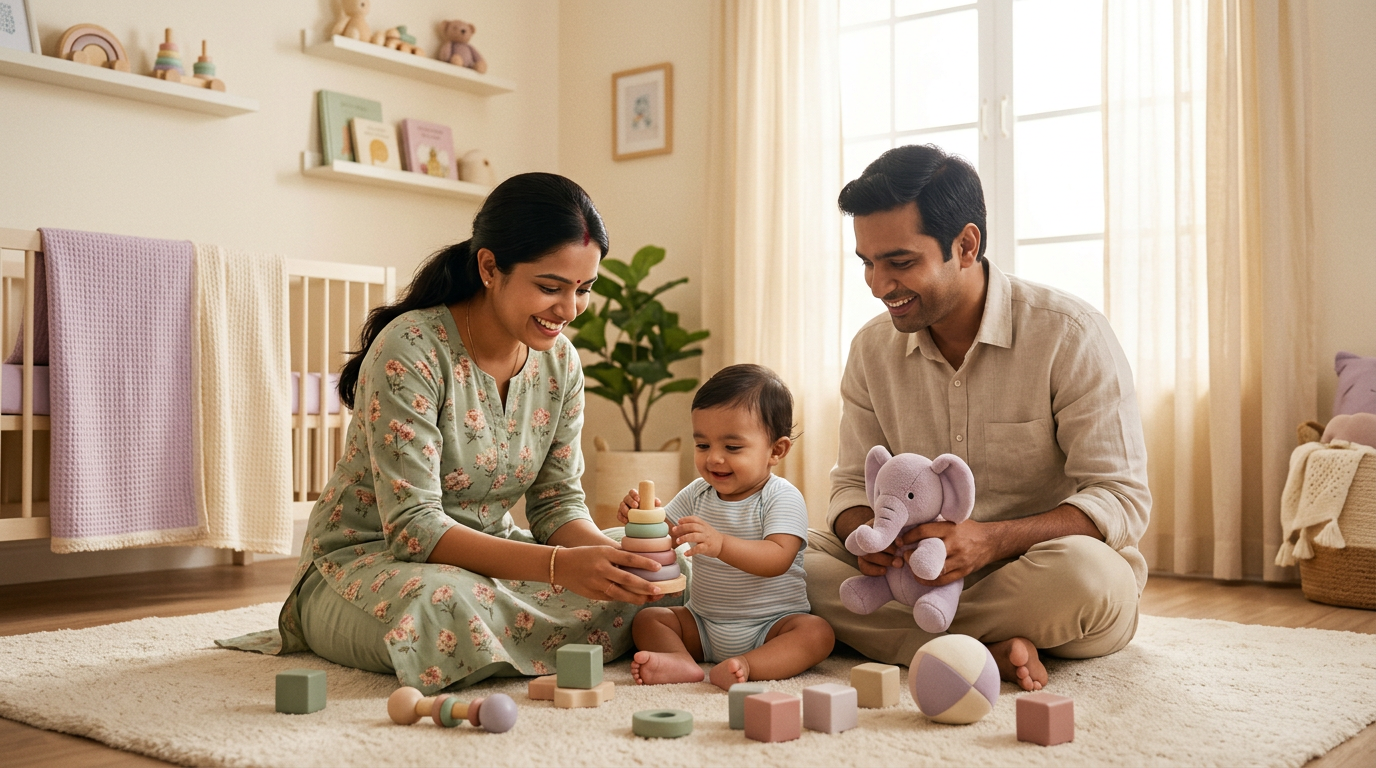
Finding the right baby boy toys in India isn’t just about choosing blue cars over pink dolls; it’s about choosing tools that spark cognitive development, motor skills, and sensory awareness. Whether you are looking for high-contrast rattles for a newborn or sturdy walkers for a 10-month-old, the focus should be on safety, non-toxic materials, and age-appropriateness. In the Indian market, where we juggle traditional jhunjhunas and modern Montessori kits, picking toys that meet BIS (Bureau of Indian Standards) IS 9873 safety norms is non-negotiable for your little one’s well-being.
How to Choose the Best Baby Boy Toys by Age
In the first year, your baby’s brain grows faster than at any other time. While you might be tempted to buy a remote-controlled car for a 4-month-old, his development actually requires tactile and visual stimulation. Let’s break down what actually works for Indian households.
0 to 3 Months: High-Contrast and Sensory Play
At this stage, your son is just beginning to focus his eyes. He doesn't need a "boy" toy; he needs visual stimulation.
* High-Contrast Flashcards: Black, white, and red patterns help develop the optic nerve.
* Soft Rattles: Look for fabric wrist rattles that he can’t accidentally bonk himself with.
The Desi DIY: A simple steel katori* and spoon held by you can create the perfect auditory tracking exercise.
3 to 6 Months: The Teething and Grasping Phase
This is when everything goes into the mouth. When looking for baby boy toys for this age, prioritise materials like neem wood or medical-grade silicone.
* Textured Teethers: Essential for soothing sore gums.
* Soft Cloth Books: Great for tactile exploration without the risk of paper cuts.
* Unbreakable Mirrors: Helping him recognize his own reflection is a massive milestone. Check his progress with our baby milestones tracker.
6 to 12 Months: Sitting, Crawling, and Exploring
Once your baby starts sitting up, his world expands. This is the peak time for toys for 6 month old baby like stacking cups and activity cubes.
* Stacking Rings: Teaches size differentiation and hand-eye coordination.
* Push-and-Go Vehicles: Sturdy wooden cars or buses that encourage him to crawl after them.
Musical Instruments: Small dholaks* or xylophones help with cause-and-effect learning.
What are the safest baby learning toys for Indian homes?
When we talk about baby learning toys, we are looking for items that challenge the brain without being overwhelming. In India, we have a unique challenge: humidity and dust.
1. The BIS Mark Matters: Always look for the 'ISI' mark and compliance with IS 9873. This ensures the toy is free from heavy metals like lead and arsenic, which are unfortunately common in unbranded roadside toys.
2. Open-Ended Play: Instead of a plastic robot that does only one thing, choose wooden blocks. These Montessori baby toys allow a baby boy to build, knock down, and eventually sort by colour.
3. The "Choke Tube" Test: If a toy or a part of it can fit through a toilet paper roll, it is a choking hazard for a baby under 3.
Traditional Indian Toys vs. Modern Plastic
We all grew up with Channapatna toys and wooden lattu (tops). There is a reason these have survived for centuries.
* Channapatna Toys: Made from ivory wood and colored with natural vegetable dyes (like turmeric and indigo), these are the gold standard for non-toxic play.
The Modern Plastic Trap: While cheap plastic baby boy toys are available at every local bazaar* for ₹150–₹300, they often contain phthalates. If you buy plastic, ensure it is BPA-free and sturdy enough that it won't shatter if dropped on a marble floor.
Keeping Toys Clean: The Indian Monsoon Routine
Living in India means dealing with extreme dust and monsoon mould.
* Plastic Toys: Wash with mild baby detergent and warm water once a week.
Wooden Toys: Never soak them. Wipe with a damp cloth dipped in a vinegar-water solution and sun-dry them (in the balcony or aangan*) to kill bacteria naturally.
* Soft Toys: Use a laundry bag and a gentle cycle in the washing machine. If your baby has dust allergies, keep soft toys to a minimum.
Real talk from Indian moms
> "I spent thousands on fancy electronic baby boy toys, but my 8-month-old Kabir just wanted to play with my Tupperware containers and a wooden belan. Now I focus on simple, open-ended wooden toys from local artisans." — Meera S., Mumbai (Baby age: 9 months)
> "Living in a joint family, everyone buys toys. We had to set a rule: no battery-operated toys until he was one. It forced him to use his imagination rather than just pressing buttons." — Preeti V., Bengaluru (Baby age: 14 months)
When to call your paediatrician
While play is fun, it's also a diagnostic tool. Contact your doctor if:
* Your baby does not track a moving toy with his eyes by 3 months.
* He does not reach for or grasp toys by 6 months.
* He shows no interest in "cause and effect" play (like dropping a toy to see where it goes) by 9 months.
* There is a suspected ingestion of a small toy part, battery, or magnet (this is an emergency).
* Your baby develops a rash or irritation after handling a specific toy (potential contact dermatitis).
Frequently Asked Questions
Which are the best baby boy toys for a 1-year-old birthday gift?
For a first birthday, focus on stability and movement. A wooden push-walker, a small indoor slide, or a set of large building blocks are excellent choices. These help with gross motor skills as they transition from crawling to walking.
Are baby girl toys different from baby boy toys in terms of development?
Scientifically, no. At the infant stage, baby girl toys and boy toys should be identical in function. Both need to develop fine motor skills, spatial awareness, and language. The "blue vs. pink" divide is purely social; your son will benefit just as much from a play kitchen as he will from a toy truck.
How do I identify if a toy is non-toxic in India?
Check the packaging for the BIS (Bureau of Indian Standards) logo. Specifically, look for "IS 9873" compliance. Reliable Indian brands like Shumee, Ariro, or Skillmatics explicitly state their safety certifications. Avoid unlabelled plastic toys from local weekly markets (haats) for teething babies.
What are the most popular baby learning toys for brain development?
Baby learning toys that promote "active" rather than "passive" play are best. This includes object permanence boxes, shape sorters, and textured balls. These toys require the baby to solve a problem rather than just watching a screen or light show.My baby only wants to play with kitchen utensils. Is this okay?
It’s more than okay—it’s great! Items like a chimta (tongs), silicone spatulas, or steel bowls are excellent for sensory play. Just ensure there are no sharp edges and they are too large to swallow. This is the heart of baby toys in a traditional Indian home.
Choosing toys for your little prince doesn't have to be a struggle between budget and quality. Focus on safety first, followed by the developmental stage, and remember that your interaction is more valuable than any expensive gadget.
Mera bachcha, meri jaan—play is how he learns about his world.
Sources & further reading
- Bureau of Indian Standards - Safety of Toys (IS 9873)
- Indian Academy of Pediatrics (IAP) - Growth and Development
- WHO - Play and Child Development
Written by Dr. Anjali Mehta, MBBS, DCH (Paediatrics)
Reviewed by TheMamaCircle Editorial Team
Last updated: 8 September 2026
This article is for general information only and is not a substitute for personalised medical advice. Always consult your paediatrician or obstetrician for your specific situation.