Baby Girl Toys India: Age-Wise Guide & Safety Tips
Choosing the best baby girl toys in India? Discover age-wise picks, BIS safety tips, and desi DIY ideas to boost your little one's development safely.
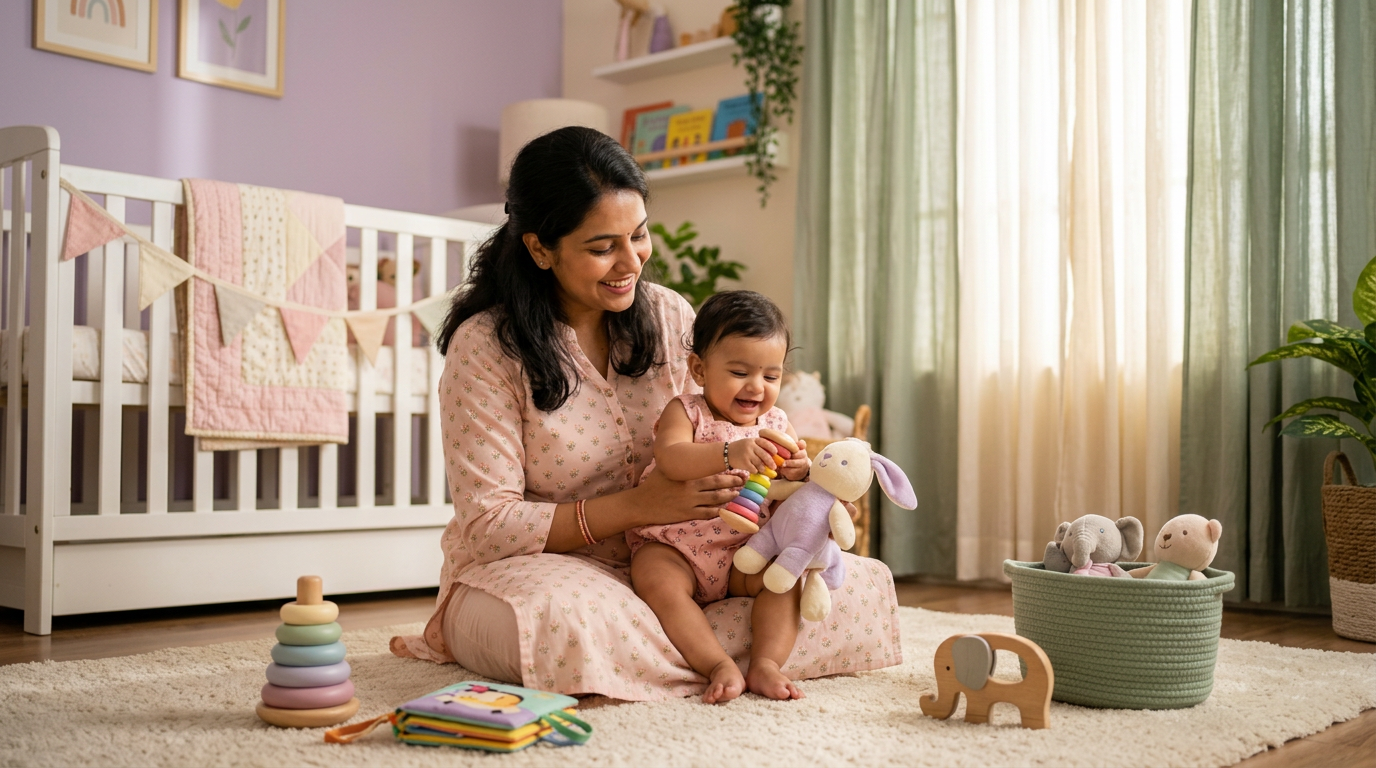
Choosing the right baby girl toys in India isn't just about finding something pink or sparkly; it’s about supporting her rapid brain development during the critical postnatal window. From the moment she starts tracking your face to the day she takes her first wobbly steps, her playthings act as her first teachers. In the Indian context, this means balancing modern developmental tools with traditional wisdom, ensuring every rattle and block meets strict BIS safety standards to keep her safe while she explores.
What should you look for in baby girl toys?
When shopping for your little one, the "pink tax" is real, but developmental needs are universal. Whether you are looking for baby toys or baby boy toys, the focus must remain on sensory stimulation and motor skills. In India, we often see a flood of cheap, unbranded plastic in local markets. However, for a baby who puts everything in her mouth, you must look for the IS 9873 mark (the Indian Standard for toy safety) or the BIS (Bureau of Indian Standards) certification.
Prioritise toys made from neem wood, food-grade silicone, or high-quality organic cotton. Avoid anything with small "chumki" (sequins), loose bells (ghungroos), or sharp edges that could pose a choking hazard.
Age-wise guide to toys for your baby girl
Development happens in leaps. What fascinates a two-month-old will be ignored by an eight-month-old. Here is how to pick the right baby girl toys for every stage:
0 to 3 Months: The Sensory Phase
During the early postnatal weeks, her vision is still developing. She can only see high-contrast colours clearly.
* Black and White Flashcards: Since her vision is blurry, high-contrast patterns help strengthen her optic nerve. You can use our baby vision simulator to see exactly what she sees.
* Soft Wrist Rattles: These encourage her to move her hands and discover that her limbs belong to her.
* Contrasting Soft Books: Look for books with different textures (crinkle paper, satin, fleece) to stimulate her sense of touch.
3 to 6 Months: The Reaching and Grasping Phase
This is when the "mouthing" begins. Everything goes straight to the mouth to be explored.
* Teethers: Look for neem wood teethers or water-filled ones (BPA-free). Brands like Ariro or Shumee offer great Made-in-India wooden options.
Lightweight Rattles: A simple silver jhunjhuna* (rattle) is a traditional favorite, but ensure it is solid silver and not plated with lead-based alloys.
* Play Gyms: A sturdy wooden play gym helps her practice reaching, which is a vital baby milestone.
6 to 12 Months: The Sitting and Scootering Phase
Once she starts sitting up, you need toys for 6 month old baby girls that encourage sitting balance and cause-and-effect learning.
* Stacking Rings: Classic colourful rings help with hand-eye coordination.
* Activity Cubes: These provide multiple ways to play—beads to slide, buttons to press, and gears to turn.
* Soft Fabric Dolls: A soft "rag doll" becomes a great first companion for role-play.
* Interactive Musical Toys: These are great baby learning toys that teach her that pressing a button results in a sound (animal noises or rhymes).
The "Desi DIY" Toy Box: Household items she will love
You don’t always need to spend thousands of Rupees on international brands. Some of the best baby girl toys are already in your kitchen!
Cleaning and Sterilising: The Monsoon Routine
In India, the humidity during the monsoon can lead to fungal growth on wooden toys and bacteria on plastic ones.
* Plastic/Silicone: Wash with a mild baby-safe cleanser and warm water. Do not boil plastic unless the pack specifically says it is "steriliser safe."
* Wooden Toys: Never soak them. Wipe them with a damp cloth dipped in a vinegar-water solution and sun-dry them immediately to prevent rot.
* Plush Toys: Put them in a pillowcase and run them through a gentle machine wash once a month.
Real talk from Indian moms
"I bought so many expensive musical baby girl toys, but my daughter’s favorite thing is my bunch of keys and an old Tupperware lid. I’ve realized she just wants to do what I’m doing!"
— Sana, Mumbai, Mom to 8-month-old Zoya
"Living in a joint family, everyone buys toys. I had to tell my Sasu Maa to stop buying the cheap plastic dolls from the local mela because the paint was chipping off. Now we only stick to BIS-certified brands."
— Deepika, Bengaluru, Mom to 11-month-old Ananya
When to call your paediatrician
While toys are for fun, they can sometimes highlight developmental delays or safety issues. Consult your doctor if:
* Your baby does not track a moving toy with her eyes by 3 months.
* She does not reach for toys or grasp objects by 6 months.
* She consistently brings only one hand to play and keeps the other fisted.
* She has a skin rash or redness after playing with a new painted toy (potential lead or chemical sensitivity).
* Emergency: She swallows a small part, a button battery, or a magnet. Go to the ER immediately.
Frequently Asked Questions
Are there specific baby learning toys that help with speech?
Yes, baby learning toys like picture books, flashcards with Indian animals/fruits, and toys that repeat sounds can help. However, the best "toy" for speech is you! Narrating what she is doing with her toys is more effective than any electronic gadget.
What are the safest toys for 6 month old baby girls in India?
For a 6-month-old, safety is all about non-toxic materials. Opt for toys for 6 month old baby that are BIS-certified. Silicone stacking cups, cloth books, and textured balls are excellent choices as they are easy to clean and safe for teething.
Should I buy a walker for my baby girl?
Most Indian paediatricians (and the IAP) advise against circular walkers. They don't actually help a baby learn to walk and can be dangerous. Instead, choose "push toys" or "activity walkers" where the baby stands behind the toy and pushes it forward.
How many baby toys does a child actually need?
Less is more. A "toy rotation" system works best. Keep only 4-5 toys out at a time and hide the rest. Every two weeks, swap them. This prevents "overstimulation" and makes old toys feel brand new again.
Is it okay to give my baby girl "boy toys" like cars?
Absolutely! Research shows that playing with a variety of toys—trucks, dolls, blocks, and kitchen sets—helps develop both spatial reasoning and empathy. Don't limit her potential by sticking only to "girl-themed" items.
Where can I check if my baby's growth is on track?
You can use a baby growth chart to monitor her physical progress and our baby milestones tracker to see if her play skills match her age.
Choosing baby girl toys is a joyful part of motherhood, but it requires a discerning eye. By focusing on safety, age-appropriateness, and a mix of traditional and modern play, you are giving your daughter the best start in her learning journey. Remember, the most expensive toy in the world cannot replace twenty minutes of floor time with you. Keep it simple, keep it safe, and let her explore at her own pace.
You are doing a great job, Mama. Your love is the best toy she could ever have.
Sources & further reading
- Indian Academy of Pediatrics (IAP) Guidelines on Play
- Bureau of Indian Standards (BIS) - Safety of Toys (IS 9873)
- WHO: Physical activity, sedentary behaviour and sleep for children under 5 years of age
Written by Dr. Anjali Mehta, MBBS, DCH (Paediatrics)
Reviewed by TheMamaCircle Editorial Team
Last updated: 17 September 2026
This article is for general information only and is not a substitute for personalised medical advice. Always consult your paediatrician or obstetrician for your specific situation.