Baby Hospital Bag Checklist India: Must-Haves for Mom & Baby
Pack your baby hospital bag like a pro! From jhablas to diapers, get the ultimate checklist for Indian hospitals. Ready for your little one's arrival?
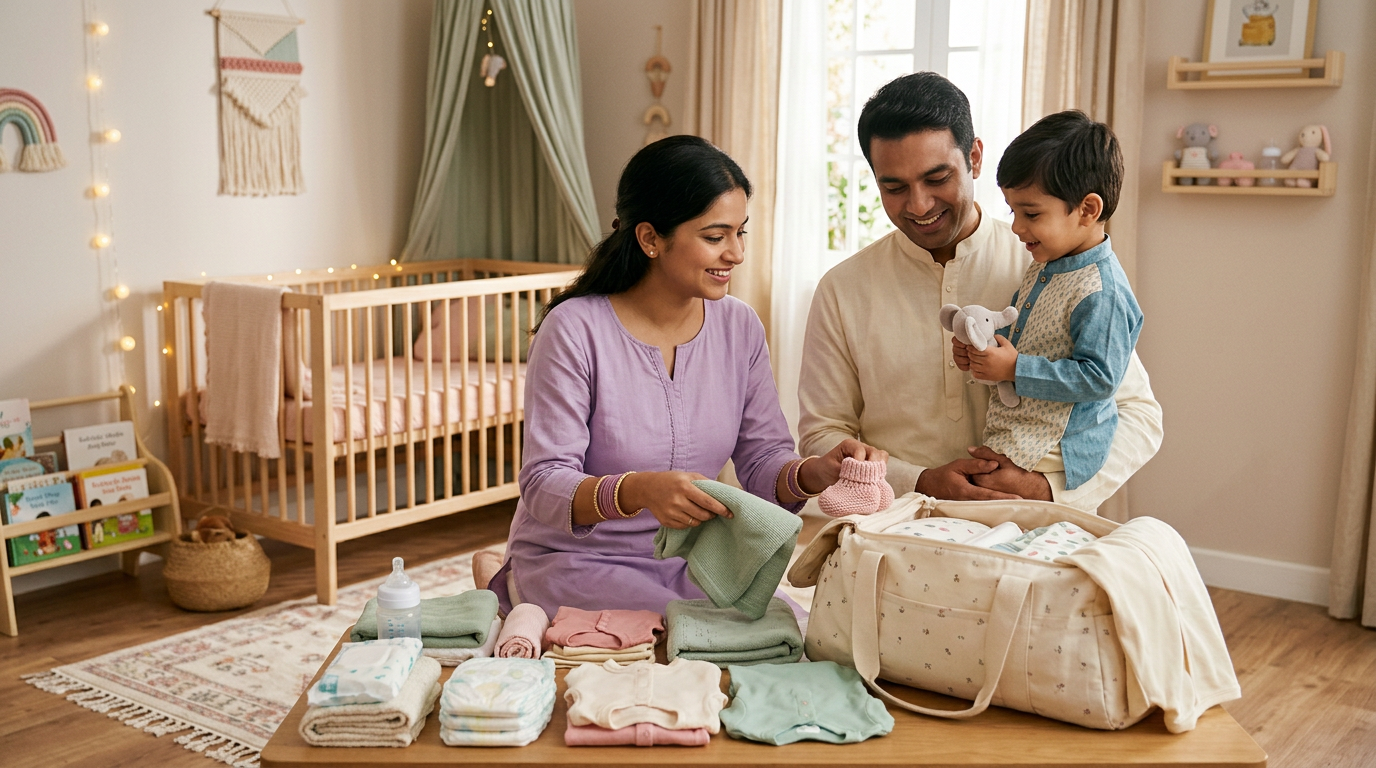
Packing your baby hospital bag is the ultimate nesting ritual, but let’s be honest: between the sasu maa’s advice to carry 10 heavy woollen blankets and the Instagram reels suggesting you need a designer diaper caddy, it’s easy to feel overwhelmed. In India, what you pack depends entirely on whether you are heading to a government facility like AIIMS, a local nursing home, or a corporate hospital like Cloudnine or Apollo. While some provide everything down to the wipes, others expect you to bring every single cotton ball.
At TheMamaCircle, we advocate for the 'Two-Bag Strategy': one for you, and a dedicated baby hospital bag for the little one to avoid digging through adult diapers to find a tiny mitten at 3 AM.
What should be in a baby hospital bag for Indian births?
The Indian climate and hospital infrastructure dictate your packing list. Whether it is a scorching Delhi summer or a humid Mumbai monsoon, the basics of newborn care remain the same. The goal is to keep the baby warm, clean, and fed while protecting their delicate skin.
1. The Clothing Essentials (The 'Jhabla' Layer)
Indian paediatricians generally recommend 100% cotton for newborns. Avoid synthetic lace or heavy embroidery that can irritate the umbilical cord stump.
* 6-8 Cotton Jhablas: These front-open tie-up tops are easier to put on than over-the-head onesies for a floppy newborn.
* 4-6 Sleepsuits/Onesies: If the hospital room is air-conditioned (common in private rooms), full-length sleepsuits prevent the baby from getting a chill.
* 3 pairs of Socks and Mittens: Newborns have sharp nails and zero motor control; mittens prevent them from scratching their face.
* 2 Swaddle Wraps: Lightweight muslin swaddles are perfect for the Indian heat.
* Going-home outfit: Something special for that first photo, but ensure it is car-seat friendly if you are driving home.
2. Diapering and Hygiene
Even if you plan to use cloth nappies (langots) later, the first 48 hours are messy. The baby will pass meconium—a thick, black, tar-like first stool that is notoriously hard to wash off.
* 1 pack of Newborn Diapers: Look for those with a U-shaped cutout for the umbilical cord.
* Cotton Wool and Warm Water: Many Indian paediatricians recommend avoiding even '99% water' wipes for the first week. Pack a bag of sterilized cotton balls.
* 2-3 Quick-Dry Sheets: Essential if you don't want to lose your security deposit over a stained hospital mattress.
* Coconut Oil: A small bottle of cold-pressed coconut oil is a multi-purpose lifesaver for meconium cleanup and dry patches.
Preparing your hospital bag checklist for delivery India style
When finalizing your hospital bag checklist, remember that Indian hospitals have specific quirks. Most private hospitals provide a 'baby kit,' but the quality varies. If you are aiming for a natural birth, your hospital bag labor needs might be different from a planned C-section where the stay is longer (usually 3-4 days).
The C-Section vs. Normal Delivery Tweak
If you are having a C-section, you will likely stay in the hospital for at least 72 hours. Increase your clothing count by 50%. For a normal delivery, you might be home in 24-48 hours. Regardless of the mode of delivery, keep a dedicated pouch for the baby’s first vaccinations (BCG, OPV, and Hepatitis B) and the baby growth chart the hospital provides.
The Seasonal Adjustment
* Summer/Monsoon: Stick to thin mulmul fabrics. The humidity can cause heat rashes even in newborns.
* Winter: Pack at least two thick blankets and a 'monkey cap' or a soft beanie to prevent heat loss from the head.
Do I need to pack formula or bottles in the baby hospital bag?
In India, the Breastfeeding Promotion Network of India (BPNI) and the IAP strongly advise exclusive breastfeeding from the first hour. Most hospitals will not allow you to bring infant formula unless medically indicated. However, if you are worried about the 'wait' for milk to come in, remember that colostrum—the thick yellow 'liquid gold'—is all your baby needs in those first few days.
If you are struggling with the latch, don't panic. You can book 1:1 postnatal care sessions to get professional support once you're home. For the hospital, just bring:
* 2-3 Nursing Bras/Capis: Essential for easy access.
* Breast Pads: To manage the initial leakage.
* Nipple Butter: Safe, lanolin-free options are best.
If you are concerned about your recovery or physical health post-birth, you might also want to look into a Postnatal Wellness Package to bridge the gap between hospital discharge and your six-week checkup.
Real talk from Indian moms
> "I packed all these fancy buttons-up onesies but ended up using only the old-school white cotton jhablas my mother-in-law brought. They were so much easier for the nurses to change during the jaundice check-ups."
> — Sunita R., Bengaluru, Mom to 4-month-old
> "Don't forget the 'Godhadi' (quilted blanket)! The hospital blankets felt too rough for my baby's skin. Having a soft, home-washed cloth made him feel much more settled in that sterile room."
> — Ananya P., Pune, Mom to 6-week-old
> "Pack a separate small bag for the very first outfit. When the nurse asks your husband for the 'baby clothes' right after delivery, he shouldn't be digging through your entire suitcase."
> — Meera V., Chennai, Mom to 1-year-old
When to call your paediatrician
While you are in the hospital, the nurses and resident doctors will monitor the baby. However, once you are preparing to leave or if you are in a smaller nursing home, watch for these red flags:
* Poor Latching: If the baby hasn't had a proper feed in 4-6 hours.
* Jaundice: If the skin or the whites of the eyes look significantly yellow before discharge.
* Fever: Any temperature above 100.4°F (38°C).
* Dehydration: Fewer than 2 wet diapers in the first 24 hours, or 3-4 in the second 24 hours.
* Lethargy: If the baby is too sleepy to wake up for feeds.
* Respiratory Distress: Flaring nostrils or grunting sounds while breathing.
Frequently Asked Questions
What should be in a baby hospital bag for a 3-day stay?
For a standard 3-day stay (common for C-sections), pack 8-10 jhablas or onesies, 2 packs of newborn diapers, 10-12 cloth nappies (if using), 4 swaddles, and enough cotton wool. Always carry two extra sets of clothes just in case of 'poop-explosions' or spit-ups.
Is a hospital bag different from a hospital bag labour kit?
Yes. A hospital bag is your general suitcase for the stay. The hospital bag labour kit is a smaller bag containing immediate essentials: your ID, a birth plan, lip balm, a handheld fan, and the very first set of baby clothes and a swaddle to be handed to the staff immediately after birth.
How many diapers should I pack in the baby hospital bag?
Plan for 8-10 diapers per day. Even if the baby doesn't soil that many, you need extras for the learning curve of putting them on correctly! In India, many moms prefer langots for the day and diapers for the night to prevent rashes.
Should I include a breast pump in my hospital bag checklist for delivery India?
Generally, no. Most Indian hospitals have hospital-grade pumps if a medical need arises. Unless your doctor has specifically asked you to bring one (e.g., for inverted nipples or a known NICU stay), leave the bulky pump at home and focus on skin-to-skin contact to stimulate milk production.
Can I carry home-cooked food to the hospital for my postnatal diet?
Most Indian private hospitals allow Ghar ka khana like daliya, khichdi, or ajwain paratha. However, check with your hospital’s policy first. Some provide a specific postnatal (also called postnatal) diet planned by their in-house nutritionist.
Packing your bag is the first step in your transition to motherhood. It’s not just about the clothes; it’s about feeling prepared for the greatest shift in your life. Take a deep breath—you have everything you need, and what you don't have, someone can always bring to the hospital later. You are doing a great job, mama.
Repeat after me: "I am prepared, I am supported, and I am ready to meet my baby."
Sources & further reading
- Indian Academy of Pediatrics (IAP) - Newborn Care Guidelines
- World Health Organization (WHO) - Postnatal Care of the Mother and Newborn
- Breastfeeding Promotion Network of India (BPNI)
Written by Dr. Anjali Mehta, MBBS, DCH (Paediatrics)
Reviewed by TheMamaCircle Editorial Team
Last updated: 29 August 2026
This article is for general information only and is not a substitute for personalised medical advice. Always consult your paediatrician or obstetrician for your specific situation.