Baby Teething Chart by Age: An Indian Mother's Guide
Confused by the baby teething chart by age? Learn the typical teething order and which Indian dadi remedies actually work (and which to skip!) for your baby.
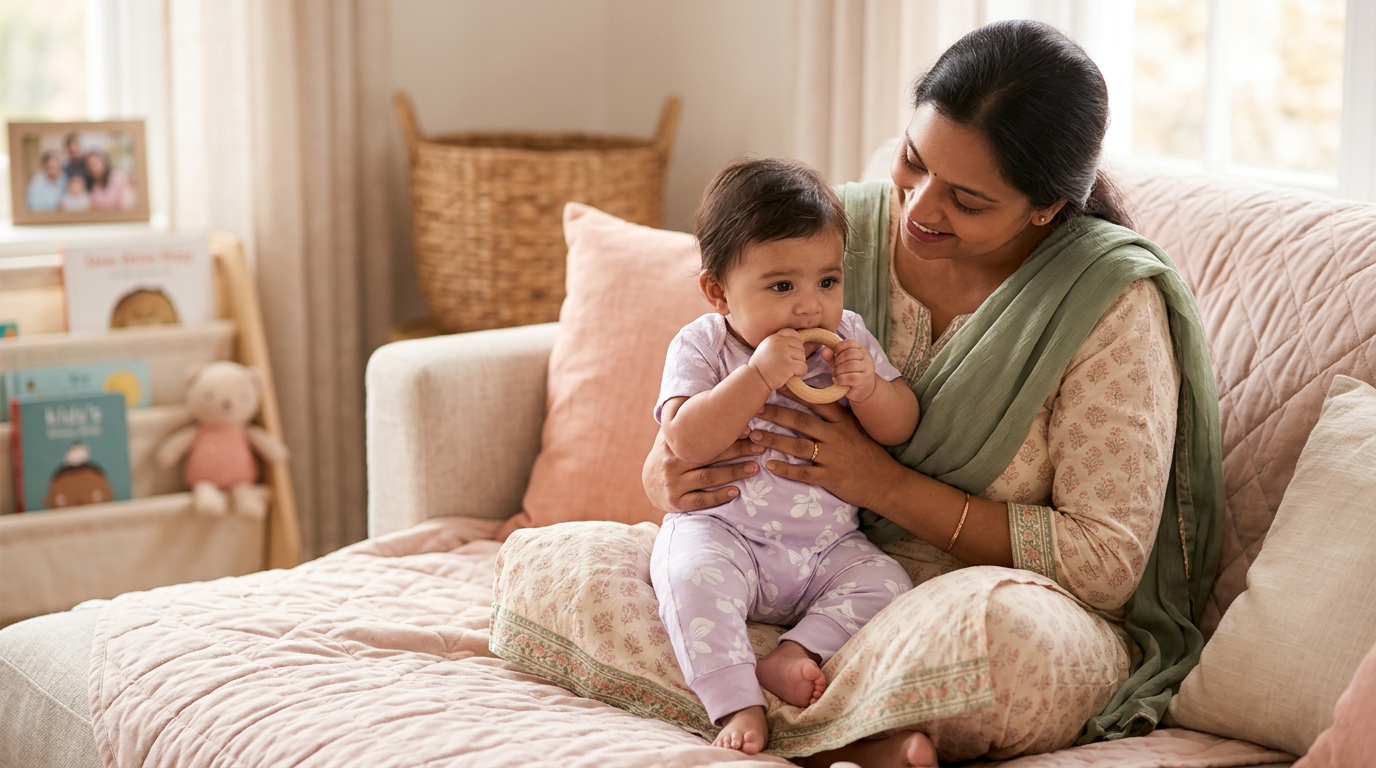
Most Indian babies get their first tooth around 6 to 10 months, usually starting with the lower front "center" teeth. While every child is different, a baby teething chart by age helps you track the arrival of those milky whites and distinguish normal development from potential delays. This stage is a major milestone in your baby’s growth, right alongside their transition to solid foods like moong dal khichdi.
Understanding the Typical Baby Teething Chart by Age
The arrival of teeth follows a predictable genetic blueprint for most babies. While some nani-dadis might say early teething means a sharp mind or late teething means strong bones, medically, the timing is mostly down to DNA. Generally, teeth erupt in pairs—one on the left and one on the right.
If you are tracking your little one's progress, you can use our baby milestones tracker to see how dental growth aligns with other motor skills.
The Standard Indian Baby Tooth Eruption Timeline
* 6 to 10 months: Lower Central Incisors (the bottom two front teeth).
* 8 to 12 months: Upper Central Incisors (the top two front teeth).
* 9 to 13 months: Upper Lateral Incisors (either side of the top front teeth).
* 10 to 16 months: Lower Lateral Incisors.
* 13 to 19 months: First Molars (the flat teeth for grinding, usually causing more discomfort).
16 to 23 months: Canines (often called the 'dog teeth' or kutta dant*).
* 23 to 33 months: Second Molars (the final set to complete the 20-tooth 'milk' set).
How to Tell When Do Babies Start Teething?
While the baby teething chart by age provides a range, the actual physical signs often precede the tooth by weeks. You might notice your 4-month-old drooling like a leaky tap and wonder when do babies start teething officially.
True teething usually involves the tooth actually "cutting" the gingival tissue. Before that, babies experience "budding," where the teeth move under the gums. This is often the stage where moms notice the most teething symptoms baby will exhibit, such as irritability and a constant need to chew on their dhoti or your finger.
Teething Order: Does it Always Follow the Chart?
Usually, the teething order is symmetrical. If the bottom left tooth comes in, the bottom right is usually days away. However, don't panic if your baby looks like a little vampire with "fang" teeth coming in first. This is called "atypical eruption." While less common, it is usually not a cause for concern unless the teeth are coming in crowded or discoloured.
Common Disruptions to the Order:
* Genetics: If you or your husband teethed late, your baby likely will too.
* Pre-term birth: Babies born early often follow an "adjusted age" for their baby teething chart by age.
* Vitamin D Deficiency: In India, despite the sun, many infants are Vitamin D deficient. Ensure you are giving the IAP-recommended 400 IU daily drops to support dental calcification.
Postnatal Care for Gums: Cleaning Before the Teeth Arrive
Oral hygiene starts before the first tooth. Even during your own postnatal recovery (also called postnatal), as you focus on your Postnatal Wellness Package, you should be mindful of baby’s oral health.
Use a clean, damp muslin cloth (malmal) to wipe your baby’s gums after feeds. This prevents "nursing bottle caries" later on. Once that first tooth pops out around the six-month mark on your baby teething chart by age, switch to a soft silicone finger brush (approx ₹150–₹300) to keep the enamel clean.
Desi Remedies vs. Modern Paediatrics: The Dadi Audit
In Indian households, the moment a baby starts drooling, the suggestions pour in. Here is my take as a paediatrician on common Indian teething hacks:
Managing the Crankiness: Teething Remedies for Babies
When the molars start pushing through, a chart won't help your ears. You need proactive teething remedies for babies.
* Counter-pressure: Wash your hands and gently massage the baby's gums with your index finger.
Cold Therapy: Use a chilled (not frozen) teething ring. The Indian brand R for Rabbit or Fisher-Price* offers BPA-free options starting at ₹250.
* The "Double Bib" Strategy: To prevent the "drool rash" on the neck and chest, use high-quality cotton bibs and change them frequently. Apply a thin layer of coconut oil or a zinc-based barrier cream if the skin gets red.
Does Teething Cause Fever?
One of the biggest myths in India is that teething causes high fever and diarrhea. Let’s be clear: baby teething fever is usually just a mild "glow" or a slight rise in body temperature (less than 100.4°F or 38°C).
If your baby has a high fever or watery stools, it is likely a viral infection. Because teething babies put everything in their mouths (including dirty chappals or dusty toys), they pick up germs. Don't blame the tooth for the infection—blame the toddler curiosity!
Real Talk from Indian Moms
> "My daughter, Myra, didn't get her first tooth until she was 11 months old. I was so stressed looking at every baby teething chart by age online! Then suddenly, four teeth came at once. My advice? Don't compare."
> — Anjali S., Mumbai (Mom to 14-month-old)
> "I thought the 'teething diarrhea' was normal because my Sasu Maa said so. Turns out it was a stomach bug. Always check the temperature!"
> — Priyanka V., Bengaluru (Mom to 9-month-old)
When to Call Your Paediatrician
While teething is a normal part of the baby teething chart by age, certain signs require professional advice:
* Fever over 101°F (38.3°C).
* Persistent diarrhea or vomiting.
* Extreme lethargy or refusal to drink liquids.
* No teeth at all by 15-18 months (Can indicate underlying issues like hypothyroidism).
* Bleeding gums or pus.
Frequently Asked Questions
What is the normal baby teething chart by age for Indian infants?
Most Indian infants follow the global standard of 6–10 months for the first tooth and completion of the set by age 3. Factors like nutrition (calcium and Vitamin D) can influence the exact month, but the sequence usually remains the same.
What are the most common teething symptoms baby will show?
The most common signs include excessive drooling, "mouthing" objects, swollen or puffy gums, and mild irritability. You might also notice a slight change in sleeping patterns as the pressure in the gums increases at night.
What are the safest teething remedies for babies in India?
Safest options include chilled, purified-water-filled teethers, clean cold muslin cloths, and gentle gum massages. Avoid amber necklaces (choking hazard) and homeopathic teething tablets that contain belladonna.
Can teething order be random?
While there is a standard teething order, some babies are "early" or "late" bloomers. It is perfectly normal for some babies to skip the front teeth and have a lateral incisor pop up first, though it's less common.
How do I handle a baby teething fever?
A true teething fever is mild. If the temperature exceeds 100.4°F, consult your paediatrician. You may be advised to give a weight-appropriate dose of Paracetamol (like Crocin or Calpol), but never medicate without a doctor’s confirmation.
Is it okay to use teething gels?
The Indian Academy of Paediatrics (IAP) generally discourages benzocaine-based teething gels as they can wash away easily and, in rare cases, cause oxygen-related blood issues. Natural pressure and cold are much safer.
Teething is a messy, droolly, and sometimes tearful phase, but it also signals that your baby is ready to explore a world of flavors. Keep that muslin cloth ready, trust your instincts, and remember that this too shall pass. Your baby’s smile is getting its permanent makeover, one tooth at a time.
You’ve got this, Mama! Every tooth is a step closer to those big, gummy, toddler laughs.
Sources & further reading
- Indian Academy of Pediatrics (IAP) Parent Resources
- World Health Organization (WHO) Infant Oral Health
- National Health Portal (NHP) India - Teething
Written by Dr. Anjali Mehta, MBBS, DCH (Paediatrics)
Reviewed by TheMamaCircle Editorial Team
Last updated: 31 July 2026
This article is for general information only and is not a substitute for personalised medical advice. Always consult your paediatrician or obstetrician for your specific situation.