Baby Teething Fever: Indian Mom’s Guide to Facts vs Myths
Worried about baby teething fever? Learn to tell the difference between 'teething warmth' and a real illness, plus doctor-vetted Indian home remedies.
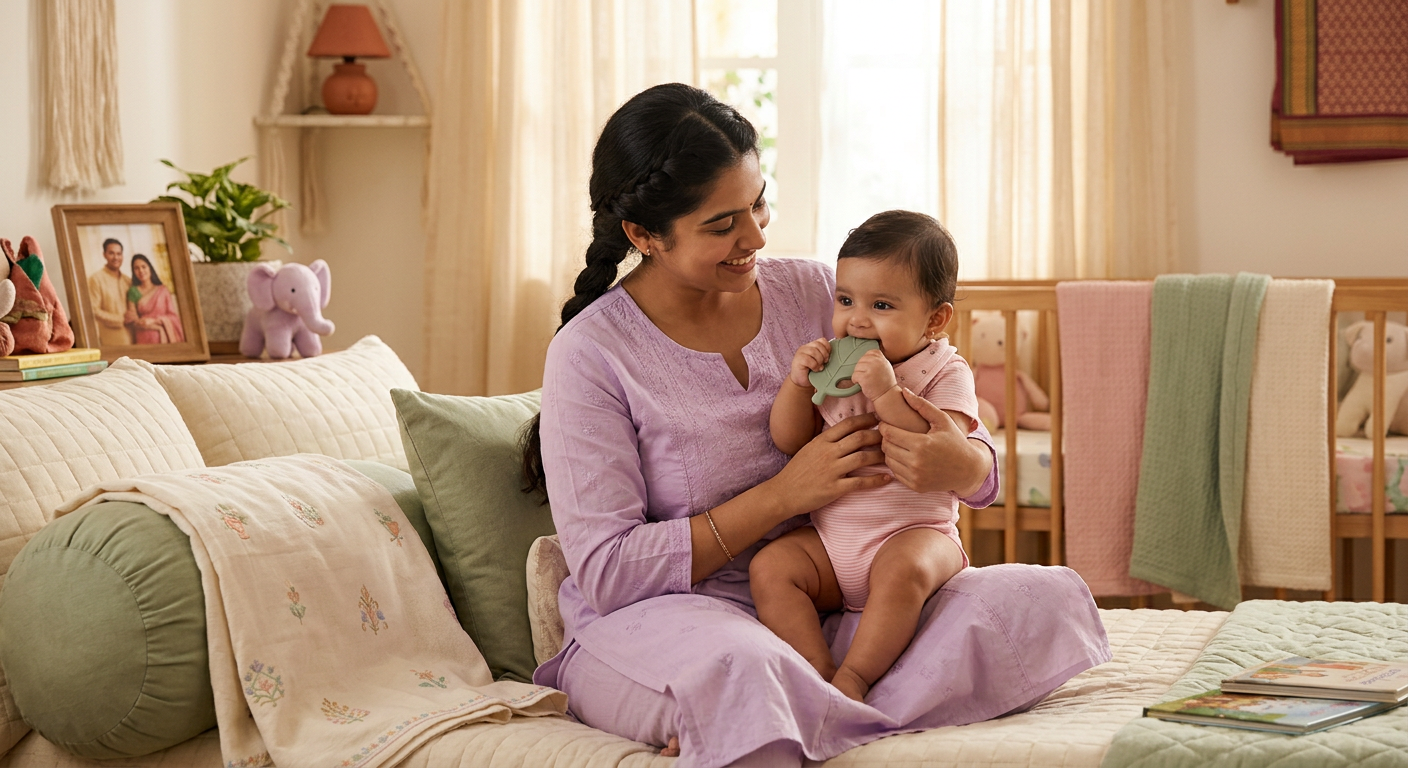
If your little one is fussing and their forehead feels slightly warm, you are likely wondering if it is a baby teething fever or a reason to rush to the clinic. Let’s clear the air: teething causes a "low-grade" rise in temperature (usually below 100.4°F or 38°C), not a true medical fever. If the thermometer hits 101°F, it is likely a viral infection, not a molar making its debut.
Teething is a rite of passage every Indian mother anticipates with a mix of excitement and dread. We watch for that first pearl-white sliver, often checking the teething chart to see if those bottom central incisors are on schedule. But when the cheek-rubbing starts and the "teething fever" kicks in, the confusion begins.
Does Teething Actually Cause a Fever?
The short answer is: no, not a high one. According to the Indian Academy of Paediatrics (IAP), teething may cause a slight elevation in body temperature, colloquially called a "thermal stir." This happens because the gums are inflamed as the tooth cuts through the tissue.
However, a true baby teething fever should never exceed 100.4°F. If your baby has a high fever, diarrhea, or a runny nose, don't blame the teeth. This is a common myth in Indian households. Often, when do babies start teething (around 6 months), their maternal antibody protection is also waning, making them more susceptible to common Indian bugs like the Adenovirus or Rotavirus.
Why we get confused:
* Inflammation: The localized swelling in the gums can make the face feel warm.
Mouthing objects: Teething babies put everything in their mouths—from the TV remote to the edge of the charpai*. This introduces bacteria, which causes real illness.
* Increased Drool: Excessive saliva can cause a "drool rash," making the skin look angry and inflamed, adding to the "feverish" appearance.
Decoding the Dadi-Nani Remedies: What to Keep and What to Skip
In India, every Sasu Maa has a remedy for the "daant nikalna" phase. As a paediatrician, I’ve seen it all. Let’s audit the classic Indian home remedies for a baby teething fever and general discomfort.
1. Jaiphal (Nutmeg) Rub - SKIP
Many families rub Jaiphal on a stone with a little mother’s milk and give it to the baby to "cool the fever." Stop. Nutmeg has sedative properties and can be toxic in small, unmeasured amounts for an infant. It does nothing for a tooth.
2. The Silver Teether (Chandi ka Khilona) - KEEP (with caution)
Silver is traditionally known for its anti-microbial properties in Ayurveda. A smooth, solid silver ring (without small parts or bells) is an excellent cooler for sore gums. Ensure it is BIS-hallmarked and sterilized daily.
3. Honey on Gums - HARD SKIP
Never give honey to a baby under 12 months. It carries a risk of infant botulism, a serious type of food poisoning. It will not help a baby teething fever and could lead to an emergency room visit.
4. Cold Carrots or Cucumber - MODIFY
Chilled (not frozen) sticks of carrot or thick cucumber are great, but only if you are holding them. Use a silicone fruit nibbler (available on Amazon India for ₹250–₹500) to prevent choking. The cold temperature constricts blood vessels and masks the dull ache.
Managing Body Heat and Discomfort at Home
When you notice teething symptoms baby like irritability and slightly elevated warmth, focus on comfort rather than heavy medication.
* Cotton Clothing: Use light, breathable Mulmul cotton. Layers are the enemy of a warm baby.
* The Power of Maalish: A gentle massage with cold-pressed coconut oil on the jawline (external only) can be incredibly soothing.
Hydration: If the baby is over 6 months, offer frequent sips of water. If they are younger, stick to stanpaan* (breastfeeding) on demand. The skin-to-skin contact during nursing is a natural analgesic.
* IAP-Approved Relief: If the baby is truly miserable, consult your doctor about a weight-based dose of Crocin (Paracetamol). Never use "teething gels" containing Benzocaine, as the CDSCO and WHO have warned against them for infants.
How to Tell the Difference: Teething vs. Illness
Is it just a tooth, or is it a viral fever? Use this checklist to decide if you need to call the clinic:
| Feature | Teething "Warmth" | Real Viral Fever |
| :--- | :--- | :--- |
| Temperature | Under 100.4°F | Over 101°F |
| Duration | Lasts 1–2 days | Lasts 3+ days |
| Mood | Irritable but plays | Lethargic, won't play |
| Appetite | Prefers cold foods/milk | Refuses all feeds |
| Other Signs | Drooling, biting | Vomiting, Cough, Rash |
If you are following the teething order, you’ll know that the molars (usually appearing between 13-19 months) cause the most significant discomfort. This is often when parents report the highest "teething fevers," but even then, it shouldn't be a true medical fever.
Real Talk from Indian Moms
> "I thought Kabir had a 102°F fever because of his first tooth. My mother-in-law insisted it was normal. I took him to the pediatrician anyway, and it turned out to be a UTI! Never assume a high fever is just teething."
> — Ananya R., Bengaluru (Mom to 8-month-old)
> "For my daughter, the best teething remedies for babies wasn't a fancy gel. It was a cold washcloth soaked in Khush water. The smell calmed her down, and the cold helped her gums."
> — Meher V., Lucknow (Mom to 14-month-old)
When to Call Your Paediatrician (The Red Flags)
Do not DIY your baby's health if you see any of the following:
Frequently Asked Questions
Can a baby teething fever cause a rash?
Teething itself doesn't cause a body rash. However, excessive drool can cause a red, bumpy rash around the mouth, chin, and neck. If the rash is on the stomach or back, it is likely a viral exanthem and needs a doctor's visit.
What are the best teething remedies for babies in India?
Stick to safe, cold items. A chilled (not frozen) silicone teether, a cold damp washcloth, or a silicone fruit feeder with cold watermelon pieces are best. Ensure all toys meet IS 9873 safety standards for toys in India.
When do babies start teething?
Most Indian babies start teething between 6 to 10 months. However, some early bloomers starts as early as 3 months, and "late" bloomers might wait until 12 months. Both are usually normal!
Is there a specific teething order for the teeth to come out?
Yes! Usually, the bottom two front teeth (lower central incisors) come first, followed by the top two. You can check our teething order guide for a full visual map of what to expect.
Should I use homeopathic teething pills?
The IAP and international bodies generally advise against these, as some have been found to contain inconsistent amounts of Belladonna, which is unsafe for infants. Stick to proven methods like gum massage.
My baby is biting everything, is this a teething symptoms baby?
Yes, biting is one of the classic teething symptoms baby will show. They do this to create counter-pressure on the gums to relieve the dull ache of the tooth pushing through.
Teething is a season, and like all seasons, it will pass. Your job is to provide the cuddles, the cold washcloths, and the extra patience. You’ve got this, Mumma.
One tooth today, a million-dollar smile tomorrow.
Sources & further reading
- Indian Academy of Paediatrics (IAP) - Teething Myths
- WHO: Infant and Young Child Feeding
- National Health Portal (NHP) India: Teething
- BIS Safety Standards for Toys (IS 9873)
Written by Dr. Anjali Mehta, MBBS, DCH (Paediatrics)
Reviewed by TheMamaCircle Editorial Team
Last updated: 14 July 2026
This article is for general information only and is not a substitute for personalised medical advice. Always consult your paediatrician or obstetrician for your specific situation.