Bag Packing for Delivery: The Ultimate Indian Hospital Guide
Master bag packing for delivery with our India-specific guide. From maternity pads to baby jablas, get your hospital bag ready for a smooth arrival.
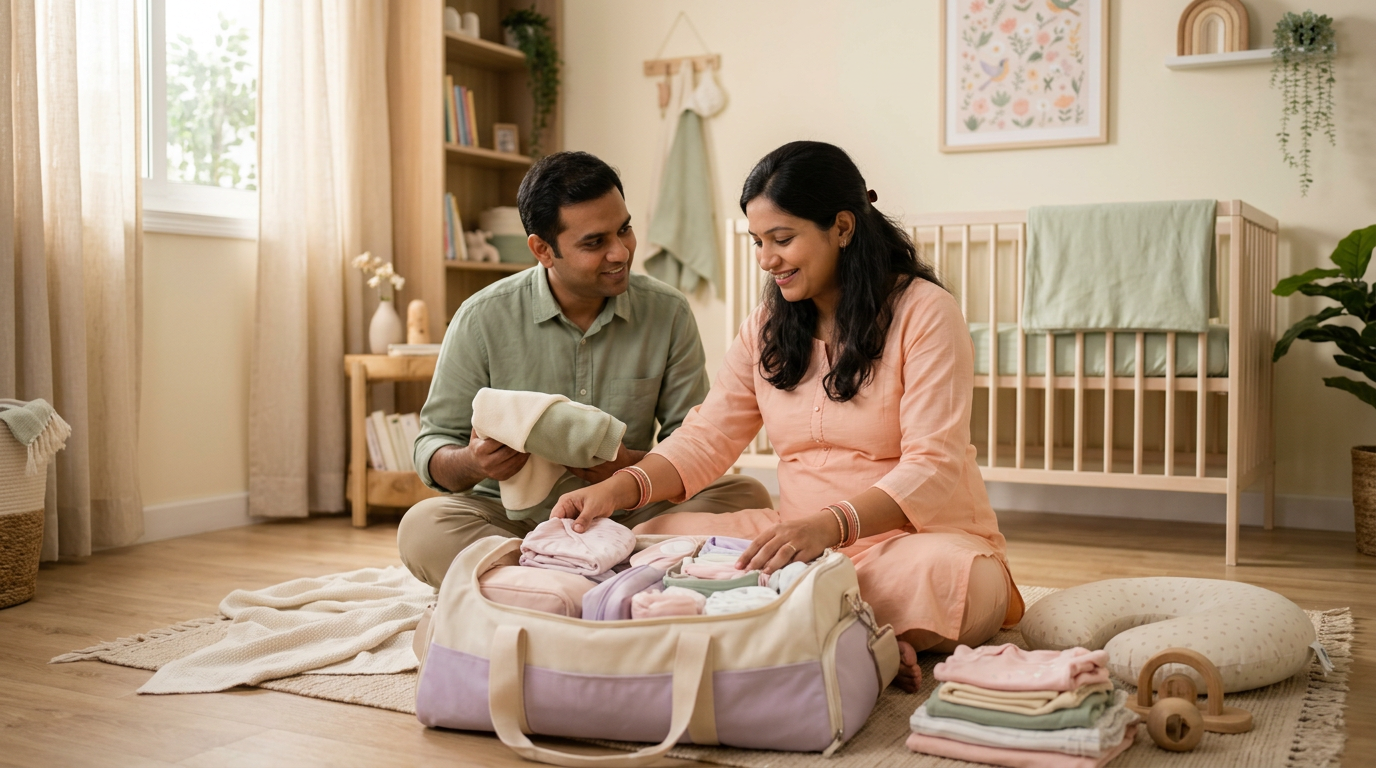
You are likely in your third trimester, staring at a half-empty suitcase and wondering if you really need that fancy labor gown you saw on Instagram. The short answer: bag packing for delivery in India is less about aesthetic photos and more about surviving the realities of a busy nursing home or a private hospital wing. Whether you are aiming for a vaginal birth or preparing for a scheduled C-section, having your essentials organized by week 36 is the ultimate peace-of-mind gift to yourself.
The Three-Bag System: Mom, Baby, and Partner
In Indian hospitals, space can be tight, especially if you are in a semi-private room. Instead of one giant trunk, divide your gear into three separate bags. This prevents your partner from digging through your nursing bras to find a baby onesie.
What is the best strategy for bag packing for delivery in India?
The most effective strategy is the "Layered Approach." Indian hospitals vary wildly; a corporate hospital like Apollo or Max might provide basics like maternity pads, whereas a government facility or a smaller local nursing home expects you to bring everything down to the bucket and mug.
Before you start, check your due date calculator to ensure you have a clear timeline. Aim to have these bags ready by your 35th or 36th week to account for early arrivals.
The Labor & Delivery Bag (The "Immediate" Bag)
This is the small backpack or tote you take into the labor room.
* Original Documents: Your file with all ultrasound reports, blood tests (especially Blood Group and Rh factor), and ID proofs for birth registration.
* Energy Boosters: Coconut water, electoral sachets, or dry fruits like dates. Avoid heavy oily snacks; stick to what the IAP (Indian Academy of Pediatrics) and FOGSI guidelines suggest for light intake during early labor.
* Hair Ties: Trust me, you don’t want your hair sticking to your face when the contractions peak.
* Lip Balm: Hospital air conditioning is notoriously drying.
The Mom’s Postnatal Bag
Once you are moved to the recovery ward, your needs shift toward comfort and hygiene.
* Clothing: Pack 3-4 sets of front-open kurtas or nighties. In India, most moms prefer cotton gowns that allow for easy stanpaan (breastfeeding).
* Maternity Pads: You will need "maxi" pads. Standard ultra-thin pads cannot handle the initial lochia. If you're unsure what's normal, use a lochia analyzer to track your recovery.
* Toiletries: Your own toothbrush, mild soap, and a comb. Don't forget a soft towel; hospital towels can feel like sandpaper.
* Slippers: Non-slip bathroom slippers are mandatory.
* Postnatal Support: If you're worried about your core strength after birth, it's worth learning how to do a free diastasis recti self-check once your doctor clears you for movement.
The Baby’s Essentials Bag
Indian babies are often swaddled immediately. Ensure all new clothes are pre-washed with a baby-safe detergent to remove starch and chemicals.
* Jablas and Onesies: 6-8 sets of soft cotton jablas.
* Swaddle Cloths: 4-5 Mulmul (muslin) cloths. They are breathable and perfect for the Indian climate.
* Diapers vs. Langots: Even if you plan on using cloth langots at home, pack a pack of newborn-size disposable diapers for the hospital stay to track urine output easily.
* Baby Blanket: Even in summer, hospital AC can be chilly for a newborn.
* Quick Tip: Keep a set of clothes ready for the "going home" photo, but prioritize comfort over frills. Check your baby’s growth against a baby growth chart in the coming weeks to see how they flourish.
Specific considerations for a hospital bag checklist for delivery india
India has unique cultural and climatic requirements. Unlike the West, we have the "Sutika" or postnatal period where warmth is prioritized.
1. The Season Factor
* Monsoon: Pack extra sets of clothes for both mom and baby as laundry won't dry, and the humidity makes you sweat more during labor.
* Summer: Stick to pure cotton. Avoid synthetic lace which can irritate skin sensitized by hormones.
* Winter: Pack a thermos for warm water and Ajwain (carom seed) water, often recommended by elders for digestion, though consult your doctor first.
2. The Food Box
Hospital food can be bland. While you must follow your doctor's advice, most Indian families bring a "dabba" for the new mom.
* Gond or Methi Laddoos: Traditional snacks for energy, provided your sugar levels are normal.
* Roasted Makhana: A great low-sodium snack.
Thermos Flask: Essential for the warm water or milk your sasu maa* will insist you drink.
3. C-Section Specifics
If you are having a Cesarean delivery, your hospital bag needs a few extras:
* High-waisted Panties: You don't want an elastic band rubbing against your incision.
* Long Straws: It’s hard to sit up and drink for the first 24 hours.
* Soft Pillow: To press against your tummy when you cough or laugh (splinting). You can use a scar analyzer later in your recovery to monitor healing.
The Partner’s Survival Kit
The father or birth partner is often the most forgotten person in the hospital bag labor process. They need:
* Change of clothes: Especially if it’s a long labor.
* Power bank and extra-long charging cable: Wall sockets in hospitals are never where you need them.
* Cash and Small Change: For the canteen, parking, or buying medicine from the hospital pharmacy at 3 AM.
* List of people to call: A pre-decided list so they aren't overwhelmed by WhatsApp pings.
Real talk from Indian moms
"I packed fancy satin robes, but ended up living in my old oversized cotton kurtas. The bleeding is no joke, and you just want something that breathes. Also, bring your own pillow from home; it smells like 'safe' and helps you sleep better in a noisy ward." — Ananya M., Bengaluru, Mom to 4-month-old.
"Don't forget a small bottle of coconut oil. My baby had so much meconium (first poop) and it's like superglue. Applying a bit of oil on the baby's bottom before the first poop makes cleaning so much easier. The nurses at my government hospital actually suggested this!" — Priya S., Lucknow, Mom to 6-week-old.
When to call your paediatrician
Once the bag is packed and the baby is here, keep this red-flag list handy. Call the doctor if:
* The baby is not feeding or has a weak suck.
* There are fewer than 6 wet diapers in 24 hours (after the first 3 days).
* The baby's skin or eyes look significantly yellow (Jaundice).
* The umbilical cord stump has foul-smelling discharge or redness around it.
* The baby has a fever (rectal temperature above 100.4°F or 38°C).
* The baby is inconsolable or extremely lethargic. You can use an AI cry analyzer to help distinguish between hunger and pain, but medical advice always comes first.
Frequently Asked Questions
What should be in my hospital bag for a normal delivery in India?
For a normal delivery, focus on mobility. Pack comfortable clothes you can walk in, maternity pads, and nursing bras. Since stay is usually 24-48 hours, you need fewer clothes than a C-section stay.
When should I start my hospital bag labor preparations?
Ideally, start at the beginning of your third trimester (around 28 weeks) by making a list, and have the physical bag ready by 35-36 weeks.
How many baby clothes should I include in my hospital bag labour kit?
Pack at least 6-8 sets of clothes. Babies can go through several changes a day due to spit-ups or diaper leaks.
Does the hospital provide diapers and pads in India?
Private corporate hospitals usually provide a basic kit (often billed to you), but smaller nursing homes and government hospitals usually require you to bring your own. It is always safer to carry one pack of each.
Can I wear my own clothes during delivery?
Most Indian hospitals will ask you to change into a sterilized hospital gown for the actual delivery to maintain hygiene in the OT or labor room. You can switch to your own clothes once you are moved to your room.
Bag packing for delivery is the final bridge between your pregnancy and your life as a mother. By keeping things simple, organized, and focused on Indian conditions, you are setting yourself up for a much smoother transition. You have done the hard work of growing a human; now, let your bag do the work of keeping you comfortable. You are ready for this.
Sources & further reading
- Indian Academy of Pediatrics (IAP) - Newborn Care
- Federation of Obstetric and Gynaecological Societies of India (FOGSI)
- National Health Portal of India - Postnatal Care
Written by Dr. Ritu Sharma, MD (Obstetrics & Gynaecology)
Reviewed by TheMamaCircle Editorial Team
Last updated: 24 August 2026
This article is for general information only and is not a substitute for personalised medical advice. Always consult your paediatrician or obstetrician for your specific situation.