Delivery Bag Packing List: The Ultimate Indian Guide
A complete delivery bag packing list for Indian moms. Learn what to pack for labor, C-sections, and baby, plus India-specific tips for private & govt hospitals.
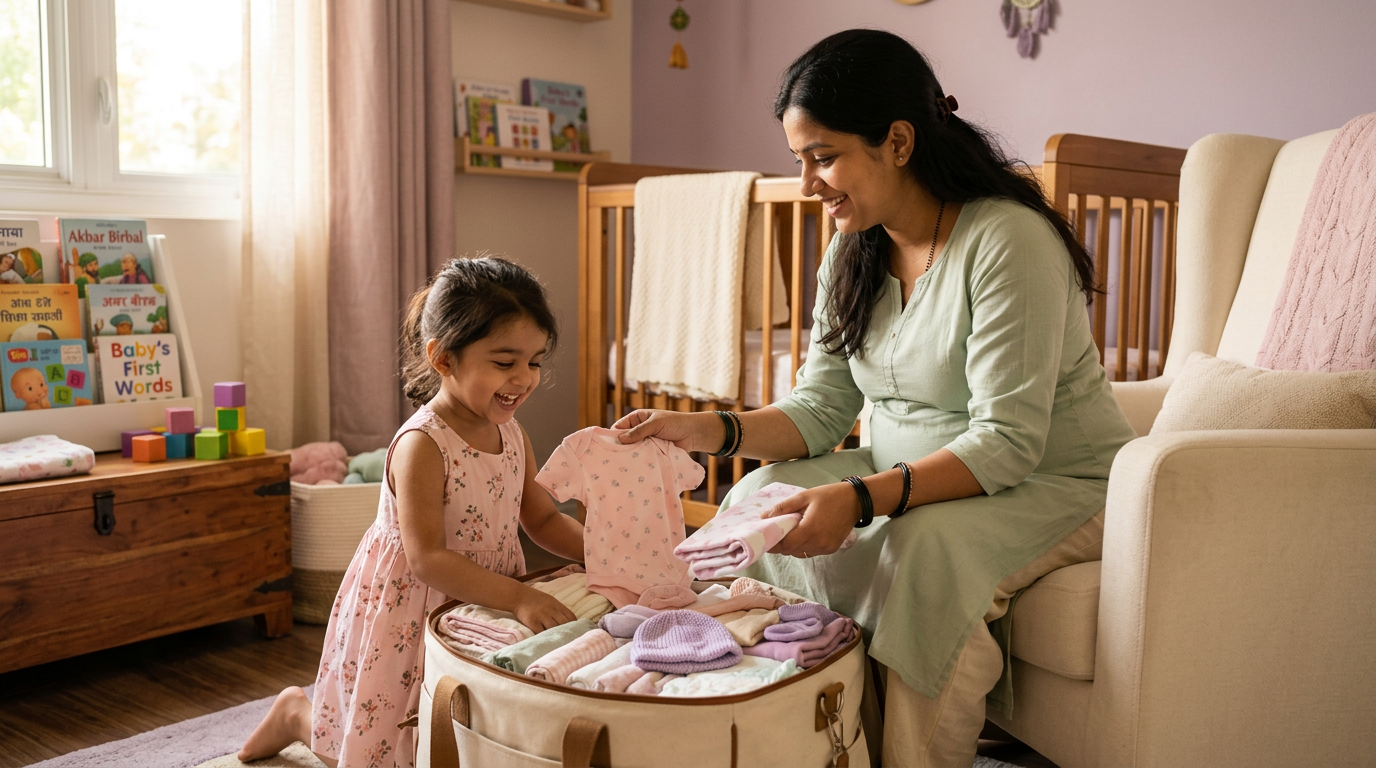
Packing your bags for the big day is the first real 'project' of motherhood. You want to be prepared for everything from a sudden C-section to a long labour, but you also don't want to look like you're migrating for good. A solid delivery bag packing list should be ready by your 35th or 36th week. In Indian hospitals—whether you are at a high-end private facility like Apollo or Cloudnine, or a government hospital like AIIMS—the requirements vary wildly, so having your own essentials is non-negotiable.
The Ultimate Delivery Bag Packing List: Three Bags, One Goal
I always advise my patients to pack three separate small bags rather than one giant suitcase. Why? Because when you are in active labour, your partner or sasu maa will not be able to find a nursing bra buried under a packet of diapers. Use three distinct bags: The Labour Room Bag, The Postnatal Room Bag, and The Baby Bag.
1. The Labour Room Bag (The Essentials)
This is the small kit that goes with you the moment you are admitted. It should be easily accessible and contain items you need during the first few hours of active labour and immediately after birth.
* Original Records & ID: Keep your Aadhar card, hospital registration card, and your entire pregnancy file (all scans and blood reports) in a waterproof folder.
Energy Boosters: Ask your doctor first, but items like coconut water, mishri*, or dry fruits can provide quick energy.
* Lip Balm: Hospital air conditioning is notoriously drying.
* Hair Ties: You do not want hair in your face while you are breathing through contractions.
Comfort Item: A small pillow from home or a photo of your Ishta Devata* (Deity) if that brings you peace.
2. The Postnatal Room Bag (For Mom)
Once you are moved to your room, your needs shift to comfort and hygiene. This is where your hospital bag needs to be most organized for your postnatal recovery.
* Front-Opening Gowns or Kurta Sets: You will be breastfeeding every 2-3 hours. Choose soft cotton fabrics that open in the front. Avoid heavy embroidery that can scratch the baby's skin.
* Maternity Pads: Forget regular pads; you need heavy-duty maternity pads or adult diapers (brands like Friends or Romsons are common in India). You can also use a lochia analyzer to track if your bleeding is within normal limits.
* Disposable Panties: Trust me, you don't want to ruin your good lingerie. Pack at least 10 pairs.
* Nursing Bras: Invest in 2-3 well-fitting nursing bras. If you aren't sure about your size, wait until the milk comes in, but have basics ready.
* Toiletries: Your own soap, toothbrush, toothpaste, and a mild face wash. Don't forget a soft towel—hospital towels can sometimes feel like sandpaper.
* Slippers: Rubber flip-flops for the bathroom and a pair of warm socks if you are delivering in the winter or if the AC is cold.
3. The Baby Bag (For the Little One)
While some private hospitals provide clothes, it is always safer to have your own. Ensure everything is pre-washed with a baby-safe detergent.
* Cotton Jhablas: 5-6 sets of soft, thin cotton tie-up tops.
* Swaddle Cloths: Soft mulmul cloths are the gold standard in India for a reason—they are breathable and get softer with every wash.
* Diapers & Wipes: A pack of 'Newborn' size diapers. Use water-based wipes or simply cotton wool and warm water for the first few days.
* Caps, Mittens, and Booties: Babies lose heat through their heads and extremities. Even in a Chennai summer, the hospital AC might be too much for a newborn.
* Going-Home Outfit: A cute (but comfortable) set for the first trip home.
How does a hospital bag checklist for delivery in India differ?
In the West, hospitals often provide everything from giant mesh underwear to peri-bottles. In India, even at premium hospitals, you might find they provide the basics but expect you to have your own supplies for the baby.
If you are delivering at a government hospital or a smaller nursing home, your delivery bag packing list must include a few extras:
* Bed Linens: A couple of clean bedsheets and pillow covers for the attendant's bed.
A Flask: For warm water or herbal tea (Ajwain* water is a common postnatal staple).
* Hand Sanitizer & Liquid Soap: Never assume the bathroom will be fully stocked.
Cash: While UPI is everywhere, keep ₹2,000–₹5,000 in small change for tips (neg*) or emergency pharmacy runs.
hospital bag checklist for delivery indiaPacking for a C-Section vs. Normal Delivery
If you have a planned C-section, your stay will likely be 3-4 days instead of 1-2. You will need:
* High-Waisted Panties: You don't want an elastic band rubbing against your incision.
* Loose Nighties: Anything that doesn't press on the abdomen.
* Support Pillow: To help with breastfeeding while protecting your stitches. You can use our scar analyzer later during your recovery to monitor healing.
For those planning a vaginal birth, your hospital bag labour focus should be on movement. Think about bringing a stress ball or a light robe to walk the corridors.
Real talk from Indian moms
> "I packed all these fancy fancy gowns, but honestly, I spent the first two days in the hospital-provided gown because the bleeding was so heavy. Save your nice clothes for the day you leave!" — Ananya S., Bengaluru (Mom to 4-month-old)
> "Don't forget a power bank and an extra-long charging cable. The plug points in hospital rooms are always in the weirdest places, far from the bed." — Meera K., Mumbai (Mom to 1-year-old)
When to call your paediatrician
Once the baby is born and you are heading home, watch for these red flags:
* Jaundice: If the baby’s skin or eyes look significantly yellow (beyond the mild newborn yellowing).
* Poor Feeding: If the baby is not latching or seems too sleepy to wake up for feeds.
* Fever: Any temperature above 100.4°F (38°C).
* Dehydration: Fewer than 6 wet diapers in 24 hours after the first few days.
* Umbilical Cord Issues: Redness, foul smell, or discharge around the navel.
* Excessive Crying: If you can't soothe the baby, use our AI cry analyzer for a quick check, but always call the doctor if you are worried.
Frequently Asked Questions
When should I start my hospital bag checklist for delivery?
You should aim to have your bag packed and kept by the door by week 35 or 36. Babies have their own timelines, and you don't want to be packing while breathing through 4-1-1 contractions!
What are the essentials for an Indian hospital bag?
Beyond the clothes, the Indian context requires a file for your medical records, a steel flask for warm water, mulmul swaddles, and high-absorbency maternity pads. If you are following a traditional postnatal diet, you might also pack home-made Panjiri or Gond laddus for energy post-delivery.
What should be in my hospital bag labor kit?
The hospital bag labor kit should focus on the 'active' phase: Aadhar card, lip balm, hair ties, a handheld fan, and any comfort items like a stress ball or religious books.
Do I need to pack my own medicines?
Generally, no. The hospital will provide all necessary medical supplies and bill them to you. However, if you are on specific long-term medication (for thyroid or BP), carry them but inform your obstetrician immediately upon admission.
What is the best dress for delivery in India?
For the delivery itself, the hospital will provide a sterile gown. For the stay after, soft cotton front-open nighties or loose Liva fabric kurtis are best. Avoid anything with zippers or buttons that can hurt the baby during skin-to-skin contact.
Packing your delivery bag packing list is a rite of passage. It marks the transition from 'expecting' to 'doing'. Don't stress too much if you forget a pair of socks—almost everything can be bought or brought from home later. Focus on the essentials, keep your documents ready, and trust your body to do the rest.
I am prepared, I am strong, and I am ready to meet my baby.
Sources & further reading
- Indian Academy of Pediatrics (IAP) - Newborn Care
- FOGSI - Good Clinical Practice Recommendations
- Ministry of Health and Family Welfare (NHP India) - Maternal Health
Written by Dr. Ritu Sharma, MD (Obstetrics & Gynaecology)
Reviewed by TheMamaCircle Editorial Team
Last updated: 5 September 2026
This article is for general information only and is not a substitute for personalised medical advice. Always consult your paediatrician or obstetrician for your specific situation.