Postnatal Ladoo: Best Indian Recipes & Diet Guide
Postnatal ladoos (gond, methi, halim) are essential for Indian recovery. Learn the best recipes for milk supply and healing in our postnatal diet guide.
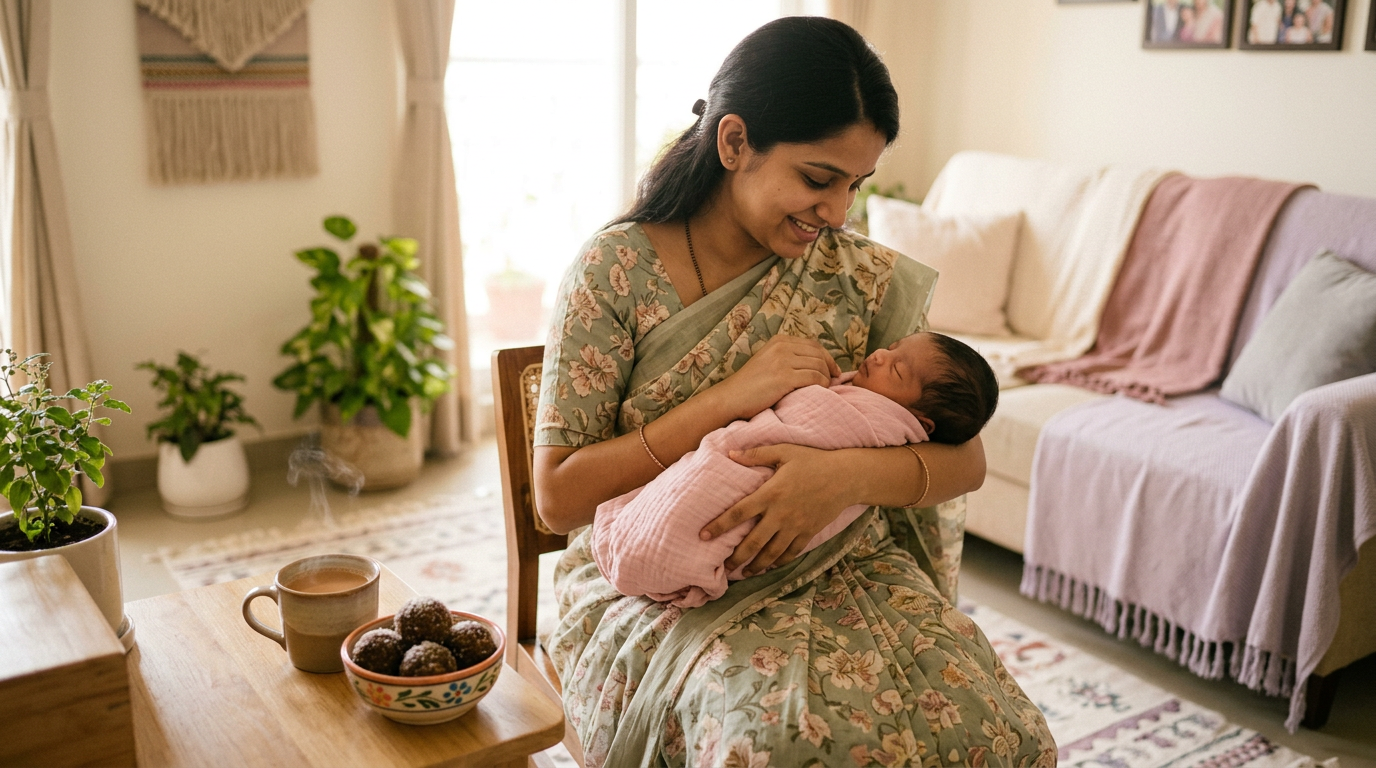
The traditional postnatal ladoo (widely known as the postnatal ladoo) is the undisputed superhero of the Indian jaapa (confinement) period. These nutrient-dense balls are designed to repair tissues, boost breast milk supply, and provide a quick energy surge for sleep-deprived new mothers. Whether it is the bitterness of methi or the crunch of gond, these ladoos aren't just sweets; they are Ayurvedic formulations passed down through generations to support postnatal food for mother during the critical six-week recovery window.
Why is the postnatal ladoo essential for Indian mothers?
In India, the first 40 days after delivery (the Sawa Mahina) are dedicated to Pathyam—a strict postnatal diet meant to balance the 'Vata' (air) element which is believed to be aggravated after childbirth. During this time, a mother’s body is in a state of high inflammation. The uterus needs to shrink back (involution), and the digestive system—or Agni—is often weak.
The postnatal ladoo serves multiple clinical and traditional purposes:
Wound Healing: Ingredients like Gond* (Edible Gum) are rich in calcium and protein, aiding in the recovery of the pelvic bone and muscles.
Lactation Support: Seeds like Methi (Fenugreek) and Shatavari* act as powerful galactagogues.
Hormonal Balance: Garden cress seeds (Halim*) are packed with iron and folic acid, helping replenish blood loss after delivery.
Lubrication: High-quality shuddh desi ghee* acts as a lubricant for joints that have been strained by the hormone relaxin during pregnancy.
If you are worried about your core strength or a "pooch" that won't go away while eating these calorie-dense foods, it’s worth taking a free diastasis recti self-check to see if muscle separation is the actual culprit rather than the ghee.
Types of postnatal ladoos across India
India’s regional diversity means your dadi and nani likely have a specific recipe based on where you grew up. While the goal of the postnatal diet chart indian remains the same, the ingredients vary by climate and availability.
1. Gond ke Laddu (North India)
Common in Punjab, Delhi, and Rajasthan, these are made from Gond (edible gum from the acacia tree). When fried in ghee, the gum puffs up and becomes crunchy. It is excellent for strengthening the spine and preventing the dreaded postnatal backache.
2. Dinkache Ladoo (Maharashtra)
Similar to Gond, Dink is the Marathi word for edible gum. These are often heavier on grated dry coconut and Kharek (dried dates powder), providing a natural sweetness without over-relying on refined sugar.
3. Methi and Ahiv Ladoo (Gujarat & Maharashtra)
These can be slightly bitter but are unmatched for lactation. Ahiv (Garden cress seeds) are tiny red seeds that are nutritional powerhouses. These are often recommended for mothers who had a difficult delivery or heavy bleeding. If you're concerned about your post-delivery flow, using a lochia analyzer can help you track if your recovery is on the right path.
4. Panjiri and Laddoo (North & Central India)
While Panjiri is often kept in loose powder form, it is frequently rolled into balls for convenience. It contains Makhana (Fox nuts), which are high in calcium and easy on the stomach.
Can I eat these after a C-Section?
A common myth in many Indian households is that you shouldn't eat "heavy" or "heating" foods like a postnatal ladoo after a C-section until the stitches heal. However, modern nutrition science and the Indian Academy of Pediatrics (IAP) emphasize that protein and micronutrients are vital for surgical recovery.
While you should wait for your doctor to clear you for a solid postnatal food plan (usually once you've passed gas and are on a soft diet), these ladoos can be introduced within the first week in moderation. The key is to monitor your digestion. If the ghee feels too heavy, start with a smaller size. If you're healing from surgery, keeping an eye on your incision with a scar analyzer can provide peace of mind alongside your nutritional recovery.
Decoding the ingredients: What does the science say?
The ICMR (Indian Council of Medical Research) suggests that lactating mothers need an additional 500-600 calories per day. A typical postnatal ladoo (approx. 40-50g) provides roughly 200-250 calories, making it the perfect mid-morning snack.
* Dry Ginger (Saunth): Excellent for digestion and reducing internal inflammation.
* Ajwain (Carom Seeds): Known to prevent colic in the baby through breast milk and help the mother’s uterus contract.
* Kamarkas (Sage herb): Specifically used in North India to help "tighten" the pelvic muscles after the expansion of labor.
* Jaggery (Gur): A better alternative to white sugar, providing much-needed iron to combat postnatal anaemia.
How to balance your postnatal diet without overdoing it
While Sasu Maa might insist you eat four ladoos a day, moderation is key. Over-consumption of high-fat, high-sugar foods can lead to unwanted weight gain and sluggishness.
Real talk from Indian moms
> "My mother-in-law made a huge batch of Methi ladoos. They were bitter, and I hated them at first, but honestly, my milk supply doubled in three days. I just swallowed them with milk like a pill!"
> — Sunita R., Mumbai, mom to 3-month-old.
> "I had a C-section and was terrified the Gond ladoos would make me constipated. My nutritionist told me to add more fiber like steamed papaya to my diet while having the ladoo. It worked perfectly for my back pain."
> — Ananya V., Bengaluru, mom to 5-month-old.
> "In our Tamil household, we make a version called Angaya Podi and also Prasava Lehyam. It’s not a ladoo but a jam-like paste. It’s the only thing that settled my stomach after delivery."
> — Deepika S., Chennai, mom to 2-month-old.
When to call your paediatrician
While the mother's diet is crucial, sometimes what you eat can affect the baby via breast milk. Watch for these signs in your little one:
* Excessive Colic: If the baby is inconsolable for hours after you consume certain "heating" foods or spices.
* Skin Rashes: Any sudden hives or red patches on the baby’s skin.
* Changes in Stool: If the baby develops diarrhea or extremely green, frothy stools consistently.
* Allergic Reaction: Swelling around the baby’s eyes or lips (seek emergency care immediately).
If you are worried about your baby's crying patterns after you've changed your diet, our AI cry analyzer can help you distinguish between a "hunger cry" and a "tummy pain cry."
Frequently Asked Questions
What are the benefits of a postnatal ladoo?
The primary benefits include boosting lactation through galactagogues like fenugreek, strengthening the spine and joints with edible gum (gond), and providing concentrated energy to help the mother recover from the physical exhaustion of childbirth.
How many ladoos should I eat in a day?
Ideally, one postnatal ladoo per day is sufficient. These are calorie-dense and high in fats. Eating too many can cause indigestion or excessive weight gain, which may be harder to lose later.
Which is the best postnatal diet chart indian for weight loss?
A weight-loss-friendly postnatal diet chart indian focuses on high protein (dals, sprouts, lean meat), high fiber (oats, daliya, seasonal veggies), and healthy fats in moderation. You can still include one small postnatal ladoo for its medicinal benefits while cutting back on white rice and refined sugar in other meals.
Can I eat a postnatal ladoo if I have gestational diabetes?
If you had gestational diabetes or are currently pre-diabetic, you must be very careful. Opt for ladoos made with stevia or a very small amount of dates, and avoid jaggery or honey. Consult your doctor or a registered dietitian before including them in your postnatal food plan.
What is the best postnatal food for mother to increase milk?
Apart from the traditional ladoo, focus on postnatal food for mother options like garlic-infused milk, fennel seed (saunf) water, soaked almonds, and green leafy vegetables like spinach and sua (dill leaves).
Summary
The postnatal ladoo is a time-tested tradition that bridges the gap between ancient Ayurvedic wisdom and modern nutritional needs. While it might feel like "too much ghee" to a modern eye, these ingredients are specifically chosen to heal the Indian mother's body from the inside out. Listen to your body, enjoy the tradition, and remember that this period of jaapa is as much about your rebirth as it is about your baby's birth.
You are doing an incredible job; your body built a human, and now it deserves to be nourished with love and a little bit of shuddh desi ghee.
Sources & further reading
- ICMR-NIN Dietary Guidelines for Indians
- FOGSI Postpartum Care Guidelines
- Indian Academy of Pediatrics - Nutrition in Lactation
Written by Neha Kapoor, RD (Registered Dietitian, Maternal & Child Nutrition)
Reviewed by TheMamaCircle Editorial Team
Last updated: 7 August 2026
This article is for general information only and is not a substitute for personalised medical advice. Always consult your paediatrician or obstetrician for your specific situation.