Postpartum food for mother: Best Indian Diet Chart & Recipes
Looking for the best postpartum food for mother in India? Discover traditional diet charts, dadi's laddu recipes, and science-backed nutrition for recovery.
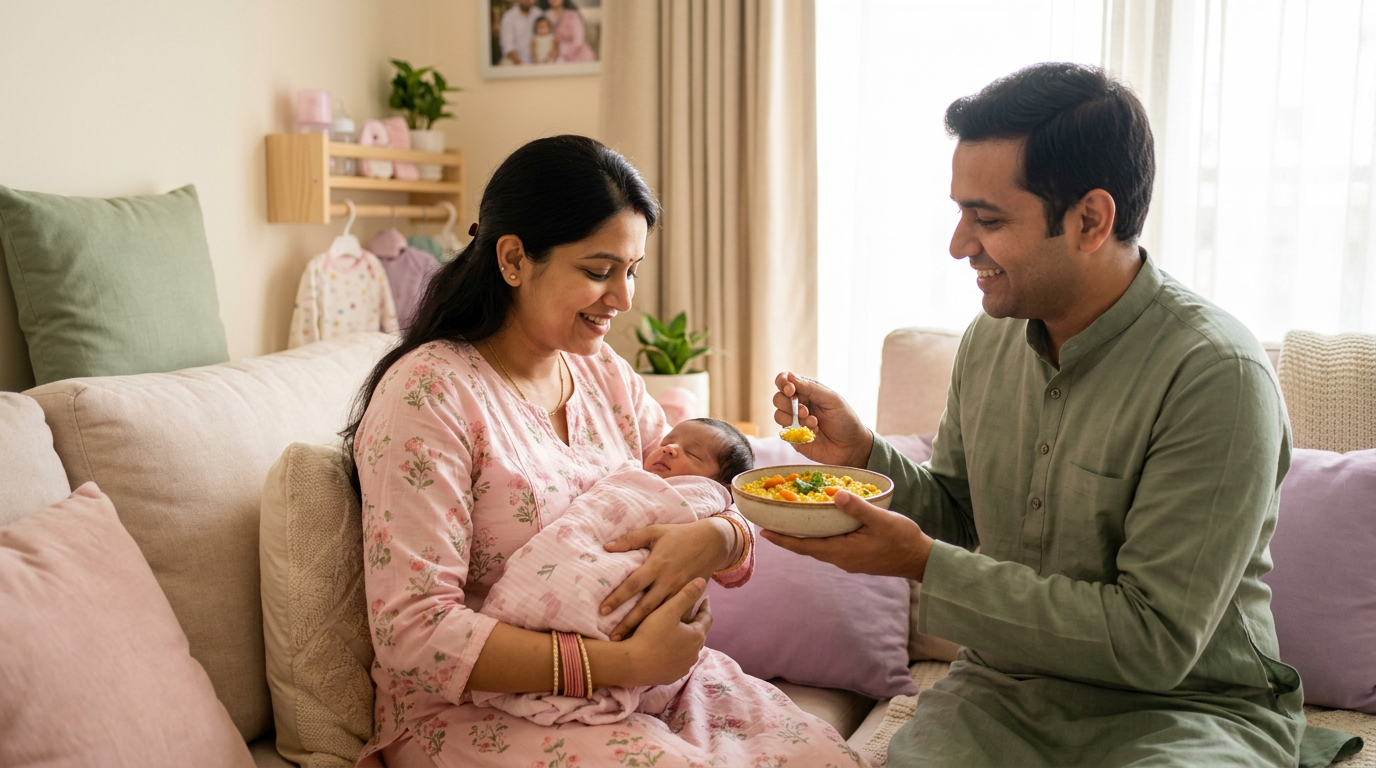
The right postpartum food for mother choices in India are a delicate balance between age-old Dadi Ma ke nuskhe and modern clinical nutrition. During the first six weeks (the Jaapa period), your body requires approximately 500 extra calories per day if you are breastfeeding, focused on healing the uterine lining and replenishing iron stores lost during delivery. From protein-rich Gond ke Laddu to hydrating Ajwain water, your plate should prioritize micronutrients like iron, calcium, and choline.
What is the best postpartum food for mother to eat for recovery?
In Indian households, the focus often shifts entirely to the baby, but the mother’s recovery is the foundation of a healthy infancy. According to the Indian Council of Medical Research (ICMR), a lactating mother needs a significant bump in protein and calcium. The goal isn't just "eating more" but eating foods that are pachne mein halke (easy to digest) yet nutrient-dense.
Essential Nutrients for the Fourth Trimester
Complex Carbohydrates: Foods like Dalia* (broken wheat) and brown rice provide sustained energy.
High-Quality Protein: Essential for tissue repair. Think Moong Dal*, paneer, eggs, and lean meats.
Healthy Fats: Crucial for brain health and hormone regulation. Pure Desi Ghee* is traditional for a reason—it aids in internal lubrication.
Galactagogues: Ingredients like Methi (fenugreek) and Shatavari* that traditionally help in milk production.
Why the Traditional Indian Postpartum Diet Works
We often roll our eyes when Sasu Maa insists on another spoonful of ghee, but traditional postpartum food has roots in Ayurvedic wisdom that aligns with modern science. The focus on "warming" foods helps improve blood circulation and supports the involution of the uterus.
The Power of Regional Specials
How to structure a postpartum diet chart Indian style?
Creating a postpartum diet chart indian requires balancing three heavy meals with two nutrient-dense snacks. Here is a sample blueprint:
Early Morning (6:00 AM)
* A glass of warm Ajwain water or Jeera water to reduce bloating.
* 5 soaked almonds and 2 walnuts.
Breakfast (8:30 AM)
* Oats Porridge with nuts or two Ragi Manni (sweet/savoury). Ragi is an exceptional source of calcium, containing about 344mg per 100g, which is vital for preventing bone density loss during breastfeeding.
Mid-Morning Snack (11:00 AM)
* One Gond or Methi Laddu.
* A seasonal fruit (Papaya is traditionally favoured, but ensure it is ripe).
Lunch (1:30 PM)
* 1 bowl of Moong Dal (tempered with ghee and hing).
1 cup of cooked leafy greens (Palak or Methi*).
2 small Chapatis* or a bowl of red rice.
* A small portion of curd (at room temperature).
Evening Tea (4:30 PM)
* A cup of herbal tea or milk with Shatavari Kalpa.
* Roasted Makhana (Foxnuts)—a low-calorie, high-fibre snack.
Dinner (7:30 PM)
* Vegetable Khichdi or a light chicken soup with shredded pieces. Keep dinner lighter than lunch to avoid acidity, which is common in the postpartum phase.
Safe Postpartum Food to Eat for C-Section Recovery
If you’ve had a Cesarean delivery, your postpartum food to eat list needs a slight tweak to manage post-operative constipation and gas.
Avoid "Gassy" Foods: Limit cauliflower, cabbage, and heavy beans (Rajma/Chole*) for the first two weeks to avoid surgical site discomfort.
Fiber is Your Friend: Aim for 25-30g of fiber daily. If you are struggling, a teaspoon of Isabgol* (Psyllium husk) in warm water at night is safe and effective.
Hydration: Drink at least 3-4 litres of water. In many Indian homes, "mummy ka pani" is boiled with Saunf* (fennel) and cooled—this helps both hydration and the baby’s colic.
Real Talk from Indian Moms
> "I was terrified of the 'Ghee' diet my mother-in-law wanted. We compromised. She added it to my Dal, but I skipped the heavy parathas. I felt much more energetic than my friends who did 'salad only' diets." — Ananya, Mumbai, Mom to a 4-month-old.
> "In my Telugu household, we focused heavily on garlic (Lellulli) and ginger. It really helped with my milk supply, though my sweat smelled like a spice box for a month!" — Lekha, Hyderabad, Mom to a 7-month-old.
When to Call Your Paediatrician (Red Flags)
While we focus on the postpartum diet, what you eat affects your baby through your milk. Watch for these signs in your little one:
* Extreme Colic: If the baby cries inconsolably for hours after you consume specific foods (like dairy or caffeine).
* Diarrhoea or Rashes: Could indicate a food sensitivity or allergy (e.g., Cow's Milk Protein Allergy).
* Poor Weight Gain: If the baby isn't hitting growth milestones despite frequent feeding, consult a specialist to check milk quality and transfer.
* Lethargy: If the baby is too sleepy to feed or appears yellow (Jaundice).
Frequently Asked Questions
What is the best postpartum food for mother to increase milk?
Foods high in galactagogues like fenugreek seeds (methi), fennel (saunf), garlic, and garden cress seeds (halim) are traditionally used in India. Including green leafy vegetables and ensuring you meet your 500-calorie surplus is essential for sustained supply.
How do I follow a postpartum diet for weight loss without losing milk?
Never go on a restrictive "crash diet." Focus on a nutrient-dense postpartum diet by replacing refined flour (Maida) with whole grains (Jowar, Bajra, Ragi) and reducing sugar. The act of breastfeeding itself helps burn approximately 400-600 calories daily.
Can I include spicy food in my postpartum food list?
While a little spice is fine, heavy "mirch-masala" can cause acidity in the mother and potentially make the baby fussy. Stick to warming spices like black pepper, ginger, and cumin rather than heavy red chilli powder.
Is it safe to drink coffee while following an Indian postpartum diet?
Moderation is key. Limit caffeine to 200mg a day (about 1-2 small cups of filter coffee or chai). High caffeine intake can enter breast milk and lead to a wakeful, jittery baby.
Should I take supplements along with my postpartum food to eat?
Yes. The Federation of Obstetric and Gynaecological Societies of India (FOGSI) typically recommends continuing Iron and Calcium supplements for at least 3-6 months postpartum to prevent anaemia and bone loss.
Recovery is not a race; your body spent nine months growing a human, so give it at least nine months to return to its baseline. Focus on nourishment over restriction, and remember to listen to your hunger cues.
Your body is a temple that just performed a miracle; feed it with the respect it deserves.
Sources & further reading
- ICMR - Dietary Guidelines for Indians
- FOGSI - Postpartum Care Guidelines
- National Health Portal of India - Maternal Nutrition
Written by Neha Kapoor, RD (Registered Dietitian, Maternal & Child Nutrition)
Reviewed by TheMamaCircle Editorial Team
Last updated: 11 July 2026
This article is for general information only and is not a substitute for personalised medical advice. Always consult your paediatrician or obstetrician for your specific situation.