Postnatal Tummy: Realistic Indian Postnatal Weight Loss
Struggling with a postnatal tummy? Learn a realistic Indian postnatal weight loss timeline, safe exercises, and diet tips to heal your core naturally.
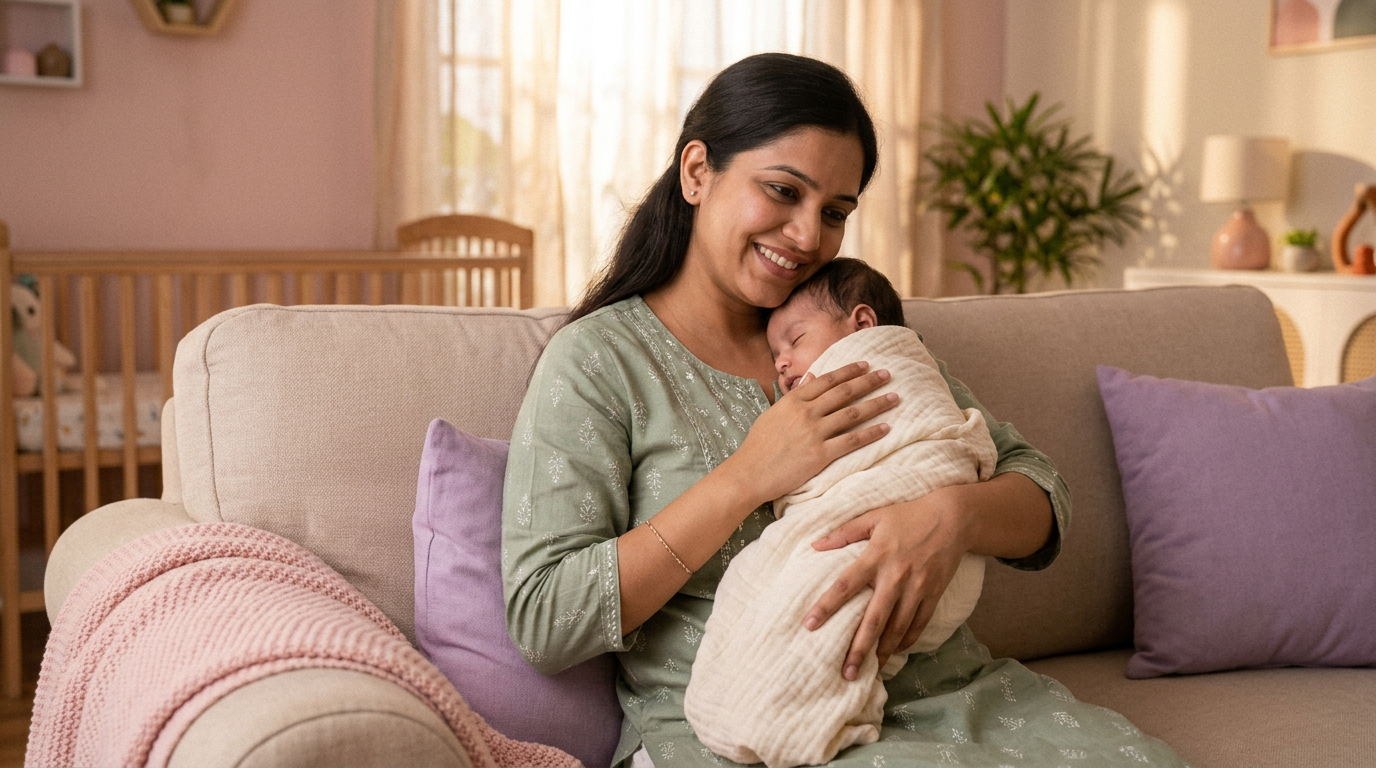
Looking at your postnatal tummy (also called postnatal) in the mirror for the first time after delivery can be a shock. You expected the baby to be out, but you still look six months pregnant. Here is the truth: your uterus took nine months to stretch to the size of a watermelon; it will not snap back in nine days. Achieving sustainable postnatal weight loss involves healing your abdominal wall, managing your hormones, and eating nutrient-dense Indian meals rather than resorting to crash diets or "detox" teas that do more harm than good.
Why does your postnatal tummy still look pregnant?
The "pooch" you see is a combination of a stretched-out uterus, extra fat stores for breastfeeding, and often, a separation of the abdominal muscles. In India, we often hear nani or dadi talk about "gas" or the uterus not "shrinking" fast enough. Scientifically, your uterus takes about six to eight weeks (the Sutika period) to return to its pre-pregnancy size.
However, if your postnatal tummy feels particularly soft or you see a "coning" or "doming" effect when you try to sit up, you might be dealing with Diastasis Recti (DR). This is a gap between your left and right abdominal muscles. Doing traditional crunches or heavy lifting too early can actually make this worse. You can use our free diastasis recti self-check to see if you have a significant gap before starting any heavy core workout.
The Postnatal Weight Loss Timeline: What is Realistic?
In the Indian context, the first 40 days (Sawa Mahina) are for rest and recovery, not weight loss. If you focus on a postnatal weight loss timeline that is too aggressive, you risk your milk supply and long-term pelvic health.
0 to 6 Weeks: The Healing Phase
Your body is dealing with lochia (post-delivery bleeding) and hormonal shifts. Focus on deep diaphragmatic breathing and short walks around the house. If you are worried about the nature of your bleeding during this time, our lochia analyzer can help you determine if your recovery is on track.
6 to 12 Weeks: Gentle Movement
Once you get the "all-clear" from your OB-GYN, you can start postnatal weight loss exercise such as postnatal yoga or brisk walking. If you had a C-section, ensure your incision is fully healed. Use a scar analyzer if you notice puckering or redness that seems unusual.
3 to 6 Months: Establishing Routine
This is when most Indian moms start seeing a shift in their postnatal tummy. Your metabolic rate is higher if you are breastfeeding, but don’t use "eating for two" as an excuse to overindulge in halwas and laddoos every single day.
How to lose "postnatal tummy" in India: The Diet Strategy
Indian postnatal diets are traditionally rich in Ghee, Gond, and Methi. While these are excellent for lactation and joint health, the "excess" is what causes stubborn weight. You don’t need a fancy Keto or Intermittent Fasting plan; you need a modified Indian plate.
The 2:1:1 Rule: Fill half your plate with sabzi (fibre), one-fourth with protein (dal, paneer, eggs, or lean meat), and one-fourth with complex carbs (unpolished rice or multigrain roti*).
Ditch the "Empty" Calories: Swap the refined sugar in your chai for a small piece of jaggery (gur*), but limit it. Avoid the "digestive" biscuits which are mostly maida and palm oil.
Hydration: Drink at least 3 litres of water. In many Indian homes, Ajwain* water is given to help with digestion and bloating—this is actually a great way to stay hydrated and reduce the "gas" that contributes to a distended postnatal tummy.
* The Protein Gap: Most Indian vegetarian diets are protein-deficient. Aim for 1.2g to 1.5g of protein per kg of body weight to help repair the abdominal tissues.
For a structured approach to your meals, you can look into our fertility diet plans which also offer templates for postnatal nourishment.
Safe Postnatal Weight Loss Exercise for the Indian Mom
You do not need a ₹3,000/month gym membership to lose the baby weight. In fact, heavy lifting or jumping too early can lead to pelvic organ prolapse.
The Pelvic Floor Connection
Before you worry about your "abs," you must fix your "floor." Your pelvic floor muscles supported a 3kg+ baby for months. Start with Kegels and Pelvic Tilts.
Walking: The Underrated Hero
A 30-minute brisk walk in your local park or even on your building terrace is the safest way to kickstart postnatal weight loss india. It improves circulation and helps with the "postnatal blues." If you feel your mood is more than just "tired," take our postnatal wellness assessment to check for signs of postnatal depression.
Yoga and Posture
Indian moms often hunch over while breastfeeding (stanpaan). This "mom posture" makes the postnatal tummy look more prominent. Focus on "Tadasana" (Mountain Pose) and "Marjaryasana" (Cat-Cow) to realign your spine.
Real talk from Indian moms
"Everyone told me the weight would melt off with breastfeeding. It didn't. I had to stop the 4 cups of milky sweet chai and start walking for 20 minutes daily before I saw my postnatal tummy actually shrink."
— Ananya, Mumbai, Mom to a 7-month-old
"I was so obsessed with my stomach gap that I started doing 100 crunches a day at 2 months postnatal. Big mistake. My back started hurting like crazy. My doctor told me it was Diastasis Recti and sent me to a physio. Listen to your body, not Instagram!"
— Meera, Bengaluru, Mom to a 4-month-old
"In my house, they forced me to eat ghee-laden gond laddoos for three months. I gained more weight after delivery than during pregnancy! I had to learn to say 'no' to my sasu maa politely and stick to simple dal-chawal-sabzi."
— Preeti, Delhi, Mom to a 1-year-old
When to call your paediatrician (and your own doctor)
While you are focusing on your postnatal weight loss, keep an eye on these red flags for yourself and your baby:
* For You: Sudden heavy bleeding (soaking a pad in an hour), fever above 100.4°F, or severe calf pain (could indicate a blood cub/DVT).
* For Baby: If the baby is not gaining weight according to the baby growth chart or if you notice unusual crying. If the crying is persistent, use our AI cry analyzer to understand if it’s hunger, colic, or sleepiness.
* For Your Incision: Any pus, foul smell, or opening of the stitches.
Losing the postnatal tummy is a marathon, not a sprint. Your body performed a miracle. Give it the grace, nutrition, and time it deserves to heal from the inside out. You are doing a great job, mama.
Slow and steady is the only way to win this race.",excerpt:
Sources & further reading
Written by Dr. Ritu Sharma, MD (Obstetrics & Gynaecology)
Reviewed by TheMamaCircle Editorial Team
Last updated: 8 August 2026
This article is for general information only and is not a substitute for personalised medical advice. Always consult your paediatrician or obstetrician for your specific situation.