Postpartum Depression Symptoms: An Indian Mom's Guide to PPD
Postpartum depression symptoms like rage, sadness, or lack of bonding are real. Learn the red flags, EPDS screening, and how Indian moms can find help today.
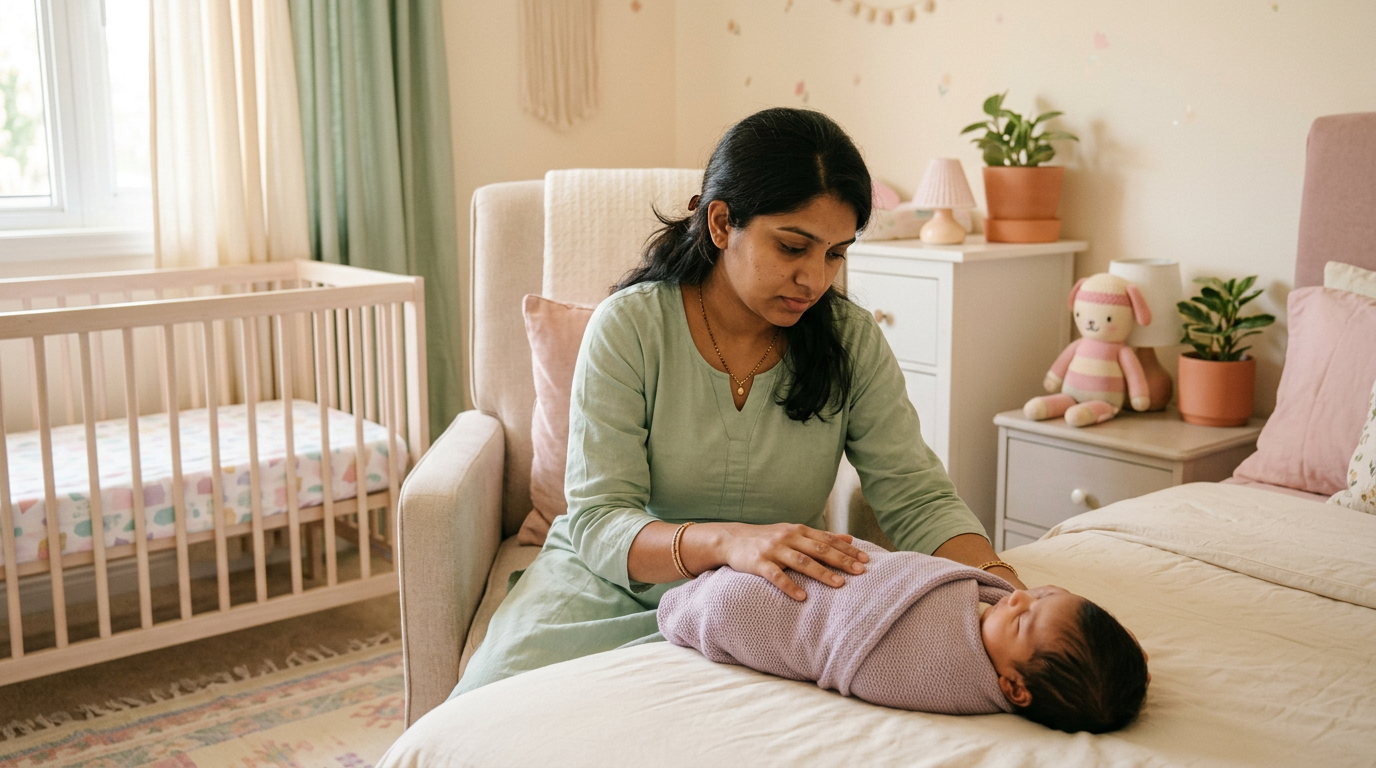
If you find yourself crying over a burnt paratha or feeling an inexplicable sense of dread while your baby sleeps peacefully, you aren't "weak" or a "bad mother." Identifying postpartum depression symptoms is the first step toward feeling like yourself again. Unlike the "baby blues" which fade in two weeks, postpartum depression (PPD) is a clinical condition affecting 1 in 5 Indian mothers, characterized by persistent sadness, severe anxiety, and a lack of bonding with the newborn that requires professional intervention.
What are the most common postpartum depression symptoms for Indian moms?
In our culture, the "happy mother" trope is pushed heavily. From the Godh Bharai to the birth, everyone expects you to be glowing. But for many, the reality is a heavy cloud. While the western world focuses on "sadness," in India, postpartum depression symptoms often manifest as physical exhaustion or "body aches" that don't go away with maalish.
The Emotional Red Flags
* Persistent Low Mood: Feeling "empty" or hopeless most of the day, nearly every day.
Severe Irritability: Also known as "postpartum rage." You might find yourself snapping at your Sasu Maa* or husband over tiny things like the temperature of the bathwater.
Loss of Interest: You no longer care about things you used to love—whether it’s chatting with friends on WhatsApp or enjoying your favourite filter kaapi*.
* Difficulty Bonding: Feeling like the baby is a stranger or feeling no "spark" when you hold them. This is often accompanied by intense guilt.
The Physical Signs
* Sleep Disturbances: Not just being awake because the baby is crying, but being unable to sleep even when the baby is out cold.
Appetite Changes: Either forgetting to eat entirely or bingeing on comfort foods like laddoos* and fried snacks to numb the pain.
* Psychosomatic Pains: Chronic headaches, backaches, or stomach issues that have no clear medical cause.
Postpartum Depression vs. Baby Blues: Know the Difference
It is vital to distinguish between the two. About 70-80% of new mothers experience the "baby blues" due to the sudden drop in oestrogen and progesterone after delivery.
Understanding the postpartum depression causes can help you realize that this is a biological event, much like gestational diabetes, and not a flaw in your character.
The Cultural Stigma: Why Indian Moms Suffer in Silence
In many Indian households, a new mother is surrounded by family. While this provides physical support, it can also lead to "smothering." When a mother mentions she feels sad, she is often told, "Tumhara toh khoon kam hoga" (your blood must be low) or "Dhyan bhatkao" (just distract yourself).
Internalizing these comments makes moms hide their postpartum depression symptoms. We worry about being judged by the society or being told we aren't grateful for the "blessing" of a child. However, clinical postpartum depression cannot be "fixed" by just "being happy" or eating more ghee. It requires a medical approach, often involving therapy or medication that is safe even during stanpaan (breastfeeding).
Screening at Home: The Edinburgh Postnatal Depression Scale (EPDS)
Medical professionals at AIIMS and FOGSI recommend the EPDS as a gold standard for screening. It is a 10-question survey that looks at how you’ve felt over the past 7 days.
* Score 0-8: Normal range.
* Score 9-12: Possible depression; monitor closely.
* Score 13+: High probability of PPD; seek a psychiatrist or clinical psychologist immediately.
If you are looking for resources in your native tongue, understanding postpartum depression in hindi can help explain your feelings to elders who may not understand the English clinical terms.
Real talk from Indian moms
> "I thought I was just tired from the midnight feeds. But when I looked at my daughter and felt absolutely nothing—no love, just duty—I knew something was wrong. My therapist in Bengaluru helped me realize it was the hormones, not my heart."
— Aditi, 29, Bengaluru (Baby age: 4 months)
> "In our joint family, I was never alone. Yet, I felt like I was drowning in a room full of people. I couldn't stop crying into the baby's jhablas. Admitting I needed help was the hardest part, but the medication saved my relationship with my son."
— Preeti, 32, Delhi (Baby age: 7 months)
When to call your paediatrician or doctor
While PPD is a mental health issue, your paediatrician is often the first person you see regularly. Speak up during your baby's vaccination appointments if you notice:
* Thoughts of harming yourself or the baby.
* Inability to perform basic hygiene (showering, brushing teeth).
* Severe anxiety or panic attacks that make your heart race.
* Hearing things or seeing things that others don't (this could be Postpartum Psychosis, a medical emergency).
* Intrusive thoughts (disturbing images of accidents happening to the baby) that you can't push away.
Navigating Treatment in India
The cost of therapy in India ranges from ₹800 to ₹3,500 per session depending on the city and the therapist's experience. Many hospitals like NIMHANS (Bangalore) provide specialized perinatal psychiatry departments. You do not have to stop breastfeeding to take help; many SSRIs (Selective Serotonin Reuptake Inhibitors) are considered safe by the IAP (Indian Academy of Paediatrics) for nursing mothers.
Recovery involves a combination of postpartum depression treatment options:
* Cognitive Behavioural Therapy (CBT): To change negative thought patterns.
* Interpersonal Therapy (IPT): To manage roles and expectations within the family.
* Social Support: Joining a "Mummy and Me" group or an online community where you can speak freely.
Frequently Asked Questions
What are the most common postpartum depression symptoms?
The most common symptoms include a persistent feeling of sadness or "emptiness," severe mood swings, difficulty bonding with your baby, withdrawal from family, and thoughts of self-harm. Physical symptoms like extreme fatigue and changes in appetite are also frequent.
How is postpartum depression treated?
Postpartum depression treatment typically involves a mix of psychotherapy (talk therapy) and medication. In India, doctors often suggest involving the spouse or a close family member in the sessions to create a supportive home environment.What causes postpartum depression?
Postpartum depression causes are primarily biological and chemical. After birth, levels of oestrogen and progesterone drop sharply, affecting the brain's "feel-good" chemicals. Stress, lack of sleep, and a history of depression also play significant roles.Postpartum depression kya hota hai? (What is postpartum depression?)
To understand postpartum depression in hindi, think of it as "Prasavottar Avsad." It is more than just sadness; it is a clinical condition where a mother feels emotionally disconnected and overwhelmed to the point where she cannot function normally after childbirth.
Is postpartum depression common in India?
Yes, studies suggest that nearly 22% of Indian mothers experience some form of postpartum depression. Factors like the pressure to have a male child, lack of financial security, or lack of support in nuclear families can increase the risk.
Can I breastfeed while on PPD medication?
Yes, many medications used for treating PPD are safe for breastfeeding. Always consult with your psychiatrist and paediatrician to choose a prescription that has minimal transfer into breast milk.
You are doing a brave thing by seeking information. Taking care of your mind is the best way to take care of your baby. You are the heart of your home, and you deserve to feel whole again.
Sources & further reading
- Indian Academy of Pediatrics (IAP) - Perinatal Mental Health
- National Health Portal of India - Postpartum Depression
- FOGSI Focus - Mental Health in Pregnancy and Beyond
- World Health Organization (WHO) - Maternal Mental Health
Written by Dr. Ritu Sharma, MD (Obstetrics & Gynaecology)
Reviewed by TheMamaCircle Editorial Team
Last updated: 16 July 2026
This article is for general information only and is not a substitute for personalised medical advice. Always consult your paediatrician or obstetrician for your specific situation.