Postpartum Hair Fall: Indian Mom's Guide to Regrowth
Postpartum hair fall peaks at 4 months but it isn't permanent. Learn why Indian moms lose hair after birth and the best treatments to regrow your mane fast.
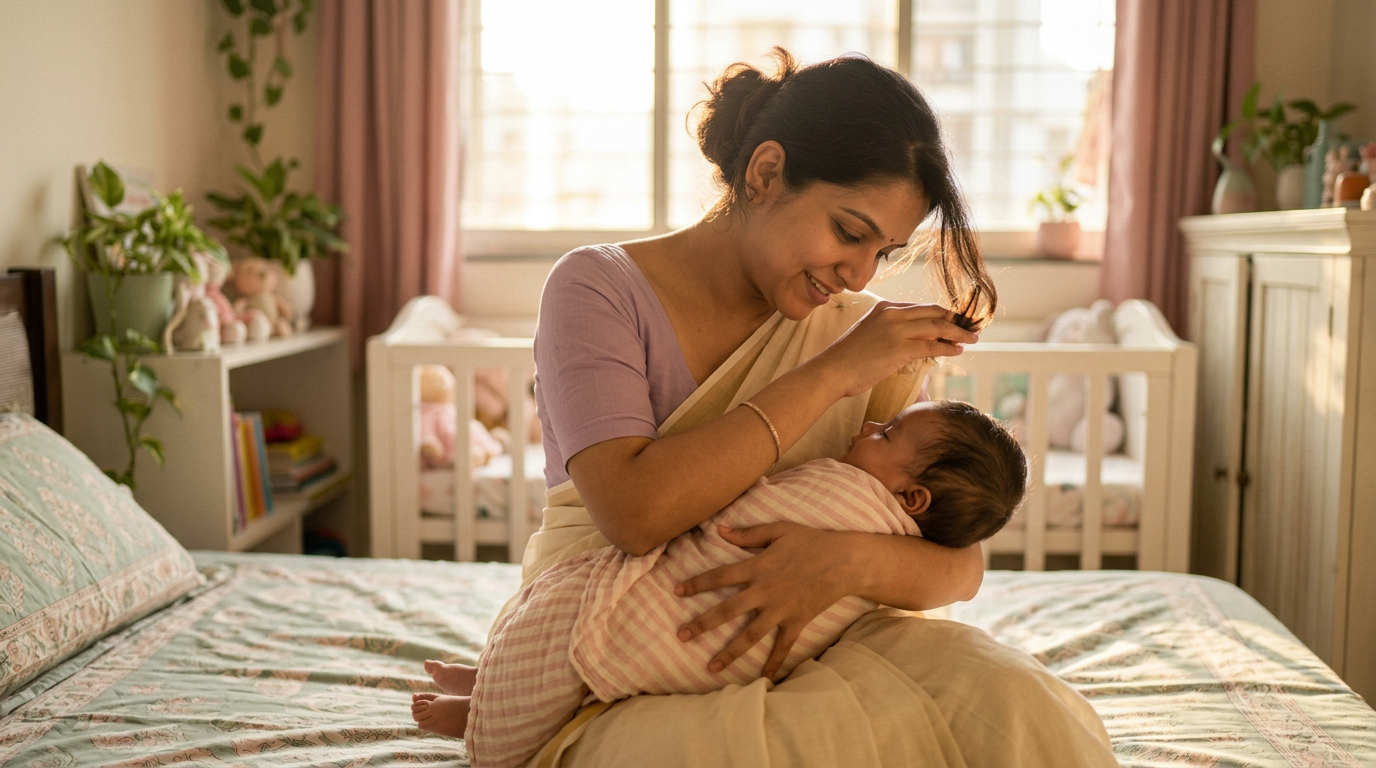
Seeing clumps of hair in your drain at the four-month mark is terrifying, but postpartum hair fall is a physiological certainty for about 90% of Indian moms. During pregnancy, high estrogen levels keep your hair in the 'growth' (anagen) phase, giving you that thick, glossy 'mummy glow' mane. Once you deliver and hormones crash, those hairs simultaneously enter the 'resting' (telogen) phase and fall out all at once. It’s not permanent balding; it’s a temporary hormonal reset.
Why is postpartum hair fall happening so aggressively?
Technically called Telogen Effluvium, this shedding usually peaks between three to six months after your baby arrives. In the Indian context, this often coincides with the end of the Sutika (postpartum recovery) period when the excitement of the new arrival settles, and the reality of sleepless nights kicks in.
Your body has undergone massive postpartum body changes, and while your uterus is shrinking, your hair follicles are reacting to the sudden drop in estrogen and progesterone. Additionally, Indian diets, while rich in spices, sometimes lack the specific iron and ferritin levels required to sustain hair growth after the blood loss experienced during childbirth.
The Indian Mom’s Guide to Postpartum Hair Loss Treatment
While you cannot 'stop' a hormonal shift that has already been set in motion, you can manage the severity and support the regrowth. Here is how we look at postpartum hair loss treatment from a clinical yet culturally sensitive lens.
1. Nutrition over "Nuskhas"
While your Dadi might suggest rubbing onion juice (pyaz ka ras) on your scalp, the real fix starts from the inside. According to the National Institute of Nutrition (NIN) India, a lactating mother needs significantly higher protein and iron.
Iron-rich foods: Include palak (spinach), methi (fenugreek seeds), and halim* (garden cress seeds) laddoos.
* Protein: If you are vegetarian, ensure you’re having double dal or paneer. If non-vegetarian, eggs are your best friend for biotin.
* Supplements: Do not stop your prenatal vitamins. Continue your Iron and Calcium supplements for at least 6 months post-delivery as per FOGSI guidelines.
2. Scalp Care and the Maalish Myth
We love a good champi, but during the peak of postpartum hair fall, vigorous Scalp massages can actually pull out hairs that were already loose.
* Be Gentle: Use a wide-toothed Neem comb.
* Oil Mindfully: Use warm coconut or almond oil, but only apply it to the scalp with cotton balls. Avoid the heavy 'pulling' motion.
* Product Choice: Look for sulphate-free shampoos. Most Indian pharmacy brands like Sebamed or Cetaphil offer gentle cleansers that don't strip the scalp of natural oils.
Is it just hair, or something more?
Sometimes, what looks like standard postpartum hair fall is actually a sign of an underlying medical issue common in Indian women.
Postpartum Thyroiditis
According to studies shared by AIIMS, nearly 5-10% of women develop thyroid inflammation after pregnancy. If your hair loss is accompanied by extreme fatigue, dry skin, or rapid weight changes, ask your doctor for a TSH (Thyroid Stimulating Hormone) test.
Iron Deficiency Anemia
Low ferritin levels are a silent epidemic in India. If you feel breathless or dizzy along with postpartum hair loss, your 'effluvium' might be exacerbated by anemia. A simple CBC (Complete Blood Count) test, usually costing between ₹300–₹700 in most Indian labs, can confirm this.
Real talk from Indian moms
"I was so scared to wash my hair that I waited 10 days once. The drain looked like a small animal had died there. My doctor told me it’s just the 'pregnancy hair' leaving to make room for new growth. It stopped around month seven." — Ananya, Mumbai (Baby is 8 months old)
"Everyone talked about postpartum stretch marks, but nobody warned me I'd find my hair in the baby's diaper! I started taking Halim seeds in milk every morning, and the texture definitely improved." — Preeti, Bengaluru (Baby is 5 months old)
Managing New Growth: The "Mummy Fringe"
As the shedding slows down, you will notice short, flyaway hairs around your forehead. This is a great sign! It means your follicles are active. Use a tiny bit of aloe vera gel or a light hair serum to tame these 'baby hairs' during your cousin's wedding or naming ceremony functions.
When to call your doctor
Most hair loss is normal, but as a paediatrician and GP team, we want you to watch for these red flags:
* Patchy Baldness: If hair is falling out in circular clumps (Alopecia Areata) rather than general thinning.
* Scalp Irritation: Excessive itching, redness, or pustules on the scalp.
* Newborn "Hair Tourniquet": CRITICAL: Check your baby’s toes, fingers, and penis. Often, a long strand of mom’s fallen hair can wrap tightly around a baby's digit, cutting off circulation. This is a medical emergency.
* Extreme Lethargy: If you feel too tired to care for yourself or the baby.
Frequently Asked Questions
Does breastfeeding cause postpartum hair fall?
No. This is a common myth in India. Breastfeeding (stanpaan) does not cause hair loss. The hormonal shift happens regardless of whether you formula feed or breastfeed. However, ensure you are eating enough calories to support both milk production and your own recovery.
What is the best postpartum hair loss treatment in India?
The best treatment is a combination of a high-protein diet (including pulses, eggs, and dairy), continuing your iron supplements, and using a gentle, caffeine-based or biotin-based shampoo. Avoid chemical treatments like straightening or 'keratin' for at least 6-9 months.
How can I hide postpartum hair loss?
Opt for a shorter haircut (the classic 'mom lob') which adds volume. Use headbands or traditional Indian dupattas and scarves or experiment with different partitions to cover thinning areas around the temples.
Can I use a postpartum stretch marks cream on my scalp?
No. While you might be looking for a postpartum stretch marks cream for your belly, the skin on your scalp requires different active ingredients. Stick to minoxidil (only if prescribed by a derm) or natural oils for the hair.
How long does postpartum hair fall last?
For most Indian women, the heavy shedding stops by the baby's first birthday. If you are still seeing massive clumps after 12 months, it is time to check your Vitamin D3 and B12 levels, which are notoriously low in the Indian urban population.
Are there any specific Indian foods that help?
Yes. Amla (Indian Gooseberry) is excellent for Vitamin C, which aids iron absorption. Curry leaves (Kadi patta) in your tadka are also traditionally believed to support hair health due to their antioxidant properties.
You aren't losing your beauty; you are just making room for a new version of yourself. Your hair will grow back, and in the meantime, that little human you created thinks you’re the most beautiful woman in the world, messy bun and all. Sab theek ho jayegai (Everything will be alright).
Sources & further reading
- FOGSI Postpartum Care Guidelines
- National Institute of Nutrition - Nutrient Requirements for Indians
- National Health Portal of India - Postnatal Care
Written by Dr. Ritu Sharma, MD (Obstetrics & Gynaecology)
Reviewed by TheMamaCircle Editorial Team
Last updated: 8 July 2026
This article is for general information only and is not a substitute for personalised medical advice. Always consult your paediatrician or obstetrician for your specific situation.