Short stories for kids in English: 10 Indian Bedtime
Discover the best short stories for kids in English. From Panchatantra to Birbal, these bedtime stories build vocabulary and character. Start reading tonight!
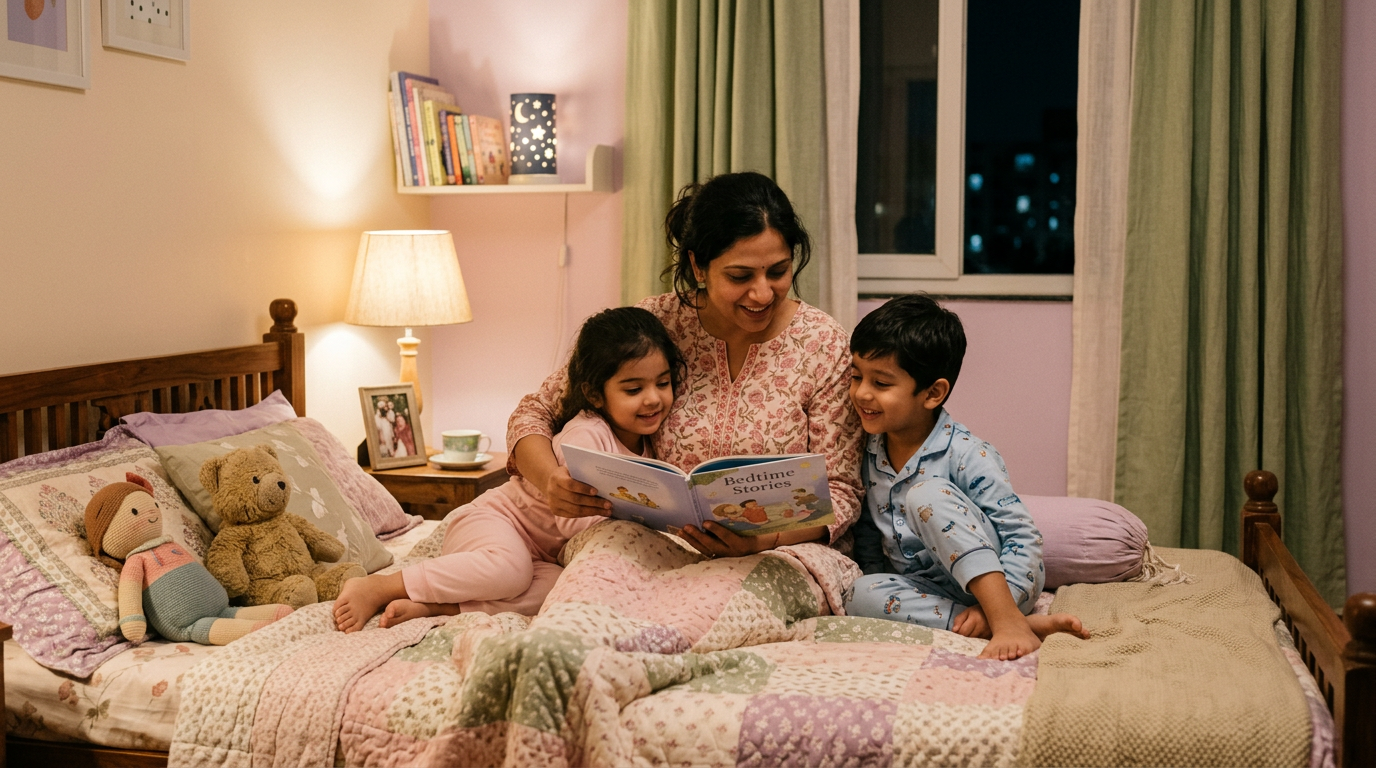
Finding the right short stories for kids in English is the secret to a peaceful night’s sleep—and a happier morning for you. For Indian parents, storytelling isn't just about reading words; it’s about passing down the sanskaars and wit of Akbar-Birbal, Panchatantra, and Jataka tales. These bite-sized narratives are perfect for children under 7, providing enough engagement to spark imagination without overstimulating their growing brains before bed.
Why Short Stories for Kids in English are Essential for Development
Reading short stories for kids in English serves a dual purpose in Indian households. While many of us speak Hindi, Marathi, or Tamil at home, these stories help bridge the gap for school-level language proficiency. Beyond linguistics, a nightly story helps regulate a child's cortisol levels, preparing them for deep sleep.
According to the Indian Academy of Pediatrics (IAP), consistent bedtime routines, which include shared reading, significantly improve cognitive development and emotional bonding. Unlike a screen, a physical book or a narrated story allows for eye contact and "serve-and-return" interaction, which is the gold standard for brain building.
The Ideal Story Length by Age
* Toddlers (1–2 years): 2–3 minutes. Focus on rhythm and bright moral stories in english with pictures.
* Preschoolers (3–5 years): 5–10 minutes. This is the sweet spot for animal fables like the Panchatantra.
* Early Schoolers (6–7 years): 10–15 minutes. They can now handle "chapter" style stories or complex wit like Tenali Rama.
Classic Panchatantra Tales for a Modern Bedtime
The Panchatantra is perhaps the oldest collection of short stories for kids in English that remains relevant today. Originally written by Vishnu Sharma to teach three young princes about niti (policy/wisdom), these stories are perfect for building character.
1. The Monkey and the Crocodile
* The Plot: A crocodile befriends a monkey who lives on a Jamun tree. The crocodile’s wife wants to eat the monkey’s heart, claiming it must be sweet from all the Jamuns. The crocodile tries to trick the monkey, but the monkey uses his wit to escape.
* The Moral: Never underestimate yourself; quick thinking can save you from the direst situations.
* Why it works: It introduces the concept of "fair-weather friends" in a way a 5-year-old understands.
2. The Loyal Mongoose
* The Plot: A mother leaves her baby with a loyal mongoose while she goes to fetch water. She returns to see the mongoose's mouth covered in blood and kills it in a fit of rage, only to find a dead cobra near her unharmed baby.
* The Moral: Look before you leap; never act in haste or anger.
* Mama Tip: For very young or sensitive children, I recommend a "softened" version where the mongoose is just injured or the mother simply feels very sorry, to avoid bedtime distress.
You can find more of these adapted classics in our guide to panchatantra stories.
Wit and Wisdom: Akbar-Birbal and Tenali Rama
If you want your child to develop a sharp sense of humour, look no further than these courtly tales. They are excellent short stories for kids in English because they rely on logic rather than magic.
Birbal’s Khichdi
We’ve all told our kids "bas do minute" while the khichdi cooks on the pressure cooker. This story takes that domestic scene to the royal court. Birbal proves to Emperor Akbar that a man can survive a freezing pond by focusing on a distant lamp, using a pot of khichdi hung far above a fire to illustrate his point. It teaches kids about the power of hope and the absurdity of unfair expectations.
Tenali Rama and the Thieves
Tenali Rama tricking thieves into watering his garden by pretending he has hidden gold in the well is a masterclass in "work smarter, not harder." These stories are fantastic for bedtime stories for kids because they usually end with a chuckle, ensuring your child goes to sleep in a positive mood.
How to Make Storytime More Effective
To get the most out of your short stories for kids in English, follow these "Bade Log" (Elder) approved tips:
* Voice Modulation: Use a deep voice for the Sher (lion) and a squeaky one for the Chuhiya (mouse).
* Indian Context: Don't just say "fruit." Say "sweet Alphonso mango" or "crunchy guava with salt and chilli." It makes the story relatable.
* Follow the Milestones: If your child is struggling to sit still for a story, check our baby milestones tracker to see if their attention span is on track for their age.
Physical Touch: Storytime is the best time for a light maalish* (massage) on the feet or back, which signals the body to release melatonin.
Real Talk from Indian Moms
> "My 4-year-old son, Ishaan, wouldn't sleep without his 'Hathi story.' I started using short stories for kids in English to help him get used to the language before he started Junior KG in Mumbai. It worked wonders for his confidence!"
> — Riya M., Mumbai (Mom to Ishaan, 4)
> "We live in a joint family, so bedtime is loud! Reading bedtime stories has become our little 'us time.' I tell her stories about Tenali Rama, and now she tries to 'outsmart' me when it's time to eat broccoli!"
> — Ananya S., Bengaluru (Mom to Kiara, 5)
Safety and Quality Standards for Storybooks
When buying physical books in India, look for the IS 9873 certification (Bureau of Indian Standards) for toy safety, especially for board books that toddlers might chew on. Quality hardbound books usually range from ₹250 to ₹600, while paperback sets of moral stories can be found for as low as ₹150 at local book fairs or online.
If you notice your child is consistently rubbing their eyes or holding books very close to their face during storytime, you might want to use our baby vision simulator to understand how they see the world and consult a paediatrician.
When to Call Your Paediatrician
While reading short stories for kids in English is a joyful activity, sometimes underlying issues can surface during these quiet moments. Consult your doctor if:
* Your child shows no interest in looking at pictures or following a simple narrative by age 2.
* They exhibit extreme distress or "night terrors" frequently, despite a calming routine.
* They struggle significantly with speech sounds or cannot repeat simple 3-word sentences by age 3.
* You notice persistent squinting or head-tilting while they look at the book.
* They seem unable to hear you unless you are speaking very loudly or they are looking directly at your face.
Frequently Asked Questions
What are the best short stories for kids in English for improving vocabulary?
The best stories for vocabulary are those that use descriptive language. Panchatantra and Jataka tales are excellent because they describe nature, emotions, and moral dilemmas in detail. Reading short stories for kids in English consistently exposes them to sentence structures they might not hear in daily casual conversation.
How long should bedtime stories for kids be?
For children aged 3–6, a story should ideally last 5 to 10 minutes. This is long enough to build a plot but short enough to keep their attention. If a story is too long, they might get over-excited or frustrated, which defeats the purpose of bedtime stories for kids.
Where can I find moral stories in English with pictures for toddlers?
Many Indian publishers like Amar Chitra Katha, Tulika, and Karadi Tales offer beautiful moral stories in english with pictures. Look for books with high-contrast illustrations and simple text to keep younger children engaged.
Can I tell bedtime stories instead of reading them?
Absolutely! Oral storytelling is a rich Indian tradition. Whether you are reading or telling bedtime stories, the benefit comes from the interaction and the language exposure. In fact, telling stories from your own childhood can be even more special.
Which panchatantra stories are best for 3-year-olds?
For 3-year-olds, choose stories with animal characters and simple resolutions, like "The Tortoise and the Hare" or "The Blue Jackal." These panchatantra stories are easy to follow and have clear visual elements you can describe.
Reading to your child is the greatest gift you can give their developing mind. Whether it's a tale of a clever rabbit or a wise king, these moments create a lifetime of memories. Tonight, dim the lights, tuck them in, and start with: "Once upon a time, in a forest far, far away..."
You are building your child’s world, one story at a time.
Sources & further reading
- Indian Academy of Pediatrics - Parenting Guidelines
- WHO - Early Childhood Development
- NHP India - Importance of Reading to Children
Written by Dr. Anjali Mehta, MBBS, DCH (Paediatrics)
Reviewed by TheMamaCircle Editorial Team
Last updated: 24 September 2026
This article is for general information only and is not a substitute for personalised medical advice. Always consult your paediatrician or obstetrician for your specific situation.