Small Story for Kids: 5-Minute Indian Bedtime Tales
Find the best small story for kids to end the night peacefully. Explore Indian classics, Panchatantra tales, and tips for the perfect 5-minute bedtime routine.
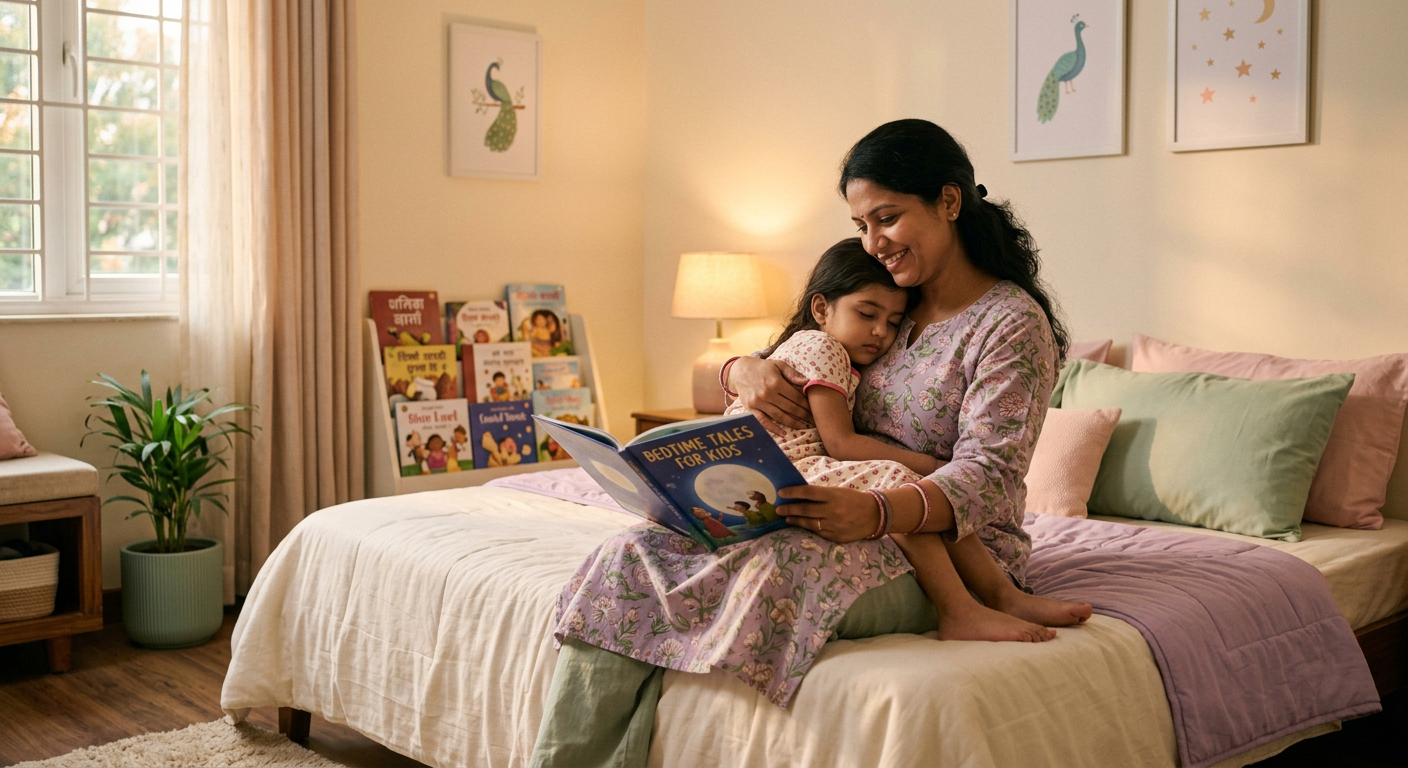
Finding the perfect small story for kids is the secret weapon in every Indian mother’s arsenal to end the day without a tantrum. Whether it’s a 2-minute tale about a clever rabbit or a classic Panchatantra moral, a short narrative helps transition your little one from the high energy of playtime to the quiet of sleep. These stories aren't just fillers; they are brain-builders that improve vocabulary and emotional intelligence before the lights go out.
Why a Small Story for Kids is Better Than a Long Movie
Most Indian parents worry that they aren't reading enough, but at this age, brevity is your best friend. A small story for kids works because the attention span of a toddler or preschooler is roughly 3 to 5 minutes per year of age.
When you choose bedtime stories that are concise, you allow the child to process the "Moral of the Story" without getting lost in complex subplots. In our busy households—where Dadi is watching her serial and the pressure of tomorrow's tiffin is real—a 5-minute story creates a dedicated "mama-and-me" bubble that regulates the child’s nervous system. According to the Indian Academy of Paediatrics (IAP), early childhood literacy starts with oral storytelling, which strengthens the parent-child bond.
5 Classic Indian Small Stories for Bedtime
Here are five curated tales retold for modern Indian kids. These are perfect for when you need a small story for kids that packs a punch.
1. The Thirsty Crow (A Lesson in Jugaad)
A thirsty crow found a pot with very little water. His beak couldn't reach it. Instead of giving up, he picked up small pebbles one by one and dropped them into the pot until the water rose to the top.
* The Moral: Where there is a will, there is a way.
* Mom Tip: Use this to talk about how we find solutions to problems, like finding a lost toy!
2. The Lion and the Clever Rabbit (Panchatantra)
A hungry lion was eating all the animals in the jungle. A tiny rabbit, his next meal, told the lion there was another "King Lion" in a deep well. The arrogant lion looked into the well, saw his own reflection, jumped in to fight, and was never seen again.
* The Moral: Wisdom is stronger than physical strength.
* India Detail: Remind them that just like Birbal or Tenali Rama, being "chatur" (clever) is a superpower.
3. The Elephant and the Tailor
An elephant and a tailor were friends. Every day, the elephant would visit the shop, and the tailor gave him a banana. One day, the tailor playfully pricked the elephant’s trunk with a needle. The next day, the elephant filled his trunk with muddy water and sprayed it all over the tailor’s new clothes.
* The Moral: Tit for tat, but kindness is always better.
* Cultural Context: Mention how we treat our animals with respect, especially during festivals like Ganesha Chaturthi.
4. The Cap-Seller and the Monkeys
A cap-seller fell asleep under a tree. Monkeys took all his caps. When he woke up, he realized they mimicked him. He threw his own cap down, and all the monkeys did the same!
* The Moral: Quick thinking saves the day.
5. The Honest Woodcutter
A woodcutter dropped his iron axe into a river. The River Goddess appeared with a golden axe, then a silver one. He refused both, saying his was only iron. Impressed by his honesty, she gave him all three.
* The Moral: Honesty is always rewarded.
How Long Should a Bedtime Story Be?
I often get asked in my clinic: "Doctor, how much is too much?" Here is a quick guide based on age-appropriate development and baby milestones tracker.
| Age Group | Recommended Duration | Story Type |
| :--- | :--- | :--- |
| 0–12 Months | 2–3 Minutes | Rhythmic sounds, cloth books |
| 1–3 Years | 5 Minutes | Animal panchatantra stories with pictures |
| 3–5 Years | 7–10 Minutes | short stories for kids in english with a clear moral |
| 5–7 Years | 15 Minutes | Chapter books or complex Akbar-Birbal tales |
Making Storytime Effective in an Indian Home
To make a small story for kids truly effective, you need the right environment.
Real Talk from Indian Moms
"My son Dhruv (3y, Bengaluru) won't sleep without hearing about the 'Monkey and the Crocodile'. I've started adding 'moral of the day' like why we don't hit our friends. It's the only time he actually listens!" — Ananya S.
"We do a 5-minute small story for kids right after his milk. I use the Panchatantra apps sometimes for ideas, but I always tell the story myself. It's our special ritual before the madness of the next day begins." — Preeja R. (4y, Kochi)
When to Call Your Paediatrician
While storytelling is a joy, sometimes sleep issues are medical. Consult your doctor if:
* Your child consistently snores loudly or gasps for air during sleep.
* Night terrors are frequent (more than once a week) and the child is inconsolable.
* The child is excessively sleepy during the day despite 10+ hours of sleep.
* There is a sudden regression in speech or social interaction during storytime.
* You notice signs of extreme anxiety or fear that prevents them from closing their eyes.
Frequently Asked Questions
Which small story for kids is best for toddlers?
For toddlers, animal-based tales with repetitive sounds are best. The "Thirsty Crow" or "The Hare and the Tortoise" are excellent choices because they can mimic the "flap-flap" of wings or the "slow-slow" walk of the tortoise.
How to read bedtime stories for kids effectively?
The key is engagement. Ask questions like, "What do you think the elephant did next?" Use props like a dupatta or a teddy bear to act out parts of the bedtime stories for kids.
Are panchatantra stories too scary for 3-year-olds?
Some originals can be a bit harsh (like animals eating each other). As a parent, you should soften the endings. Instead of the lion "killing" the rabbit, say the lion "ran away because he was embarrassed." Gentleness is key for a peaceful night.
Can I use YouTube for bedtime stories?
While audio stories are okay occasionally, screens are a big no-no 60 minutes before bed. The blue light inhibits melatonin. A physical book or a narrated small story for kids by a parent is always superior for brain development.
How many short stories for kids in english should I read per night?
One or two high-quality stories are better than rushing through five. If your child asks for "one more," set a firm boundary: "We will read the elephant story today, and the monkey story tomorrow."
Bedtime isn't just about ending the day; it’s about starting their dreams with a sense of security. Choose a small story for kids that leaves them feeling loved, and you'll find that bedtime becomes the favorite part of your day too.
You are the best storyteller your child will ever have.
Sources & further reading
- Indian Academy of Pediatrics - Early Childhood Development
- WHO Guidelines on Physical Activity, Sedentary Behaviour and Sleep for Children under 5 Years of Age
- National Health Portal of India - Child Health
Written by Dr. Anjali Mehta, MBBS, DCH (Paediatrics)
Reviewed by TheMamaCircle Editorial Team
Last updated: 21 September 2026
This article is for general information only and is not a substitute for personalised medical advice. Always consult your paediatrician or obstetrician for your specific situation.