Sooji for Babies: Indian Guide to Rava Weaning & Recipes
Sooji for babies is an Indian weaning staple. Learn how to introduce rava, its benefits for weight gain, and simple recipes for your 6-month-old's diet.
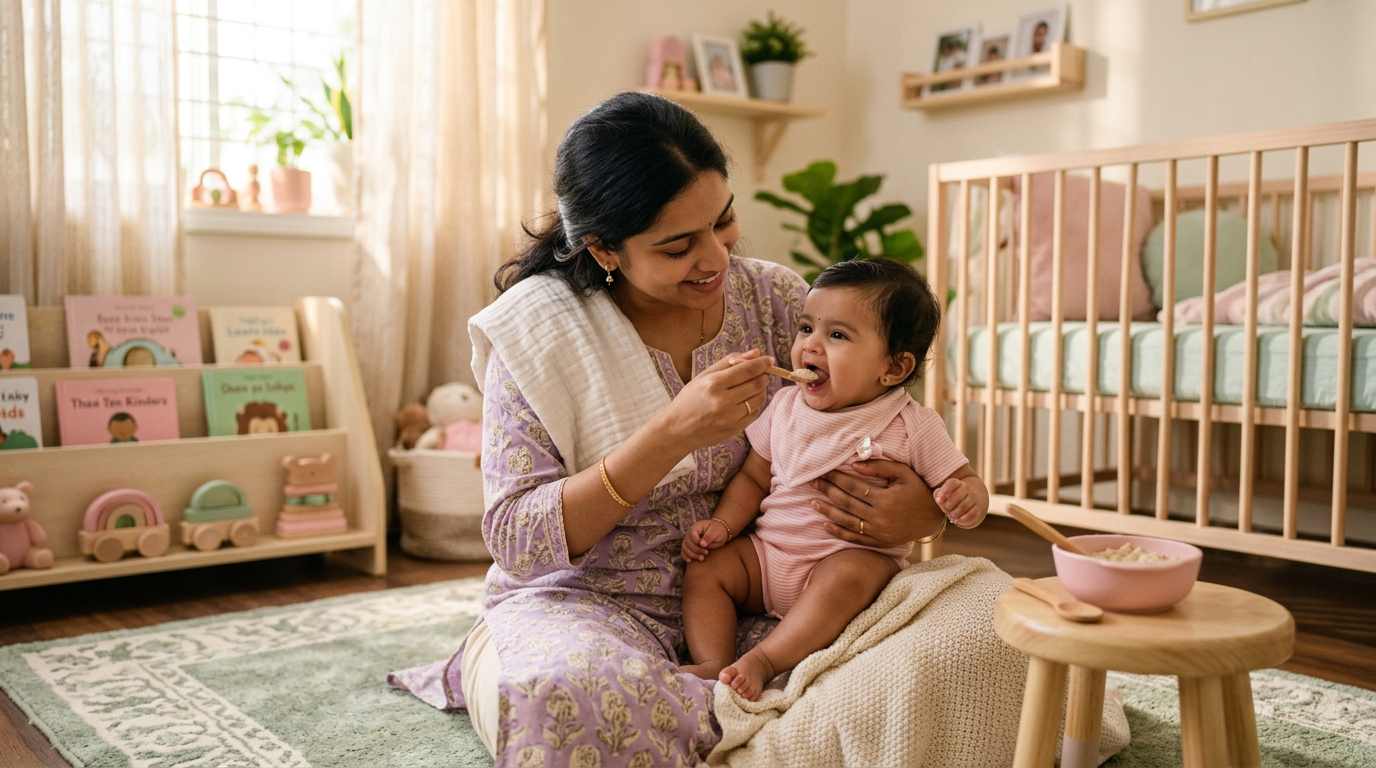
Sooji for babies is often the first solid food recommended by Indian grandmothers, and for good reason. Known as semolina or rava, sooji is incredibly easy to digest, energy-dense, and highly versatile, making it a perfect starter food for infants transitioning from exclusive breastfeeding or formula. Whether you are following a 6 month baby food chart indian or looking for weight-gain recipes, sooji provides the essential carbohydrates and iron your little one needs to power through their daily milestones.
Is Sooji Safe for a 6-Month-Old?
Yes, sooji is safe and highly recommended as one of the first cereal-based foods for infants in India. The Indian Academy of Pediatrics (IAP) suggests introducing complementary foods at 180 days (6 months) while continuing breastfeeding. Sooji is made from durum wheat, meaning it contains gluten. While some parents worry about early gluten introduction, current clinical guidelines suggest that introducing gluten between 6 and 7 months may actually help reduce the risk of celiac disease later in life.
When you start, the texture should be a thin, pouring consistency (like a runny sheera or kanji). As your baby grows and follows a 7 month baby food chart indian, you can gradually thicken the consistency to help them develop their swallowing reflexes.
Nutritional Benefits of Rava for Infants
Sooji isn't just a filler food; it’s a powerhouse of energy. In the Indian context, where we often worry about "baby looking thin," sooji is a reliable ally for healthy weight gain.
* Complex Carbohydrates: Provides sustained energy for babies who are starting to roll, crawl, and sit up.
* Iron and Magnesium: Supports blood health and bone development. While not as high in iron as ragi, it is a significant contributor when paired with vitamin C-rich foods.
Easy Digestion: Unlike whole wheat flour (atta*), which can be heavy due to high fiber, the bran-free nature of sooji makes it gentle on a 6-month-old’s developing gut.
* Protein Content: Contains a decent amount of protein to support the rapid tissue growth occurring during the first year.
How to Prepare Sooji for Babies: The Indian Way
In India, we don't just boil sooji in water; we enhance it with traditional wisdom. For a 6-month-old, the best way to serve sooji is as a Sooji Halwa (without sugar) or Sooji Ki Kheer.
Step 1: Dry Roasting (The Secret Tip)
Always buy fine-quality rava (often labeled as 'Chiroti Rava' in South India) which costs roughly ₹60–₹80 per kg. Dry roast a batch in a heavy-bottomed kadhai until it smells nutty but hasn't changed color. This removes the "rawness" and prevents the porridge from becoming sticky or slimy in the baby's mouth. Store this roasted rava in an airtight container to save time during hectic mornings.
Step 2: Cooking Consistency
For a baby just starting solids, use a 1:4 ratio (1 part sooji to 4 parts water). Avoid using cow's milk as a base until the baby is 12 months old, as per IAP guidelines. Instead, cook the sooji in water and add expressed breast milk or prepared formula after the porridge has cooled down to a lukewarm temperature.
Step 3: Natural Sweeteners
Never add refined sugar or honey (honey is a strict no-go for babies under 1 due to botulism risk). Use mashed bananas, stewed apple puree, or a tiny bit of date paste to sweeten the porridge. As you progress to an 8 month baby food chart indian, you can start adding savory versions like Sooji Upma with finely grated carrots.
Regional Variations: Rava Across India
Indian weaning is beautiful because it varies by state. While North Indian moms swear by Sooji ki Lapsi, South Indian households often prepare Rava Ganji.
Maharashtra: Often prepared as Sanjha, roasted with a tiny bit of homemade ghee* (clarified butter) for healthy fats.
Tamil Nadu/Karnataka: Known as Rava Koozh, often thinned out and served with a pinch of roasted cumin (jeera*) powder to aid digestion and prevent gas.
Bengal: Prepared as Sujir Payesh*, often flavored with a tiny piece of green cardamom (removed before feeding) to introduce the baby to aromatic spices.
If you are tracking your baby's growth alongside these meals, you can use a baby growth chart to ensure their weight gain remains within the healthy Indian percentile ranges.
Real Talk from Indian Moms
> "My sasu maa insisted on sooji halwa when my daughter turned six months. I was hesitant about gluten, but she took to it much better than rice water. It’s now my go-to travel food because roasted rava cooks in 5 minutes!"
> — Priyanka M., Mumbai (Mom to 9-month-old Kabir)
> "In our house, we call it 'Pehelwan Food'. I started adding a drop of ghee to his sooji kheer once he hit 7 months, and it really helped with his constipation issues."
> — Jaspreet K., Ludhiana (Mom to 11-month-old Zoravar)
When to Call Your Paediatrician
While sooji for babies is generally safe, you must watch for signs of gluten intolerance or wheat allergy. Contact your doctor if you notice:
* Skin rashes or hives immediately after eating.
* Extreme fussiness or abdominal pain (drawing legs up to the chest).
* Chronic diarrhea or very foul-smelling, bulky stools.
* Vomiting that occurs shortly after consuming wheat products.
* Swelling of the lips, tongue, or face (this is a medical emergency).
If you are also navigating your own health, perhaps dealing with postnatal recovery, remember that your nutrition is just as important as the baby's. Many Indian moms find that the same light sooji preparations (with more nuts and spices) are excellent for their own postnatal diet to support lactation.
Frequently Asked Questions
Can I give sooji for babies every day?
Yes, sooji can be a part of the daily diet, but variety is key. Rotate it with other traditional grains like ragi, bajra, and moong dal to ensure a wide spectrum of nutrients. By the time you reach a 9 month baby food chart indian, your baby should be eating 3-4 different food groups a day.
Which sooji is best for babies?
Look for "Fine Rava" or "Chiroti Rava." Avoid "Bansi Rava" or "Coarse Sooji" for the first two months of weaning as the larger granules can be a choking hazard or difficult for a 6-month-old to swallow. Ensure the pack has a valid FSSAI logo or BIS certification.
When should I follow a 10 month baby food chart indian for sooji recipes?
By 10 months, your baby's digestive system is more robust. In a 10 month baby food chart indian, you can move away from thin porridges and start offering "Sooji Veggie Cheela" (savory pancakes) or "Rava Idli" broken into small, bite-sized pieces for finger feeding.
Can sooji cause constipation in infants?
If given in very thick forms without enough hydration, it might. Always ensure the porridge is moist and follow it up with a few sips of boiled and cooled water (for babies over 6 months) to keep digestion smooth.
Is sooji better than Cerelac?
Homemade sooji is generally preferred over commercial infant cereals because it contains no preservatives, added flavors, or hidden sugars. It is also more cost-effective for Indian households.
While you focus on these first bites, don't forget to track other areas of development. If you're curious about their cognitive growth, check out our baby milestones tracker to see how those nutrients are fueling their brain!
Weaning is a messy, beautiful phase of your postnatal journey. Some days they will eat the whole bowl; other days, they will wear it. Both are perfectly normal. Take a deep breath, mama—you’re doing a great job feeding your little nanha farishta.
I am nourishing my baby with patience and love, one spoon at a time.
Sources & further reading
- Indian Academy of Pediatrics - Complementary Feeding Guidelines
- Nutritive Value of Indian Foods - NIN/ICMR
- WHO - Infant and Young Child Feeding
Written by Neha Kapoor, RD (Registered Dietitian, Maternal & Child Nutrition)
Reviewed by TheMamaCircle Editorial Team
Last updated: 23 August 2026
This article is for general information only and is not a substitute for personalised medical advice. Always consult your paediatrician or obstetrician for your specific situation.