Sunscreen for Newborn: Safety Guide for Indian Moms
Expert guide on sunscreen for newborn babies in India. Learn why physical shade beats creams, safest ingredients for 6m+, and Dr.-approved sun care tips.
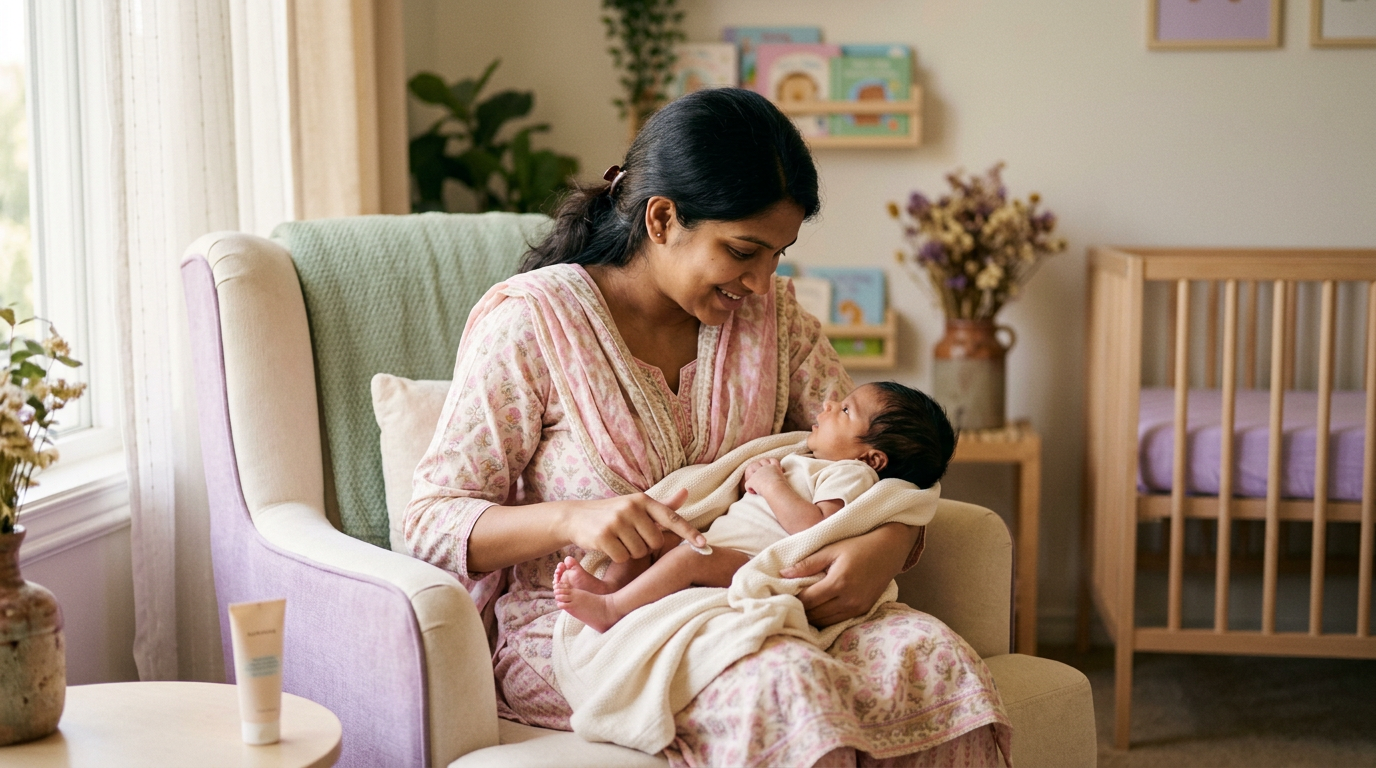
Can you use sunscreen for newborn babies? The short, expert-backed answer is: preferably not before 6 months. In the scorching Indian summers—from the dry heat of Rajasthan to the humid coasts of Kerala—your instinct is to reach for a lotion to protect that velvety skin. However, a newborn’s skin is structurally thinner and absorbs chemicals much faster than ours. Instead of a tube of cream, the Indian Academy of Pediatrics (IAP) suggests "physical barriers" like shade and breathable cotton clothing as your first line of defense.
Why Sunscreen for Newborn Babies Isn't Recommended Before 6 Months
Unlike adults, newborns have a higher surface-area-to-body-weight ratio. This means if you slather a chemical-heavy sunscreen for newborn skin, their body absorbs a disproportionately high amount of the ingredients. Furthermore, babies do not sweat as efficiently as adults, making them prone to overheating if a thick cream blocks their pores.
In India, we often celebrate the Mundan ceremony or take the baby for temple visits where sun exposure is inevitable. While we prioritize baby skin care rituals like maalish, sun protection requires a different strategy. Until your little one hits the 6-month milestone, focus on these physical shields:
* The Golden Hour Rule: Avoid taking the baby out between 10:00 AM and 4:00 PM when the UV index is highest.
* The Cotton Shield: Use loose, light-colored Mulmul or organic cotton long-sleeved clothes.
* Pram Accessories: Ensure your stroller has a deep canopy or use a breathable muslin cover.
How to Choose the Best Sunscreen for Babies 6 Months+
Once your baby crosses the 180-day mark, you can start looking for sun protection products. But don’t just pick up any "kids' lotion" from the local chemist. Indian markets are flooded with products, but you need to check for the Bureau of Indian Standards (BIS) or IS 4707 compliance.
1. Physical vs. Chemical Blockers
Always opt for Physical (Mineral) Sunscreens. These sit on top of the skin and reflect UV rays like a mirror. Look for two specific ingredients:
* Zinc Oxide: The gold standard for infant safety.
* Titanium Dioxide: Excellent for sensitive skin.
Avoid chemical filters like Oxybenzone or Avobenzone, which can disrupt hormones or cause the dreaded "sudden rash" on the face.
2. SPF Rating for Indian Conditions
For the Indian sun, an SPF 30 to SPF 50 is sufficient. Anything higher often feels too greasy and may clog pores, leading to prickly heat (ghamori).
3. Water Resistance
If you are taking the baby for their first splash in a pool in Goa or a monsoon vacation, ensure the label says "water-resistant" for at least 40–80 minutes.
Traditional Indian Remedies: Reimagined or Rejected?
Our Dadis and Nanis have a solution for everything, from besan scrubs to malai moisturizers. When it comes to sun exposure, let’s separate the myths from the science.
* Coconut Oil (Nariyal Tel): It has a natural SPF of about 1–4. While it’s great for a baby skin care massage, it is not a substitute for sunscreen. It won’t prevent a sunburn.
Sandalwood (Chandan): Often used to "cool" the skin after being outside. While soothing, do not apply raw chandan* paste to a newborn's face as it can be drying and might contain lead if not sourced purely.
* Aloe Vera: Fresh aloe gel is excellent for soothing a mild redness, but it offers zero UV protection.
If your baby’s face looks red after an outing, instead of heavy home remedies, start with a gentle face cream for infants that contains ceramides to help repair the skin barrier.
The Correct Way to Apply Baby Sunscreen
When your baby is old enough (6 months+), application is more than just a quick smear.
Real Talk from Indian Moms
> "We went to my sister's wedding in Udaipur when Myra was 4 months old. I was so worried about the sun. My paediatrician told me no sunscreen, so I kept her in a wide-brimmed hat and used a giant floral umbrella every time we were outdoors. She stayed cool and tan-free!" — Ritu V., Jaipur (Mom to 7-month-old)
> "I made the mistake of using my own sunscreen on Advit once. He broke out in tiny red bumps within an hour. Now I stick to Zinc-based creams only, and only for his arms and legs." — Ananya S., Bengaluru (Mom to 1-year-old)
When to Call Your Paediatrician
Sun exposure in newborns can escalate quickly. Keep an eye out for these "Red Flags":
* Blisters: Any sign of fluid-filled bumps after being in the sun.
* Fever: If your baby develops a fever along with a skin rash.
* Extreme Fussiness: Signs of dehydration or heat exhaustion (less wet diapers, crying without tears).
* Persistent Redness: If a "sunburn" doesn't fade or turns purplish/dark brown and painful.
* Spreading Rash: If you suspect an allergic reaction to a new cream, stop usage and call the doctor if the rash spreads across the torso.
If the skin looks irritated but not burnt, a soothing newborn face rash cream might help, but consult your doctor first to rule out a chemical burn.
Frequently Asked Questions
Which is the best sunscreen for newborn under 6 months?
Ideally, none. Medical bodies like the IAP and WHO recommend keeping infants under 6 months out of direct sunlight entirely. Use physical shade, hats, and full-sleeved cotton clothing. If you must use a tiny bit, apply it only on very small areas like the back of the hands, and choose a mineral-only formula.
What is the best soap for newborns to wash off sunscreen?
For removing mineral sunscreen (which is thick and white), use a soap-free syndet bar or a liquid cleanser with a pH of 5.5. Look for brands like Sebamed or Cetaphil Baby available in India, which effectively break down the zinc oxide without stripping the skin's natural oils.
Can I use a face cream for infants as sun protection?
No. A regular face cream for infants is designed for hydration (moisturization) and doesn't contain UV filters. While it’s great for daily nourishment, it will not protect your baby from UV rays.
When should I use a newborn face rash cream after sun exposure?
If your baby develops tiny red heat-related bumps (miliaria), you can use a newborn face rash cream or a zinc-based diaper cream to soothe the area. However, if the rash is a result of a sunburn, seek medical advice before applying any medicated ointments.
Are there any Indian brands making safe sunscreens for babies?
Yes. Look for Indian brands that prioritize mineral filters. Popular choices in the ₹400–₹800 range include Mamaearth (Mineral based), The Moms Co., and Lotus Herbals Baby+ (make sure to check the specific ingredient list for physical blockers). Always look for the 'Tear-Free' and 'Dermatologically Tested' labels.
My baby got a tan; should I use ubtan?
Avoid using traditional ubtan (besan and haldi) on a fresh tan or sun-sensitized skin. The coarse particles of besan can act as an abrasive and further irritate the skin. Stick to gentle hydration and let the skin heal naturally.
Is chemical sunscreen better for humid weather like Mumbai?
Chemical sunscreens feel "lighter," but for babies, they are riskier. In humid weather, stick to a lightweight mineral lotion rather than a thick paste. Keep the baby in air-conditioned or well-ventilated spaces to prevent the sunscreen from mixing with sweat and causing irritations.
Protecting your baby from the sun is one part of the larger baby skin care puzzle. In India, the sun is a constant companion, but with the right shade and the right mineral shield (once they are old enough), your little one can enjoy the outdoors safely.
You are your baby’s best shield—the sun is strong, but your mama-instinct is stronger.
Sources & further reading
- Indian Academy of Pediatrics (IAP) Skin Care Guidelines
- National Health Portal - India
- World Health Organization - Sun Protection for Children
Written by Dr. Anjali Mehta, MBBS, DCH (Paediatrics)
Reviewed by TheMamaCircle Editorial Team
Last updated: 22 June 2026
This article is for general information only and is not a substitute for personalised medical advice. Always consult your paediatrician or obstetrician for your specific situation.