Weaning Essentials India: Top 10 Must-Haves for Starting
Starting solids? Discover the must-have weaning essentials India parents need, from suction bowls to Ragi recipes. Make your baby's first bites safe and mess-free.
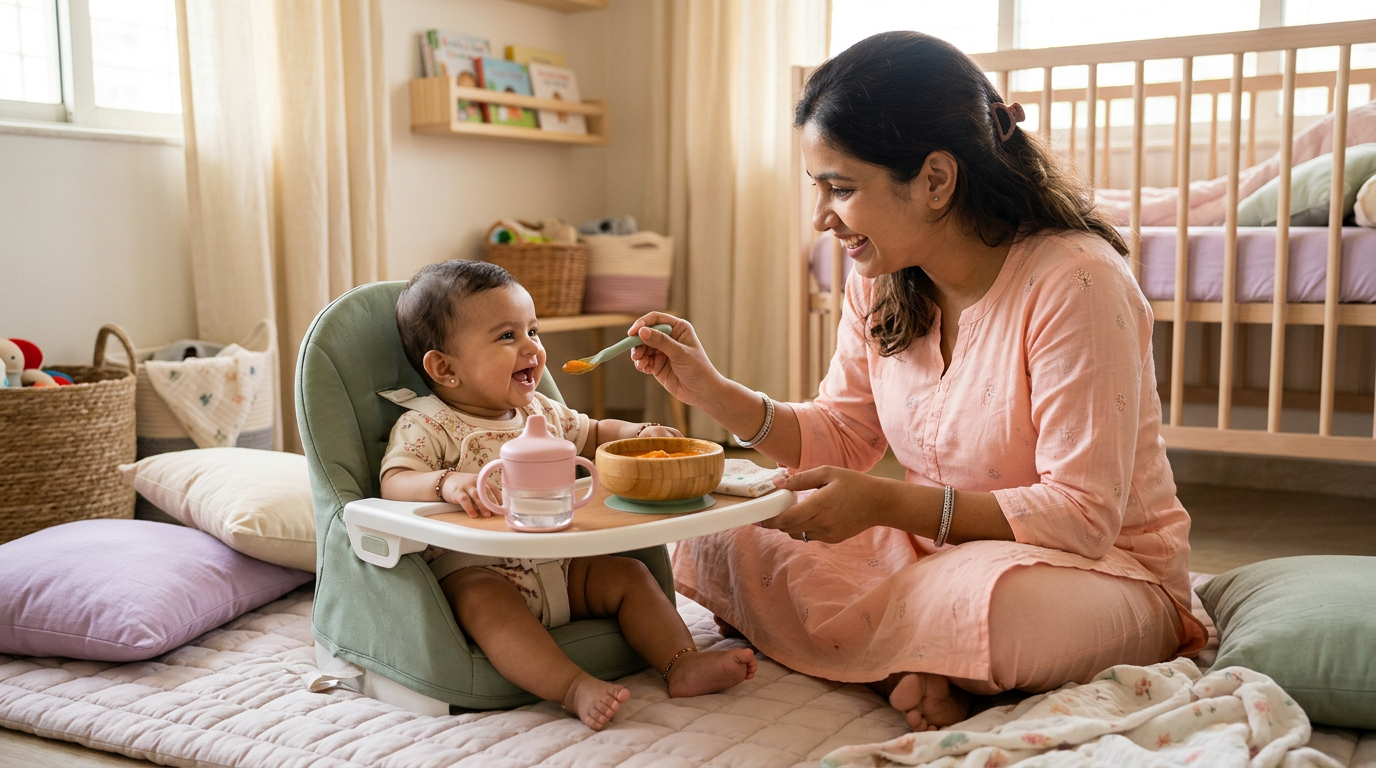
Starting solids is a massive milestone that feels like both a graduation and a chaotic science experiment. When your little one hits the six-month mark, moving beyond exclusive breastfeeding or formula requires the right weaning essentials india parents actually need for our specific kitchens and climate. Forget the $200 baby food makers you see on Pinterest; in India, weaning is about simple textures, food safety, and the transition from stanpaan to annaprashan.
Why 6 Months is the Golden Rule for Weaning in India
According to the Indian Academy of Paediatrics (IAP) and WHO, exclusive breastfeeding must continue until 180 days. Around this time, you’ll notice your baby showing signs of readiness: sitting with minimal support, good neck control, and an intense interest in the dal-chawal on your plate. This transition isn't just about nutrition; it's about developing motor skills. To make this mess-free (or at least mess-controlled), having the right baby care essentials on hand is vital.
Signs your baby is ready for solids:
* Neck Stability: They can hold their head up steadily without wobbling.
* Tongue Thrust Reflex: They stop pushing everything out of their mouth with their tongue.
* Curiosity: They reach for your food during family meals.
* Weight Gain: Usually, they have doubled their birth weight (check your baby growth chart to be sure).
The Ultimate List of Weaning Essentials India Edition
Our Indian kitchens are already well-equipped, but some specialized baby care items make the 6–12 month transition much smoother.
1. High Chairs and Seating
Don't let the "feeding while running behind the baby" culture take over. A sturdy high chair with a 5-point harness is the most important of all baby essentials. If you have a space constraint, look for booster seats that strap onto your dining chairs.
* Budget Tip: Look for chairs that follow IS 9873 safety standards (BIS certified). Prices for a decent booster start around ₹1,500, while full high chairs range from ₹3,500 to ₹10,000.
2. Silicone or Bamboo Spoons and Bowls
Standard steel spoons are often too hard and sharp for sensitive infant gums.
* Soft-tip silicone spoons: These act like teethers and are gentle.
Suction bowls: A godsend in Indian homes with tiled floors. A suction base prevents the khichdi* from flying across the room.
* BPA-free Materials: Always ensure any plastic is food-grade and heat-resistant.
3. Full-Coverage Bibs and Mess Mats
Weaning in India involves turmeric (haldi), and haldi stains are forever.
* Silicone Bibs with Pockets: These catch 80% of the food that misses the mouth.
* Sleeved Bibs: Essential for "Baby Led Weaning" (BLW) where the baby explores food with their whole body.
* Floor Mats: Spread an old bedsheet or a plastic "splat mat" under the high chair. It saves your grout from beetroot puree.
4. Preparation Tools
You don't need a fancy "baby food processor." Most Indian households already have the ultimate weaning essentials india needs:
A Small Pressure Cooker: A 1-litre or 2-litre cooker is perfect for steaming a single apple or a handful of dal*.
* Fine Mesh Sieve: For the initial weeks, you may want to strain soups or purees to ensure no lumps.
* Potato Masher: As you move from purees to textured food, a manual masher is better than a blender because it leaves some "bite" for the baby to learn chewing.
Feeding Hygiene and Safety Standards
When choosing baby hygiene products, focus on what touches the food. Sterilizing remains important for the first year, especially for water bottles and spoons.
* Water Quality: Use boiled and cooled water. If using a sippy cup, ensure it is easy to take apart and clean to prevent mould.
* Bottle/Utensil Cleansers: Use a plant-based, fragrance-free cleanser that complies with IS 4707 standards for safety.
Traditional Indian First Foods (The Pathyam Approach)
In many Indian cultures, the first food is Suji Ki Kheer (made with breastmilk/formula, not cow's milk), Rice Kanji, or Mashed Banana.
* Iron-Rich Options: Indian infants are prone to anaemia. Focus on Ragi (Finger Millet). It’s an Indian superfood that is easily digestible.
Introduction of Spices: Avoid salt and sugar until age one (ICMR guidelines). However, you can introduce "soft" spices like jeera powder, haldi, and a tiny bit of hing* to help with digestion.
Ghee: A half-teaspoon of desi ghee in their khichdi* provides essential healthy fats for brain development.
1:1 postnatal care sessions can help you manage your own nutrition while you focus on the baby's transition, ensuring your postnatal recovery stays on track.Real Talk from Indian Moms
"I thought I needed a fancy steamer-blender. Honestly? My small 1.5L Hawkins cooker and a steel fork for mashing did the job better. Also, buy dark-coloured bibs; carrots and haldi will ruin the cute white ones in one day."
— Ananya S., Mumbai (Mom to 8-month-old Kabir)
"Don't skip the suction bowl. My daughter treated her first bowl of ragi like a frisbee. Also, keep the baby milestones tracker handy to see how their pincer grip develops—it changes how you cut their food!"
— Priyanka R., Bengaluru (Mom to 14-month-old Ira)
"Living in a joint family, everyone wanted to give the baby 'just a lick' of spicy curry or honey. Stand your ground! I showed them the IAP guidelines on my phone to explain why we wait for salt and honey."
— Megha V., Delhi (Mom to 10-month-old Arjun)
What are the best weaning essentials for an Indian climate?
Our heat and humidity mean food spoils fast.
* Small Glass Containers: Use these for storing small portions of purees in the fridge. Avoid long-term freezing if possible; fresh is best.
* Insulated Water Bottles: Stainless steel sippy cups keep water cool during hot Indian summers.
Cotton Muslin Cloths: Always keep mulmul* wipes handy for the constant drool and spills.
When to Call Your Paediatrician
While weaning is a natural process, keep an eye out for these red flags:
* Allergic Reactions: Hives, swelling of the face/lips, or vomiting immediately after a new food (especially common with eggs, nuts, or dairy).
* Severe Constipation: If the baby goes several days without a motion or passes very hard, painful stools after starting solids.
* Persistent Gagging vs. Choking: Gagging is normal (noisy/red face); choking is silent and blue. If you are scared, ask your doctor for a BLW safety demonstration.
* Refusal to Eat: If the baby completely stops taking any solids and seems lethargic.
* Diarrhoea: More than 3-4 watery stools after introducing a specific food.
Frequently Asked Questions
What are the must-have weaning essentials india parents should buy first?
The basics include a high chair for safety, soft-tip silicone spoons, suction bowls, and several waterproof bibs. You don't need a specialized blender; your regular Indian mixer-grinder or a manual masher works perfectly for making purees and mashes.
How do I choose the right baby care items for feeding?
Look for products that are BPA-free, phthalate-free, and ideally BIS-certified in India. Ensure utensils have no sharp edges and that sippy cups are "spill-proof" but easy to sterilize.
Are there specific baby care essentials for starting solids?
Yes, beyond the utensils, you need high-quality iron-fortified cereals (like Ragi or Bajra), a good vegetable wash to remove pesticides from produce, and a dedicated set of small cooking pots to avoid cross-contamination with spicy family food.
What baby hygiene products are needed during weaning?
You will need a food-grade bottle and nipple cleanser, a dedicated bottle brush that can reach the bottom of sippy cups, and plenty of cotton washcloths. Hand hygiene for the caregiver is also paramount, so a gentle, fragrance-free handwash is a must.
Can I use regular steel utensils for baby essentials?
While steel is traditional and hygienic, many babies find the cold, hard edge of a steel spoon uncomfortable against their gums before their teeth fully emerge. It is better to start with silicone-tipped spoons and move to small steel spoons once they are around 10-12 months old.
Is a food processor a necessary baby care item?
No. In most Indian homes, a pressure cooker for softening food and a simple fork or masher are sufficient. A blender is only needed for the very first stage of smooth purees, which usually only lasts for 2-4 weeks.
Weaning is a messy, beautiful stage of your baby's life—one that marks their growing independence. Take it one spoonful at a time, trust your gut (and your paediatrician), and remember that "food is fun until they are one." You’ve got this, Mumma.
Sources & further reading
- Indian Academy of Paediatrics (IAP) - Infant and Young Child Feeding Guidelines
- World Health Organization (WHO) - Complementary Feeding
- ICMR-NIN Dietary Guidelines for Indians
Written by Neha Kapoor, RD (Registered Dietitian, Maternal & Child Nutrition)
Reviewed by TheMamaCircle Editorial Team
Last updated: 6 August 2026
This article is for general information only and is not a substitute for personalised medical advice. Always consult your paediatrician or obstetrician for your specific situation.