Why Do Babies Cry at Night? Indian Mom's Guide to Cries
Why do babies cry at night? Decode the 4 secret sounds of a fussy infant, manage colic naturally, and learn when to call your Indian paediatrician today.
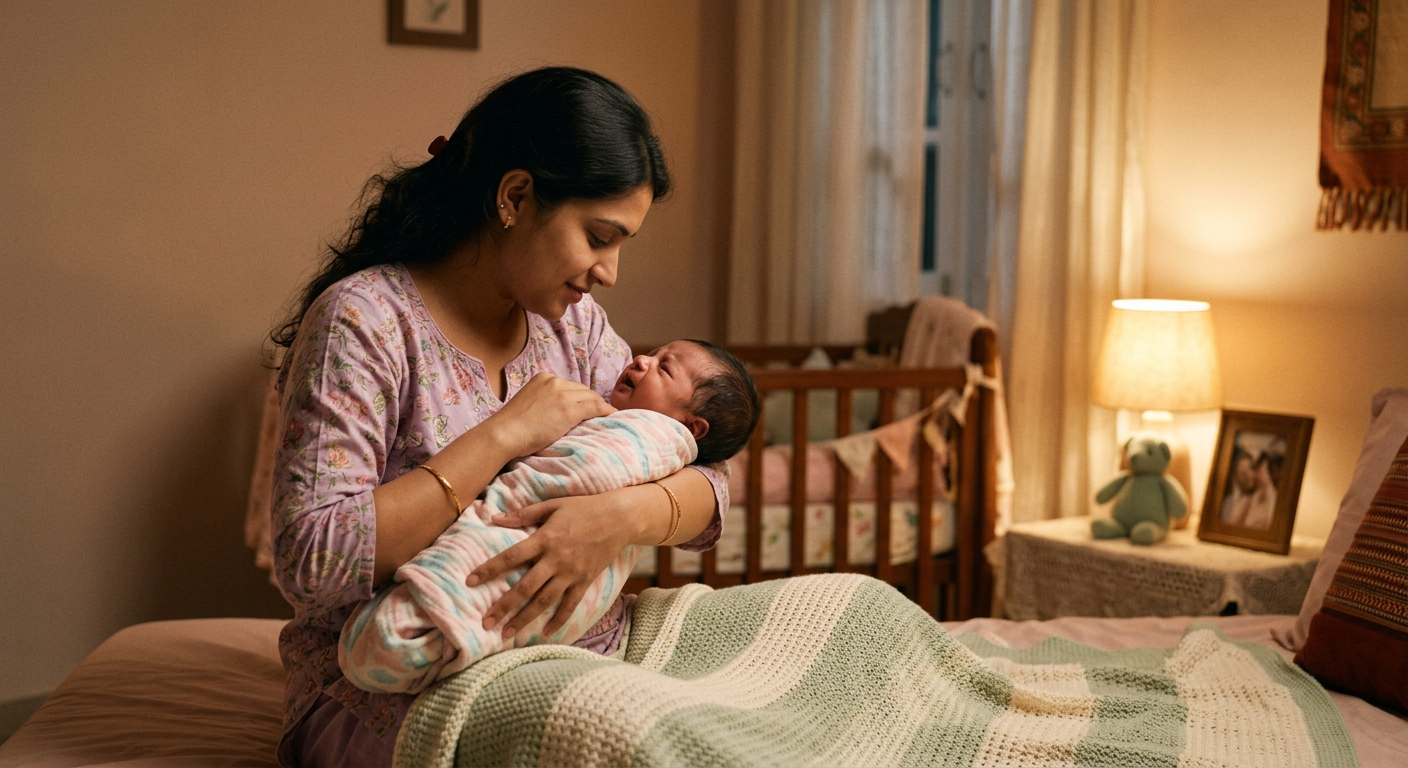
If you are reading this at 3:00 AM while rocking a screaming infant, know that you aren't alone. You are likely wondering why do babies cry at night when they were perfectly happy two hours ago. Most night crying in Indian households stems from four major culprits: hunger, gas (wind), overstimulation from too many visitors, or the 'witching hour'—a developmental phase where their nervous system just needs to discharge energy.
Understanding the root cause of these tears is the first step toward a peaceful night. Let’s decode the midnight melodies of your little one.
Why do babies cry at night? The Primary Culprits
For a new mother in the postnatal period (also called postnatal), a crying baby feels like a personal failure. It isn’t. In the first three months, a baby’s brain is essentially an "external fetus." They are adjusting to life outside the warm, dark garbh (womb), and the night can feel vast and scary.
1. The Hunger Gap
Indian babies are often prone to "cluster feeding" in the evenings. You might feel your milk supply is low, but usually, the baby is just fueling up for a longer sleep stretch. If their cry is rhythmic and accompanied by rooting (turning their head to find the breast), they are hungry.
2. Digestive Distress (Colic and Gas)
If your baby pulls their legs up to their tummy and screams in a high pitch, it’s likely gas. Whether it’s the sasu maa blaming your dal-chawal or just an immature gut, wind is a major reason for a fussy infant.
3. The "Witching Hour" Overload
In many Indian homes, evenings involve a lot of noise—pressure cooker whistles, loud TV news, and family members returning from work. A fussy infant might simply be overstimulated. Their tiny nervous system hits a "reset" button at night, leading to what we call the witching hour.
Decoding the Sound: The Dunstan Method for Indian Parents
Before you reach for the janam ghutti or Woodwards Gripe Water (which the IAP suggests avoiding if it contains sugar or alcohol), listen to the specific sound of the cry. You can use our AI cry analyzer to help distinguish these, but here is the manual guide:
* "Neh" (Hunger): The baby’s tongue touches the roof of the mouth, creating a sucking sound. This is the most common reason why babies cry at night.
* "Owh" (Sleepy): A round mouth shape, similar to a yawn. If you hear this, they are overtired and need a dark, quiet room immediately.
* "Eair" (Lower Gas/Flatulence): A distressed, grunting sound coming from the lower abdomen. You’ll see them tensing their pelvic muscles.
"Heh" (Discomfort): This could be a wet diaper, a scratchy tag on their jhabla*, or feeling too hot in a heavy swaddle during a humid Mumbai or Chennai night.
The Myth of "Evil Eye" vs. Developmental Reality
In India, we often hear that a baby crying at night has been affected by nazar (evil eye). While cultural rituals like nazar utarna might soothe the parents' anxiety, medically, we look at the baby growth chart. If a baby is hitting their baby milestones tracker and gaining weight, the night crying is usually developmental.
Sudden crying at night can also be "confusional arousals." The baby is stuck between sleep cycles. If you rush in and flip on the lights, you wake them up fully, making it harder to settle. Instead, wait for 30 seconds to see if they self-soothe.
Strategies to Calm a Baby Crying at Night for No Reason
If you feel your baby crying at night for no reason, try these India-specific soothing techniques:
* The Maalish Connection: A gentle tummy massage using warm coconut or mustard oil (depending on your region) in a clockwise direction can move trapped wind.
The "Hing" Paste Trick: A traditional remedy involves applying a tiny bit of hing* (asafoetida) dissolved in warm water around the navel (never inside it). It helps many babies release gas.
White Noise vs. Fan Noise: While many use a loud ceiling fan, a dedicated white noise machine (ranging from ₹1,500 to ₹4,000) can drown out the household shor* better.
Check the Temperature: Over-wrapping the baby in a godhadi* or heavy woollens can cause overheating. The Indian Academy of Paediatrics (IAP) recommends keeping the room between 24-26°C.
Real talk from Indian moms
> "My son used to scream every night at 7 PM like clockwork. I thought my milk was finishing. My paediatrician told me to just sit in a dark room with him and skip the evening tea guests. It worked within three days!" — Ananya, Bengaluru (Mother to 4-month-old)
> "I spent thousands on different bottles, but it turned out she just hated the polyester onesies my aunt gifted. Switched to pure mulmul cotton and the night crying reduced by half." — Meher, Lucknow (Mother to 6-week-old)
When to call your paediatrician
While why do babies cry at night is usually a question with a simple answer, some red flags require immediate medical attention:
* Fever: Any temperature above 100.4°F (38°C) in an infant.
* Projectile Vomiting: Not just a little spit-up, but forceful vomiting.
* Inconsolable Crying: If the baby cries for more than 2 hours without stopping despite all soothing.
* Bloody Stools: Can indicate a milk protein allergy or a bowel issue.
* Lethargy: If the baby is too tired to cry or won't wake up for feeds.
Frequently Asked Questions
Why do babies cry at night?
Most babies cry at night because they have shorter sleep cycles than adults (about 45-50 minutes) and haven't yet learned how to transition between them. Other common causes include hunger, a wet diaper, or feeling too hot or cold.
Why babies cry at night even after being fed?
If the baby is fed but still crying, the culprit is often trapped air. Ensure you burp the baby for at least 10-15 minutes, even if they fall asleep at the breast. Physical discomfort from a tight swaddle or an itchy fabric can also be the cause.
Is it normal for a baby crying at night to be very loud?
Yes. Babies have a very high decibel range because it is their only survival mechanism to ensure a caregiver responds. A loud cry doesn't always mean a big problem; it just means a big need for comfort.
How to handle a baby crying at night for no reason?
When there is no physical cause, it is often "overtiredness." When a baby passes their sleep window, their body produces cortisol and adrenaline, making it very hard for them to shut down. This leads to a cycle of crying that looks like it's for no reason.
Can a fussy infant be a sign of colic?
Colic is generally defined by the "rule of three": crying for more than 3 hours a day, 3 days a week, for 3 weeks. If your fussy infant follows this pattern, consult your doctor about probiotic drops or anti-colic positioning.
Remember, this phase is temporary. Your baby isn't crying to manipulate you; they are crying because you are their safe space. Deep breaths, mama—this too shall pass. You are doing a great job, and tonight is just one tiny chapter in your child's long life.
Repeat to yourself: This is not an emergency; this is just a conversation I don't understand yet.
Sources & further reading
- Indian Academy of Pediatrics (IAP) - Colic Guidelines
- World Health Organization - Infant Sleep and Crying patterns
- AIIMS - Newborn Care and Common Problems
Written by Dr. Anjali Mehta, MBBS, DCH (Paediatrics)
Reviewed by TheMamaCircle Editorial Team
Last updated: 19 September 2026
This article is for general information only and is not a substitute for personalised medical advice. Always consult your paediatrician or obstetrician for your specific situation.