Activities for 1 Year Old Baby: Best Indian Home Ideas
Find the best activities for 1 year old baby using simple Indian household items. From sensory play to brain development, turn your home into a fun learning zone!
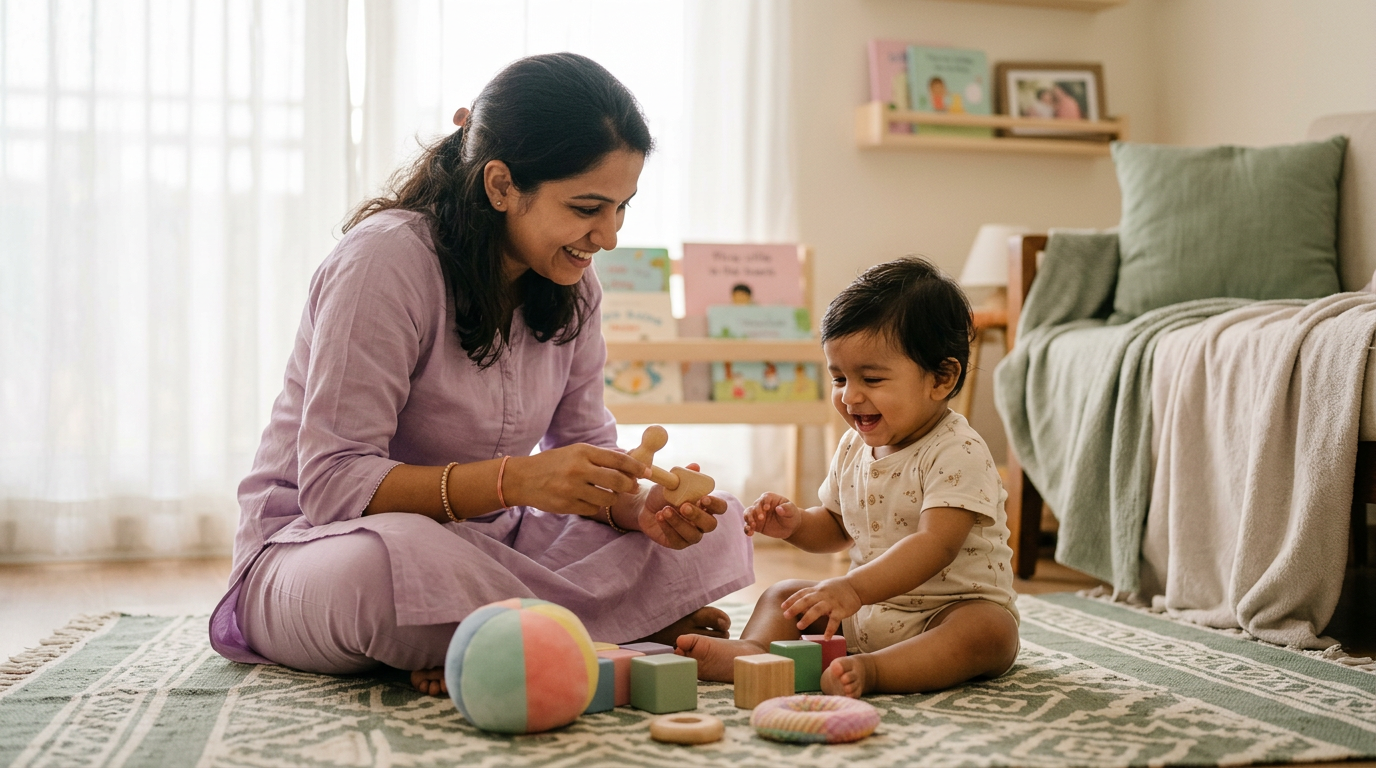
The day your baby turns one, everything changes. They aren't just "infants" anymore; they are tiny explorers with a sudden urge to climb the sofa, dump out every container in the kitchen, and test the gravity of their steel katori. Finding meaningful activities for 1 year old baby doesn't require expensive Montessori kits imported from Europe. In fact, your Indian kitchen and the local kirana store hold all the tools you need to foster brain development and motor skills during this crucial postnatal stage.
Why Play is Work for Your One-Year-Old
At twelve months, your baby is undergoing a massive neurological shift. This is the peak of the postnatal period (often called the postnatal period) where physical mobility meets cognitive curiosity. They are learning "cause and effect"—if I throw this spoon, Mumma picks it up. If I squeeze this atta (dough), it changes shape.
These interactions are not just ways to pass the time; they are the building blocks of neural pathways. By engaging in targeted activities for babies, you are supporting their developing hand-eye coordination, linguistic skills, and emotional regulation.
H2: What are the best brain development activities for 1 year old baby?
To keep a toddler engaged, you need to tap into their senses. In an Indian household, we have a sensory goldmine. You don't need a dedicated playroom in a 2BHK; you just need a safe corner and a few household staples.
1. The "Kitchen Band" (Auditory & Motor Skills)
Forget the ₹2,000 plastic drum set. Grab a steel patila, a plastic bowl, and a wooden belan (rolling pin).
* The Activity: Sit on the floor and show them how different surfaces make different sounds.
* The Skill: Teaches rhythm and differentiation of sound.
* Pro-Tip: Use a heavy steel plate for a "gong" sound and a Tupperware box for a muffled thud.
2. Atta Sensory Play (Tactile Development)
Before you roll your rotis, give your baby a small ball of whole-wheat dough.
* The Activity: Let them poke, pull, and squish it. If they put it in their mouth (which they will), it’s just flour and water—perfectly safe.
* The Skill: This is excellent sensory play for babies that strengthens the tiny muscles in their fingers (fine motor skills) needed for holding a pencil later.
3. The Dupatta Tunnel (Gross Motor Skills)
Take 3-4 of your long cotton dupattas and drape them over two chairs.
* The Activity: Encourage your baby to crawl through the "tunnel" to find a favorite toy on the other side.
* The Skill: Encourages spatial awareness and builds confidence in movement. Even though they are walking or cruising, crawling is still vital for bilateral coordination.
4. Dal & Rice Sorting (Fine Motor & Focus)
Use large grains like kabuli chana or rajma (avoid small lentils like moong dal to prevent choking).
* The Activity: Place two bowls—one empty, one with the beans. Show them how to transfer the beans one by one.
* The Skill: Refines the "pincer grasp."
H2: How to encourage brain development activities for babies at home?
Brain development at one year is heavily linked to "joint attention"—the act of looking at the same thing together. While Montessori baby toys are wonderful, your interaction is the real "brain food."
The "What’s in the Bag?" Mystery
Take a cloth shopping bag and put 5 familiar items inside: a comb, a large spoon, a ball, a soft toy, and a shoe.
* The Process: Ask, "Where is the ball?" and let them reach in and feel around without looking.
* The Impact: This builds object permanence and language association.
Reading with a Desi Twist
Don't just read the words. Use your mother tongue to describe the pictures. "Look, the elephant has a big soond (trunk)!" Points out colours and shapes. If you are tracking their growth using a baby growth chart, you’ll notice that cognitive leaps often happen right alongside physical growth spurts.
H2: Safe and Budget-Friendly Sensory Play for Babies
Sensory play doesn't have to be messy or expensive. The Indian Academy of Pediatrics (IAP) emphasizes that play should be safe and age-appropriate, following BIS/IS 9873 safety standards for any manufactured toys.
* Water Play: During bath time, give them mugs and funnels. Pouring water is a foundational math concept (volume).
* Sticky Note Wall: Stick colorful Post-its on a wall just above their reach. Watching them stretch and peel them off is great for balance.
* Texture Board: Glue scraps of old clothes—a bit of silk from a torn saree, a rough denim patch, some cotton, and a piece of velvet—onto a cardboard sheet.
If you are noticing changes in how your baby interacts or if you feel overwhelmed by the constant energy of a one-year-old, remember to check in on your own mental health using a postnatal wellness assessment. A happy mama makes for a happy playmate!
Real Talk from Indian Moms
> "I spent 3000 rupees on a 'developmental' activity cube, but my son spends 40 minutes every morning playing with a plastic bucket and my old bangles. Simple is always better for their little brains."
> — Sunita, Mumbai (Mom to 14-month-old Aarav)
> "We do 'Masala Smell Test.' I let her smell ginger, cardamom, and lemon. Her face when she smells the lemon is hilarious, and it’s become our favorite 5-minute activity."
> — Deepika, Bengaluru (Mom to 12-month-old Ishani)
H2: When to call your paediatrician
While every baby hits milestones at their own pace, keep an eye out for these red flags during play:
* Lack of Eye Contact: If the baby doesn't look at you when you are playing together.
* No Pointing: By 12-15 months, most babies should point at things they want.
* Loss of Skills: If they could previously do an activity (like pincer grasp) and suddenly cannot.
* No Response to Sound: If they don't turn toward the "Kitchen Band" noises.
* Extreme Lethargy: If they have no interest in exploring their environment.
Frequently Asked Questions
What are the best activities for 1 year old baby to do indoors?
Indoor activities for a one-year-old should focus on movement and exploration. Try building a pillow fort, playing "hide and seek" with toys under a towel, or "sticky tape rescue" where you tape toys to a tray and let them peel them off.
How often should we do activities for babies?
There is no set schedule, but aim for short 5-10 minute bursts of engaged play throughout the day. Babies have short attention spans. If they turn away or get cranky, it’s time to stop. tummy time activities might have evolved into floor play, but the goal remains the same: movement.
What is the best sensory play for babies at 12 months?
At 12 months, tactile and auditory play are winners. Edible finger painting (using yogurt mixed with turmeric or beetroot juice) and "sensory bins" filled with large pasta shapes or flattened rice (poha) are excellent choices.
Which brain development activities for babies help with speech?
Narrating everything you do is the best activity. Use "Parentese"—a high-pitched, melodic way of speaking. Singing nursery rhymes like "Lakdi ki Kaathi" or "Machli Jal ki Rani" with hand gestures helps link words to actions.
Are mobile screens okay for 1 year old activities?
The WHO and IAP recommend zero screen time for children under 2 years of age. Screens are passive; brain development requires active, two-way interaction with people and objects.
Can activities for 1 year old baby help with sleep?
Yes! Physical activities like crawling through tunnels or "chasing" bubbles help expend energy. A baby who has been mentally and physically stimulated during the day is often easier to settle at night.
Building a world of wonder for your little one doesn't require a big budget or a big house—it just requires you. Whether you are playing with atta or singing old Bollywood songs while they dance, you are building a bond that lasts a lifetime. You are doing a great job, Mumma; just keep playing.
Mera baccha, sabse achha! (My baby is the best!)
Sources & further reading
- IAP Guide on Play and Development
- WHO Guidelines on Physical Activity, Sedentary Behaviour and Sleep for Children under 5 Years of Age
- AIIMS Child Development & Early Intervention
Written by Dr. Anjali Mehta, MBBS, DCH (Paediatrics)
Reviewed by TheMamaCircle Editorial Team
Last updated: 25 September 2026
This article is for general information only and is not a substitute for personalised medical advice. Always consult your paediatrician or obstetrician for your specific situation.