Baby Skin Care: Indian Newborn Guide & Safe Routine
Expert guide to baby skin care in India. Learn about safe soaps, face creams, and why dadi's ubtan might need a tweak. Keep your little one's skin soft!
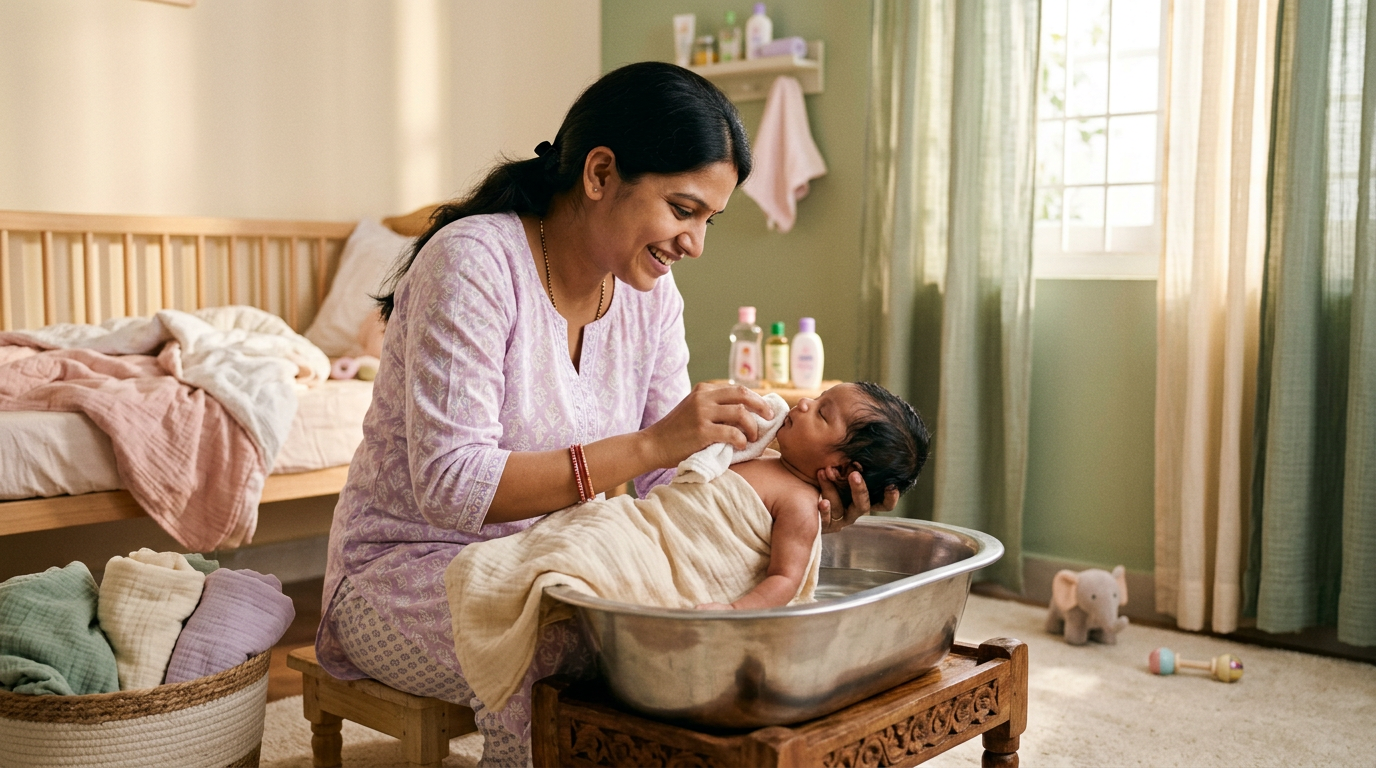
The secret to effective baby skin care in India isn’t found in a luxury hamper, but in understanding that a newborn’s skin is 30% thinner than ours. It loses moisture faster, absorbs chemicals easily, and is still figuring out how to handle the Indian heat and humidity. To keep your chhota baby’s skin healthy, you need a "less is more" approach: use pH-neutral cleansers, moisturise twice daily with Ceramides or Coconut oil, and strictly avoid harsh dadi-nani scrubs like thick besan ubtans that can cause micro-tears.
Why Indian Baby Skin Needs a Different Approach
In India, baby skin care is often a family affair. From the maalish wali arriving at 10 AM to the sasu maa insisting on a heavy ubtan, your baby’s skin goes through a lot. Unlike the dry, cold climates of the West, Indian babies deal with high sweat (leading to prickly heat) and hard water (leading to dryness).
The Indian Academy of Pediatrics (IAP) suggests that maintaining the skin barrier is the first line of defence against infections. If that barrier is broken by a harsh soap or a rough towel, your baby is at risk for atopic dermatitis or fungal rashes.
The Indian Maalish: Balancing Tradition and Science
We love our oil massages. It’s a beautiful bonding time and great for circulation. However, the choice of oil depends entirely on your geography and the season.
1. The Oil Guide
* Virgin Coconut Oil (VCO): Best for South India and coastal regions. It is light, anti-fungal, and cooling.
* Mustard Oil (Sarson ka tel): Traditionally used in North India during winters for its warming properties. Caution: Always dilute it or ensure it is "low erucic acid" as pure sarson can be too pungent and irritating for a newborn's delicate skin.
* Sunflower or Almond Oil: Great for all-year use, provided they are food-grade and fragrance-free.
2. The "Ubtan" Warning
While we value heritage, rubbing a newborn with a thick paste of besan (gram flour), haldi (turmeric), and malai (cream) can be counterproductive. A newborn’s skin is delicate; the abrasive nature of flour can cause redness. If you must use it for a ceremony, ensure it is a thin, runny consistency and wash it off immediately without scrubbing.
Choosing the Right Products: Reading the Indian Label
When shopping in India, look for the IS 4707 standard, which regulates the quality of cosmetic ingredients. Avoid anything with "Parabens," "Phthalates," or "SLS/SLES."
The Bathing Ritual
Stop using the soap your family has used for generations. For a newborn, you need a "Syndet" (synthetic detergent) bar or liquid.
* Temperature: Ensure the water is "lukewarm" (around 37°C). You don't need a thermometer; the inside of your elbow is the best Indian sensor.
* Duration: Keep baths under 10 minutes to prevent the skin from pruning and drying out.
* Cleanser: Use the best soap for newborns which should be fragrance-free and tear-free.
Moisturising 101
Do not wait for the skin to look dry. Apply a moisturizer within 3 minutes of stepping out of the bath while the skin is still slightly damp. This is particularly important if you are monitoring your child's growth using a baby growth chart, as healthy skin is a sign of overall systemic health. For the delicate facial area, look for a specific face cream for infants that contains ceramides to lock in moisture.
Climate-Specific Baby Skin Care in India
India's diverse climate means your routine must change with the calendar:
The Delhi/North Indian Winter
The air is bone-dry. You might need to moisturize 3-4 times a day. Use heavy creams (often sold in Indian pharmacies for ₹300–₹700) rather than lotions.
The Mumbai/Coastal Monsoon
The humidity is high, leading to "Ghamori" (prickly heat). Skip the heavy oils during the monsoon. Use a light, water-based lotion. If your baby develops an itchy, red rash on the cheeks or chin, you may need a newborn face rash cream to calm the inflammation.
The Harsh Indian Summer
Sun protection is vital. While we recommend keeping babies under 6 months out of direct sunlight, if you are travelling, you should consult your doctor about a mineral-based physical sunscreen for newborn use (look for Zinc Oxide or Titanium Dioxide).
Nappy Rash Management
In India, many of us use "langots" (cloth nappies) at home and disposables for the night or outings.
* Air time: Allow your baby 15 minutes of "nappy-free" time after every change.
* Wiping: Use plain water and cotton balls rather than scented wipes, which often contain alcohol that stings.
* Barrier Creams: Apply a thick layer of Zinc Oxide cream. It should look like you're frosting a cake—you shouldn't be able to see the skin through the cream.
If you are currently in your postpartum period and struggling with your own recovery, such as managing lochia or healing from a C-section scar, remember that your health affects how you care for your baby. Don't hesitate to ask for help with the baby's bath while you recover.
Real Talk from Indian Moms
> "I used to think 'Natural' meant better, so I used pure malai on my daughter. She ended up with tiny white bumps (milia) because the malai was too heavy and clogged her pores. Now we stick to a simple pH 5.5 lotion." — Ananya S., Bengaluru (Mom to 4-month-old)
> "Living in Chennai, the humidity is no joke. I stopped using oil during the day because my son would get heat rashes instantly. We only do a light coconut oil maalish at night before his bath." — Meenakshi R., Chennai (Mom to 7-month-old)
When to Call Your Paediatrician
While most skin issues resolve with basic baby skin care, watch out for these red flags:
* Pus-filled blisters: This could indicate a bacterial infection (Impetigo).
* Worsening Cradle Cap: If the yellow crusting on the head starts smelling or spreading to the neck/face.
* High Fever with Rash: Any rash accompanied by a fever over 100.4°F (38°C) needs immediate attention.
* Bleeding Rashes: If a nappy rash or eczema patch is cracked and bleeding.
* Hives: Sudden raised, itchy welts (could be an allergic reaction).
Frequently Asked Questions
What is the best soap for newborns in India?
The best soap for newborns isn't technically a soap but a "syndet" bar. Look for brands like Sebamed, Cetaphil Baby, or Tedibar which maintain the skin's natural acidic mantle (around pH 5.5). Avoid traditional "beauty soaps" which are too alkaline for a baby.
Should I use a face cream for infants every day?
Yes, especially if you live in a polluted city or use air conditioning/heaters. A face cream for infants creates a barrier against environmental pollutants and prevents "drool rash" around the mouth.
Which newborn face rash cream is safest?
For common heat rashes or drool rashes, a newborn face rash cream containing Zinc Oxide or Calendula is usually safest. Avoid any cream containing "hydrocortisone" or steroids unless specifically prescribed by your paediatrician.
Do I really need a sunscreen for newborn babies?
The WHO and IAP generally recommend keeping babies under 6 months in the shade. However, if incidental exposure is unavoidable, a mineral-based sunscreen for newborn use (Physical blocker) is preferred over chemical filters.
Is it okay to use talcum powder?
Most doctors now advise against talcum powder because the fine dust can be inhaled by the baby, causing respiratory issues. If you must use it, use a cornstarch-based powder and "pat" it onto your hands away from the baby first.
Can I use Kajal in my baby's eyes?
No. All leading Indian medical authorities, including AIIMS, strictly advise against Kajal. It can contain high levels of lead and can cause conjunctivitis or block tear ducts.
Your baby’s skin is their first shield against the world. Treat it with the same Gentleness you use to hold them. When in doubt, remember: Clean, Moisturise, and Observe.
"My baby’s skin is perfect just the way it is, and I will protect it with gentleness."
Sources & further reading
- Indian Academy of Pediatrics (IAP) Skin Care Guidelines
- National Health Portal of India - Newborn Care
- World Health Organization - Skin Care for the Newborn
Written by Dr. Anjali Mehta, MBBS, DCH (Paediatrics)
Reviewed by TheMamaCircle Editorial Team
Last updated: 24 July 2026
This article is for general information only and is not a substitute for personalised medical advice. Always consult your paediatrician or obstetrician for your specific situation.