Home Remedies for Teething Pain: Safe Indian Guide for Moms
Searching for home remedies for teething pain? Learn safe Indian dadi-nani hacks like frozen washcloths & silver teethers to soothe your baby's sore gums today.
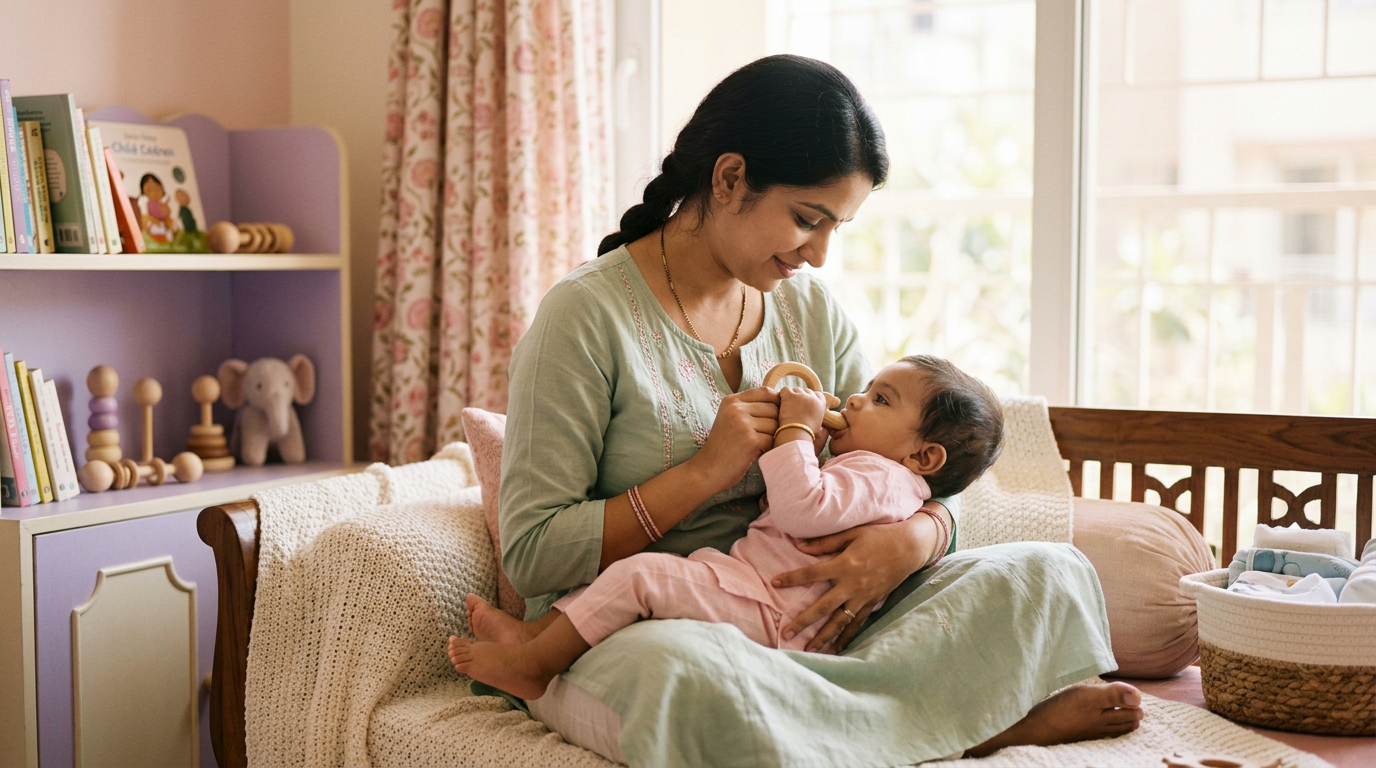
The first tiny white "rice grain" peeking through your baby’s gums is a milestone worth a thousand photos, but the sleepless nights leading up to it? Not so much. If your little one is biting everything in sight and turning into a little "chidiya" (cranky bird), you are likely looking for home remedies for teething pain that actually work without resorting to unnecessary medication. In India, we have a treasure trove of dadi-nani wisdom, but as a paediatrician, I know that not every traditional remedy is safe for a modern nursery.
The Teething Timeline: What to Expect
Before we dive into the remedies, let’s be clear: when do babies start teething varies wildly. While the average age is 6 months, some early bloomers start at 4 months, and others wait until their first birthday. Knowing the teething order helps you anticipate which part of the gum will be sore next—usually, the lower central incisors (bottom front teeth) make their debut first.
Safe and Effective Home Remedies for Teething Pain
When those gums are inflamed, the goal is to provide counter-pressure and cooling. Here are the safest ways to soothe your baby using items you already have in your Indian kitchen.
1. The Frozen Washcloth (The Desi 'Cotton Rumal')
This is the gold standard of home remedies for teething pain. Take a clean, soft cotton washcloth or a malmal cloth, soak it in filtered water (or breast milk), wring it out, and pop it in the freezer for 15-20 minutes.
* Why it works: The cold numbs the gums, and the texture of the cloth provides the friction babies crave.
* Pro-tip: If your baby is already on solids, soak the cloth in cold coconut water for a little electrolyte boost.
2. Chilled Fruit and Vegetable Batons
If your baby is older than 6 months and has started solids, use food as a natural teether.
* Carrot or Cucumber: Peel a large carrot or cucumber, cut it into a thick baton (too big to swallow), and chill it. Let the baby gnaw on it under strict supervision.
* Frozen Banana: Place a piece of banana in a silicone mesh feeder. This prevents choking while letting them enjoy the cold mush.
Cold Makhana: While not frozen, the crunch of a roasted (not fried) makhana* (fox nut) can sometimes provide the right resistance for itchy gums.
3. The Power of Gum Massage
Your clean index finger is one of the best teething remedies for babies.
* The Technique: Wash your hands thoroughly. Firmly rub your baby’s gums in a circular motion.
The 'Cold Spoon' Trick: Place a small steel chammach* (spoon) in the fridge. Once cool, gently rub the back of the spoon against the gums. The metal stays cold longer than plastic.
4. Breastfeeding and Hydration
For many babies, nursing is the ultimate comfort. The skin-to-skin contact releases oxytocin, which acts as a natural pain reliever. If you are struggling with nursing strikes due to gum pain, check our 1:1 postnatal care sessions for personalized support. Sometimes, a baby might refuse the breast because the sucking action hurts; in this case, try offering expressed milk in a chilled sippy cup or a small steel palada.
The Indian Dadi-Nani Audit: What to Keep and What to Skip
In Indian households, Sasu Maa will likely have a list of remedies. Let’s look at them through a clinical lens.
The Jaiphal (Nutmeg) Paste
Verdict: Use with Extreme Caution.
Traditionally, a tiny bit of jaiphal is rubbed on a stone with water and given to babies to induce sleep. While nutmeg has mild sedative properties, it can be toxic in even slightly high doses for infants. I recommend skipping the ingestion and instead focusing on external soothing.
The Silver Teether or 'Chandi ka Khilona'
Verdict: Keep (with hygiene).
Silver is naturally antimicrobial. A smooth, solid silver ring (ensure it has no small parts or bells that can break off) is an age-old Indian tradition. If you use one, ensure it is hallmarked and cleaned daily with boiling water. A basic silver teether in India usually costs between ₹800 to ₹1,500 depending on weight.
Sooth/Ginger Rubs
Verdict: Skip.
Rubbing ginger or honey (honey is a strict NO for babies under 12 months due to botulism risk) on gums can be too harsh and irritate the delicate oral mucosa.
Managing the "Teething Troubles": Fever and Rashes
Many parents believe teething causes high fever, but medically, a baby teething fever usually doesn't exceed 100.4°F (38°C). It is more of a "warmth" than a true fever.
* Drool Rash: The constant "laar" (drool) can cause redness around the chin and neck. Apply a thin layer of coconut oil or a barrier cream to protect the skin.
Loss of Appetite: If your baby is refusing their usual khichdi or ragi sari*, don't force it. Offer colder, softer foods like chilled curd (dahi) or applesauce. You can track their growth during these dips using our baby growth chart.
Real Talk from Indian Moms
> "My daughter, Ananya, was miserable at 7 months. The only thing that worked was a frozen 'Paratha'! I’d give her a cold, hard piece of plain paratha to chew on. The texture was perfect for her itchy gums." — Priya S., Bengaluru (Mom to 10-month-old)
> "We tried all the fancy silicone teethers, but my son preferred a cold steel bowl. He would just hold the rim in his mouth. My mother-in-law was right about the 'Chandi ka chammach' logic!" — Meher V., Mumbai (Mom to 9-month-old)
When to Call Your Paediatrician
While teething is a normal developmental phase, it shouldn't make a baby truly ill. Seek medical advice if you notice:
* High Fever: Anything above 101°F (38.3°C).
* Diarrhoea: Teething does not cause loose motions; this is usually due to babies putting dirty objects in their mouths.
* Ear Pulling + Fever: This could be an ear infection, not just teething pain.
* Extreme Lethargy: If the baby is not playing or staying hydrated.
* Bleeding Gums: While a tiny haematoma (blue-ish bump) is normal, active bleeding is not.
Safety Warning: The Amber Necklace Myth
You may see "Baltic Amber" necklaces sold online in India claiming to release succinic acid to ease pain. Do not use these. They are a significant choking and strangulation hazard and have no proven scientific benefit. Stick to teething symptoms baby management that involves safe, supervised chewing.
Frequently Asked Questions
What are the best home remedies for teething pain?
The most effective home remedies for teething pain include cold therapy (frozen washcloths, chilled fruit) and gentle gum massage with clean fingers. Using a chilled steel spoon is also a popular and safe Indian home remedy.
Can I use teething gels for my baby?
The Indian Academy of Paediatrics (IAP) and the FDA generally advise against teething gels containing benzocaine or lidocaine, as they can wash away quickly and potentially cause harmful side effects like methemoglobinemia (reduced oxygen in the blood).
How can I tell the difference between teething and an ear infection?
A baby teething fever is mild, and the baby will likely be biting things. An ear infection usually involves a higher fever, crying when lying flat, and fluid drainage from the ear. If in doubt, consult your paediatrician.
Are there specific teething remedies for babies who refuse to eat?
If your baby is on solids, offer cold, soothing foods like chilled dahi, mashed cold banana, or refrigerated applesauce. Avoid salty or acidic foods which might sting the inflamed gums.
Is it normal for my baby to have a runny nose while teething?
While some parents report a "teething cold," there is no direct link. However, the excess saliva can sometimes cause a slight clear nasal discharge. If the mucus is thick, yellow, or green, it is likely a viral infection, not teething.
Teething is a phase that tests everyone’s patience, but it is also a sign that your baby is growing exactly as they should. Focus on lots of cuddles, keep the bibs ready for the drool, and remember that this too shall pass. You are doing a great job, Mama.
Mera bachcha sabse pyaara, teething bhi seh lega hamara. (My baby is the loveliest, and will brave through teething too.)
Sources & further reading
- Indian Academy of Paediatrics - Teething Guide
- NHS - Tips for helping your teething baby
- AIIMS - Infant Oral Health Care
Written by Dr. Anjali Mehta, MBBS, DCH (Paediatrics)
Reviewed by TheMamaCircle Editorial Team
Last updated: 13 August 2026
This article is for general information only and is not a substitute for personalised medical advice. Always consult your paediatrician or obstetrician for your specific situation.